
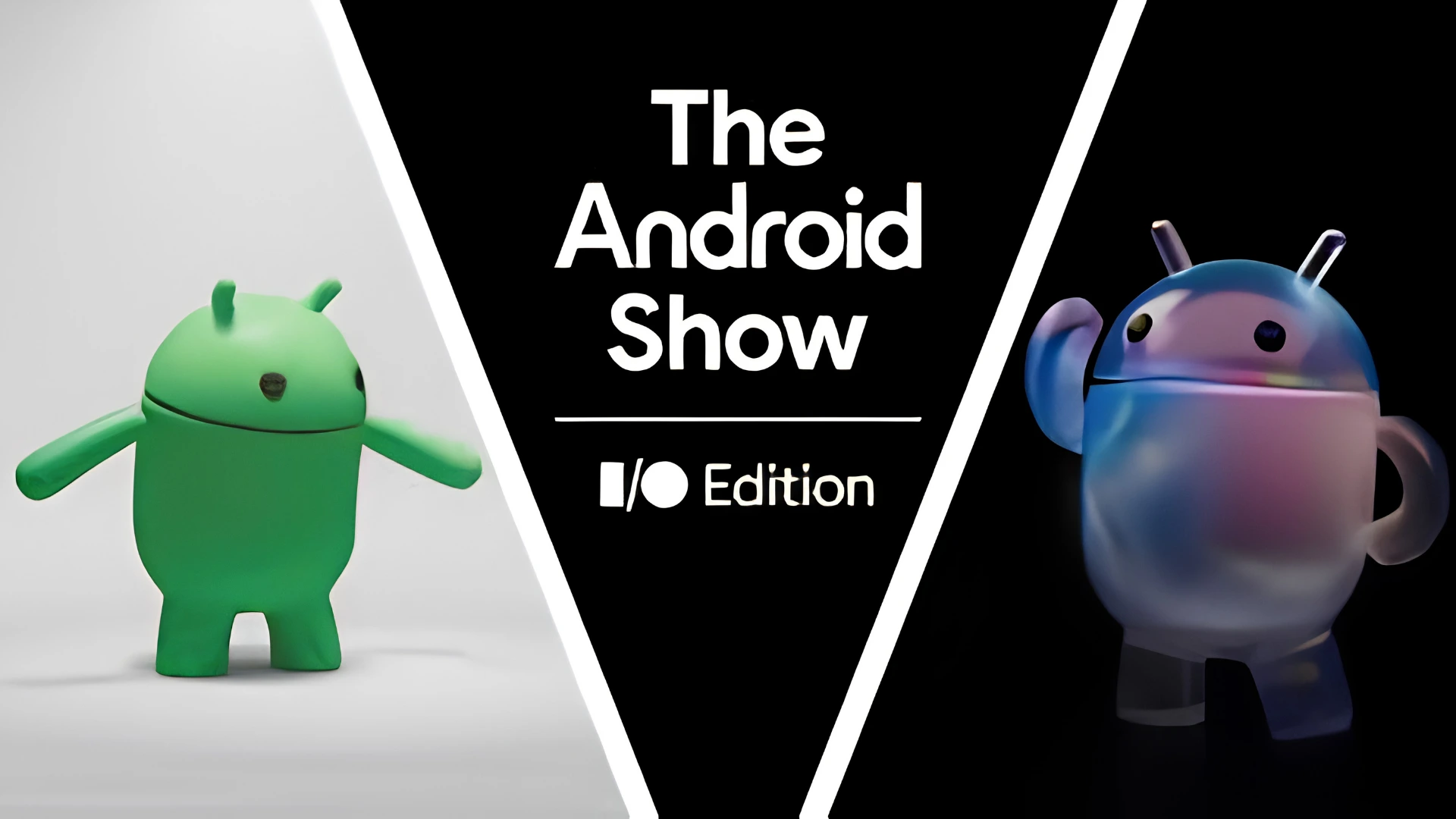
13 May, 2026: Google has officially kicked off the build-up to Google I/O 2026 with a major Android-focused showcase packed with AI announcements, Android 17 updates and ecosystem-wide upgrades.
Author: Aadarsh Patel | EQMint
The Android Show: I/O Edition made one thing very clear:
Google is pushing AI into almost every layer of Android.
From smartphones and wearables to laptops and productivity tools, artificial intelligence is now becoming the centre of Google’s software strategy.
Android 17 Gets Smarter With AI Integration
Android 17 was one of the biggest highlights of the event.
While the update brings visual refinements and system-level improvements, Google’s primary focus is clearly on AI-powered experiences.
The company showcased deeper Gemini AI integration across Android devices, allowing users to interact with apps, search and system functions more naturally.
Google is positioning Gemini as a core assistant layer rather than just a standalone chatbot., That shift could fundamentally change how Android devices are used daily.
Gemini AI Is Expanding Across Devices
Google announced that Gemini AI will now work more deeply across:
- Android phones
- Wear OS devices
- Android Auto
- ChromeOS
- productivity apps
The company is trying to create a connected AI ecosystem where devices communicate more intelligently with users and with each other.
Google also demonstrated contextual AI capabilities that can:
- summarise notifications
- understand on-screen content
- assist with multitasking
- improve search relevance
- automate tasks
This signals Google’s aggressive attempt to compete directly with Apple’s growing AI ecosystem ambitions.
AI Is Becoming Android’s Biggest Selling Point
The biggest takeaway from the event was not hardware. It was software intelligence.
Google repeatedly focused on how AI can make devices:
- more personal
- more predictive
- more context-aware
- more efficient
That strategy is becoming increasingly important as smartphone hardware innovation slows globally.
Instead of relying only on camera upgrades or processor improvements, companies are now competing heavily through AI-powered user experiences.
Google Is Also Targeting Productivity and Laptops
Beyond smartphones, Google highlighted AI-powered productivity features for laptops and large-screen devices.
The company demonstrated smarter workflows across ChromeOS and Android-connected systems, showing how AI could help users:
- organise tasks
- summarise information
- improve writing
- manage schedules
- simplify workflows
This reflects Google’s broader ambition to position Android and ChromeOS as stronger productivity ecosystems.
Android Ecosystem Competition Is Intensifying
Google’s announcements also reveal how aggressively Big Tech companies are racing toward AI-first operating systems.
Apple, Microsoft, Samsung and Google are all now competing around:
- on-device AI
- contextual assistants
- intelligent search
- generative AI integration
- productivity automation
And Android 17 appears designed to ensure Google remains central to that battle.
Privacy and On-Device AI Remain Important
Google also emphasised on-device AI processing during several announcements.
The company is increasingly trying to balance:
- AI capabilities
- speed
- privacy
- local processing
as concerns around cloud-based AI data usage continue growing globally. That approach mirrors a broader industry trend toward more secure on-device AI experiences.
Final Take
The Android Show 2026 confirmed that Google no longer sees Android as just a mobile operating system.
It now views Android as an AI ecosystem. Android 17 may bring visual and system improvements, but the real transformation is happening underneath — where Gemini AI is gradually becoming deeply embedded into how users interact with devices.
And as the AI race between Google, Apple and Microsoft accelerates, Android 17 could become one of Google’s most important software upgrades in years.
For more such Read Technology News
For more such information visit EQMint
Join our Whatsapp channel for timely updates: Whatsapp