
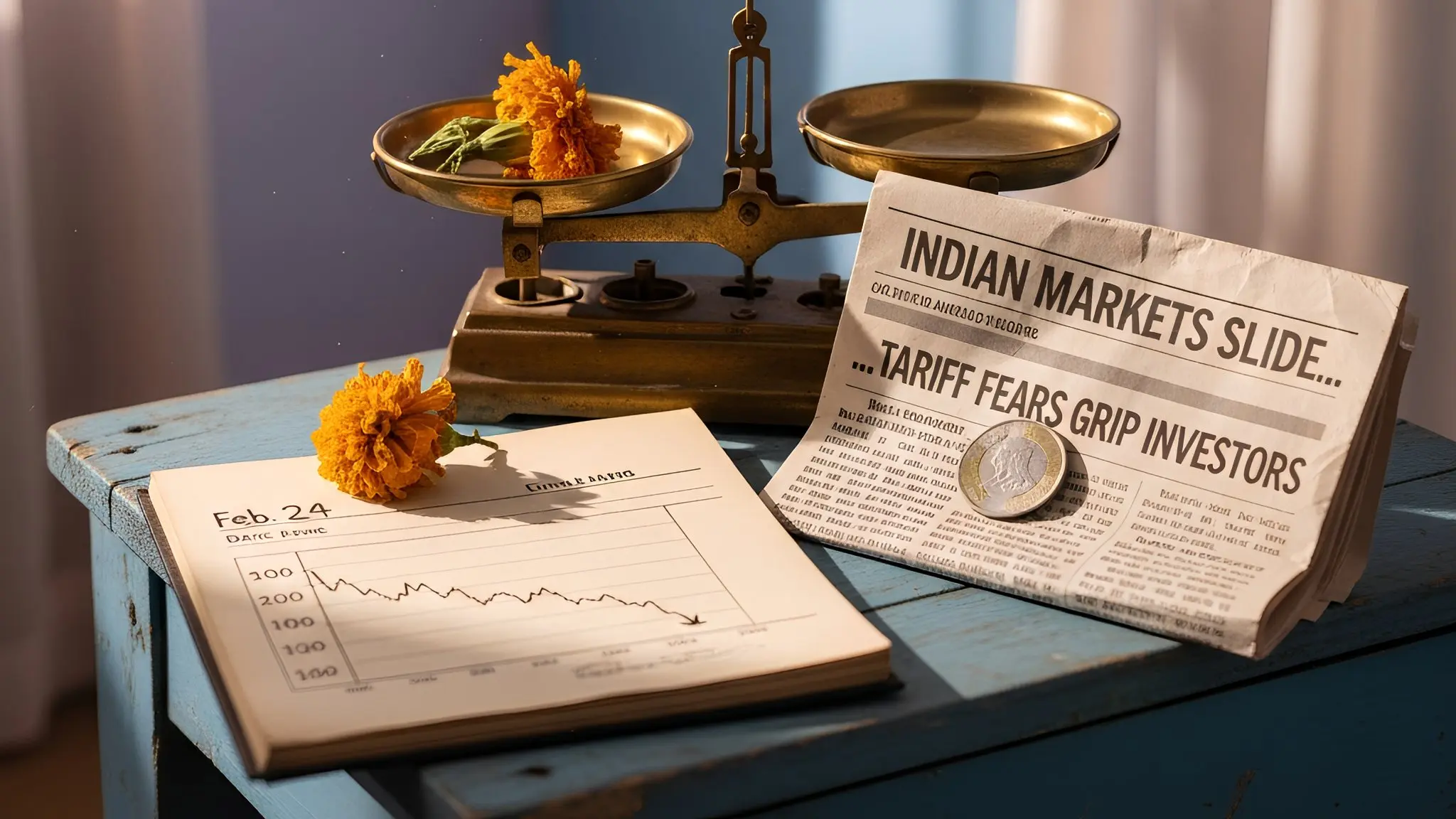
Indian equity markets experienced a significant downturn on Tuesday, 24 February 2026, as renewed global jitters and fresh concerns over U.S. trade policy pressured sentiment on Dalal Street. Both the Nifty 50 and BSE Sensex fell sharply, reversing gains from the previous session. Key sectors, particularly technology and heavyweight stocks, came under selling pressure as investors weighed risks tied to global trade tensions and macroeconomic instability.
Author : Aashiya Jain | EQmint | Market News
India’s stock markets turned notably weaker on 24 February 2026, snapping a recent uptrend that had lifted benchmark indices just a day earlier. After a strong rally on Monday, triggered by optimism around global developments, Tuesday’s trading reflected heightened caution and risk-off behaviour among investors. The session saw the Nifty 50 drop by more than 280 points to around 25,427.75 and the Sensex plunge over 1,000 points to close near 82,265.74, underlining the scale of the market’s reaction.
Global Cues Shake Domestic Markets
The bigger picture for Indian stocks was all about what was happening in the U. S. markets. You know after the Supreme Court knocked down those big tariffs from Trump the White House just came back with more tariffs and more trade drama.
That whole thing just added to the uncertainty and made investors nervous everywhere. U. S. stocks felt it too. The S&P 500 and Dow both dropped because of the tariff worries. People started moving money into safe stuff like gold instead. When Wall Street gets shaky it usually drags global markets down with it and this time was no different. The uncertainty from all that trade tension made risk appetite drop across the board. That spilled right into India’s market too.
Sectoral Pressure Intensifies
The downturn was broad-based but particularly noticeable in technology and heavyweight stocks, which tend to be more sensitive to global risk sentiment.
Tech Stocks Underperform
Leading information technology companies, including industry giants, faced significant selling pressure as traders reacted to concerns over future demand and macro uncertainty. This trend was part of a broader correction in export-oriented sectors that rely heavily on global growth.
Heavyweights Drag Benchmarks
Shares of major conglomerates and large-cap names also weighed on the market. Declines in sectors like financials and consumer goods added to the pressure, pulling major indices down further. Heavy selling in some of these segment leaders contributed to the Sensex’s sharp drop in early trade and throughout the session.
Market Dynamics: A Closer Look
The selling pressure was evident from the outset. Mid-morning trade saw both benchmarks trading lower, with the Nifty dipping below key psychological levels and the Sensex registering a steep slide. At one point, benchmark indices were down hundreds of points within the first hour of trading, indicating broad-based aversion to risk among market participants.
Adding to the turmoil was the expiry of monthly futures and options (F&O) contracts, which often increases short-term volatility as traders adjust positions and lock in profits or cut losses.
Investor Wealth and Market Capitalisation Impact
The sharp decline erased a substantial amount of market wealth in a single session. Market capitalisation contracted significantly, reflecting swift risk reduction by traders and investors responding to negative cues. This erosion highlights how sensitive equity valuations remain to global shocks and investor sentiment swings, especially after recent weeks of mixed performances.
Echoes from the Previous Session
Tuesday was weak and that was a big change from the day before when both the Sensex and Nifty had strong gains. On Monday the Sensex climbed close to 480 points and the Nifty soared over 140 points. That rally came mostly because the U. S. Supreme Court had struck down certain tariff measures. Markets felt relief.
There was optimism that easing trade tensions could support growth and risk assets. But that relief didn’t last. Renewed uncertainty and conflicting signals on trade policy re-emerged. Markets are still reacting a lot to geopolitical shifts and trade negotiations and macroeconomic developments. You know it’s like one day up and the next day down.
What’s Next for Dalal Street
Looking ahead, several key questions now dominate investor focus:
1. Clarity on U.S. Trade Policy
Market participants will be watching closely for clearer signals on trade tariffs and negotiations. Greater clarity could reduce uncertainty and help stabilise markets.
2. Global Economic Indicators
Data points such as economic growth figures, inflation trends, and central bank guidance will likely influence how investors position portfolios in the near term.
3. Corporate Earnings Trends
Earnings results from major Indian companies, especially those with global exposure, will also play a role in sculpting market sentiment and determining whether downside pressure continues.
Conclusion: A Week of Volatility
As of 24 February 2026 Indian equity markets are navigating a volatile period shaped by unpredictable global currents and domestic reactions to them. What began as a promising rally on one session quickly gave way to caution and selling as traders reassessed risks tied to trade policy and broader macro concerns.
For investors this environment underscores the importance of balancing short-term volatility with long-term fundamentals. Markets may fluctuate sharply on headline news but the underlying health of corporate earnings economic growth prospects and investor confidence will remain key pillars in the journey ahead.
For more such information visit EQMint
Disclaimer: This article is not an investment advice and is for educational purpose only