
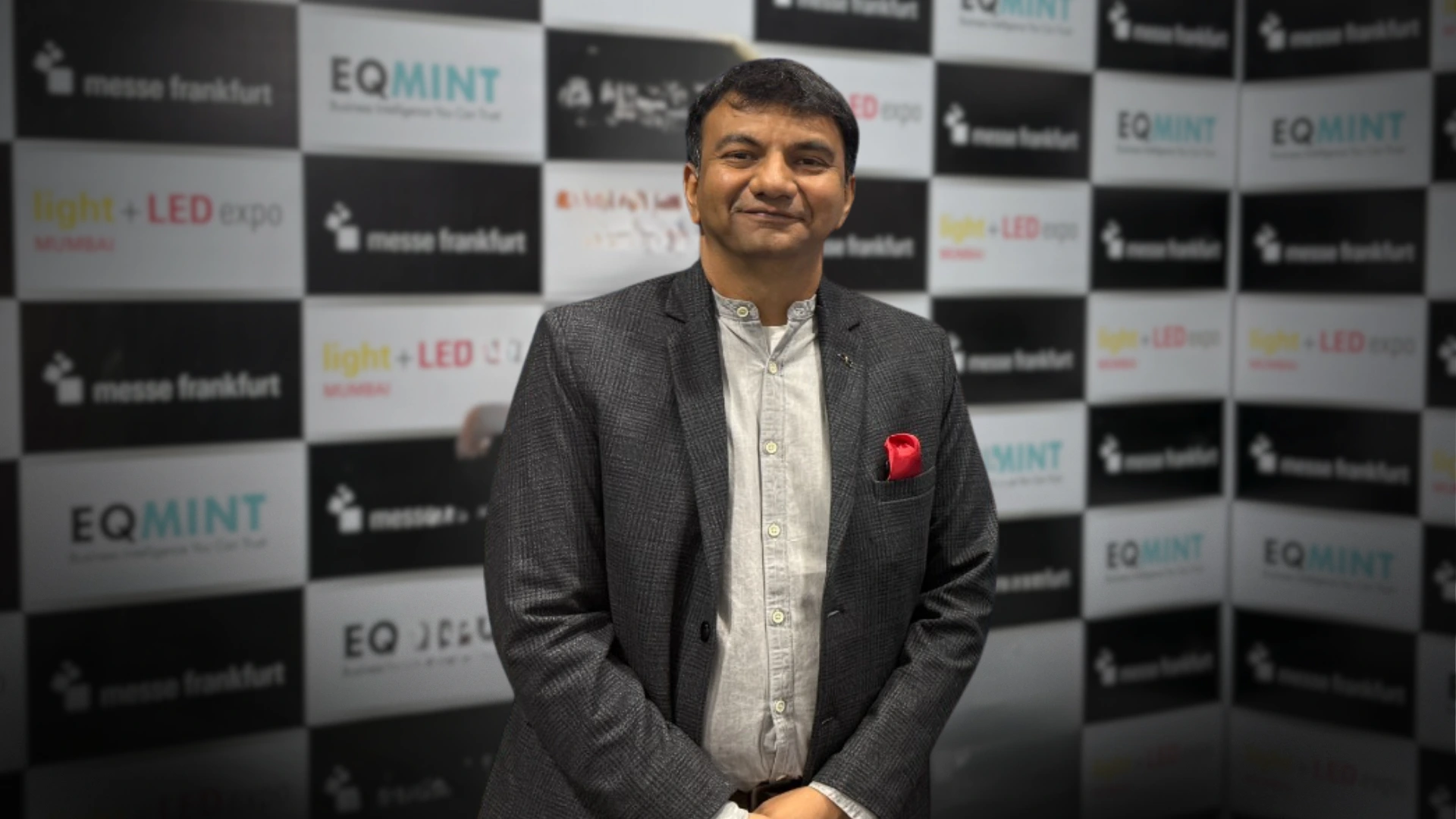
May 31, 2026: In a recent episode of the EQMint Impact Individuals podcast, recorded live at the Light + LED Expo in Mumbai, Ritesh Shah, Founder and Principal Lighting Designer at Lux Light Designs, shared his insights into the future of smart lighting, AI-driven architecture, and sustainable design.
Author: Aadarsh Patel | EQMint | EQ Exclusive
In the rapidly evolving world of architecture and interior design, lighting has moved far beyond simple illumination. Today, it plays a critical role in shaping experiences, improving sustainability, and enhancing the emotional connection people have with spaces.
With nearly two decades of experience in lighting design, Shah highlighted how technology is transforming modern spaces while also addressing growing concerns like energy efficiency and urban light pollution.
AI Is Transforming Lighting Design
Artificial Intelligence is rapidly reshaping the lighting industry.
According to Ritesh Shah, AI-driven systems can now optimize lighting layouts based on:
- Time of day
- Occupancy patterns
- User behavior
- Energy consumption
Unlike traditional timer-based systems, modern AI-powered lighting solutions can dynamically adjust brightness and usage in real time.
For example, in large corporate offices and call centers, intelligent lighting systems can detect whether employees are present at specific desks and automatically reduce power usage when spaces are vacant.
This not only improves operational efficiency but also significantly lowers electricity costs.
Smart Lighting and Sustainable Architecture
The future of intelligent lighting is deeply connected with sustainability and ESG goals.
Shah explains that AI tools can analyze environmental conditions such as:
- Geographic heat load
- Sunlight exposure
- Building orientation
- Energy efficiency requirements
By using this data, architects and designers can create naturally cooler and more energy-efficient spaces.
This reduces dependency on:
- Excessive air conditioning
- Artificial lighting
- Unnecessary power consumption
The result is a more sustainable approach to urban development.
The Rise of “Experience Lighting”
One of the biggest changes in modern lighting design is the shift toward experience lighting.
Today’s clients are no longer looking for spaces filled with harsh, uniform lighting. Instead, they want personalized environments that create specific moods and emotions.
Examples include:
- Warm lighting for relaxation
- Dramatic setups for entertainment spaces
- Dynamic lighting for hospitality and lounges
According to Shah, lighting now has a strong emotional and psychological influence on how people interact with spaces.
Fighting Urban Light Pollution
While LED technology improved energy efficiency globally, it also contributed to growing urban light pollution.
Ritesh Shah strongly advocates for mindful lighting design that minimizes unnecessary glare and sky pollution.
“In Bombay we hardly see any stars because of what? Because of light pollutions. Street lights should always—any light should always fall down on the ground…” -Ritesh Shah
He emphasizes the importance of:
- Anti-glare fixtures
- Controlled illumination
- Proper lux level planning
- Ground-focused lighting design
These measures improve visual comfort while protecting the urban night environment.
The Future Is Wireless Smart Lighting
According to Shah, the next major shift will be toward fully wireless lighting systems.
Future smart lighting networks are expected to rely heavily on:
- Bluetooth connectivity
- Wi-Fi integration
- Smartphone controls
- Cloud-based automation
This will reduce dependency on complex wiring systems while giving users greater flexibility and remote access.
Despite the higher initial setup cost, Shah notes that businesses often recover their investment quickly through energy and maintenance savings.
Conclusion
The intersection of architecture, AI, and smart lighting is shaping a future where buildings are more sustainable, efficient, and experience-driven.
Ritesh Shah’s insights highlight that lighting is no longer just a technical necessity—it has become a central element of modern architectural design.
As cities continue to evolve, intelligent lighting solutions will play a key role in creating healthier, smarter, and more environmentally responsible urban spaces.
For more such information visi EQMint
Join our Whatsapp channel for timely updates: Whatsapp