
Author: Aadarsh Patel | EQMint
What’s the deal? India’s coir industry is expanding its economic role by turning discarded coconut husks into marketable products, supporting rural employment, and creating opportunities for small businesses. According to a Ministry of Micro, Small and Medium Enterprises (MSME) release published on October 14, 2026, more than 21,000 coir units are registered on the Udyam portal, generating employment for around 2.3 lakh people through those registered units.
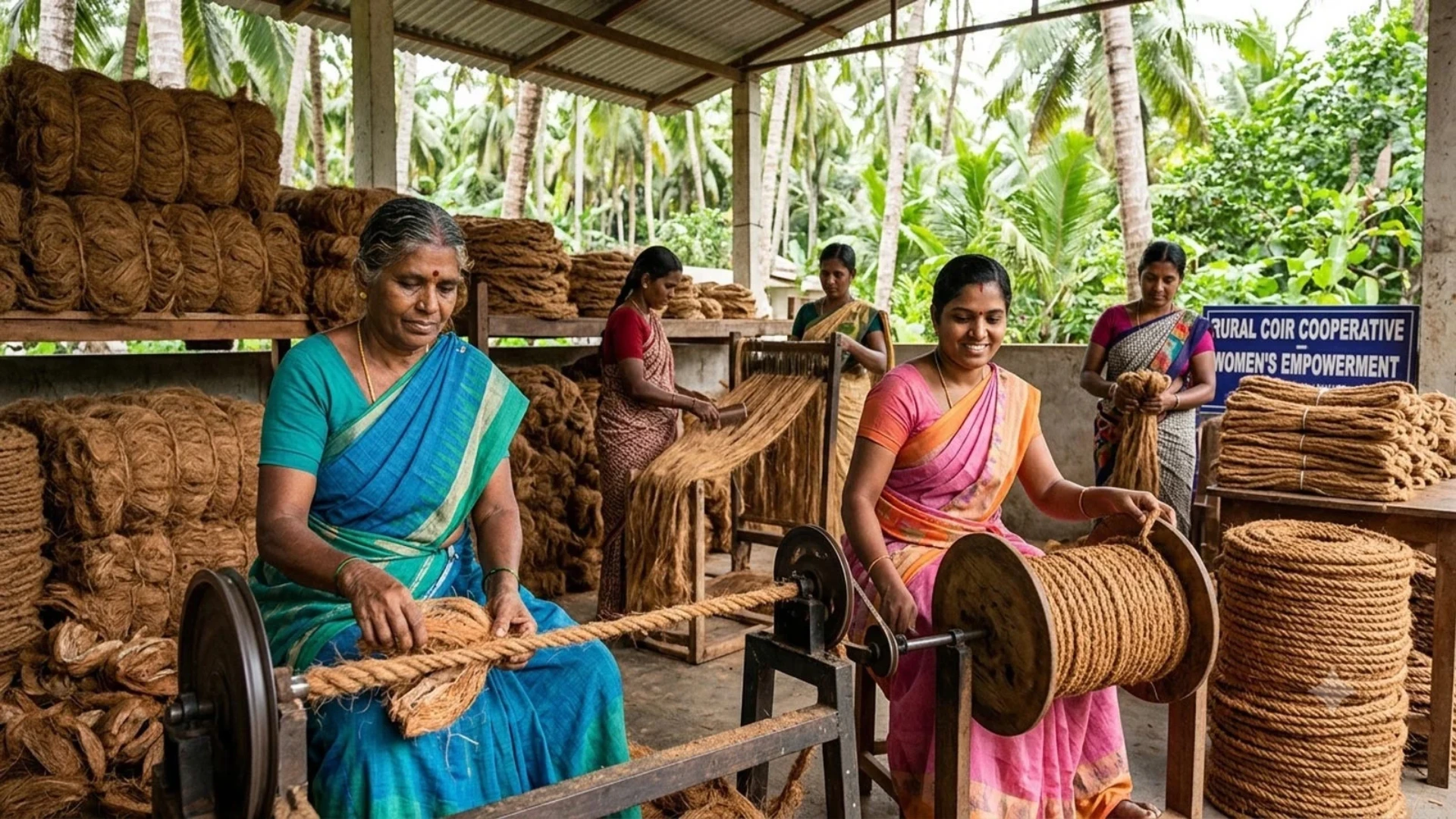
Coir is a natural fibre extracted from coconut husks. Manufacturers use it to make ropes, mats, mattresses, brushes and other everyday products.
Why now? Demand for natural-fibre products is creating opportunities for traditional industries to reach new markets. India’s coir sector connects coconut-growing communities with manufacturing, entrepreneurship and exports, while making productive use of agricultural by-products.
The sector’s impact extends beyond registered businesses. The MSME Ministry reports that India’s coir industry provides direct and indirect employment to more than 7 lakh workers, with women accounting for around 80% of the workforce. This makes coir an important source of income for rural households, particularly in coconut-producing regions.
Coir businesses also create opportunities to develop higher-value products. Coconut husks can be processed into fibre, yarn, mats, coir pith and other goods, allowing enterprises to earn from material that might otherwise go unused.
By the numbers
- 21,000+: Coir units registered on the Udyam portal.
- 2.3 lakh: People employed through the registered units, according to the latest release.
- 7 lakh+: Direct and indirect workers supported across the wider sector.
- 80%: Approximate share of women in the workforce.
- ₹6,614.40 crore: Value of coir and coir product exports in FY 2025-26.
- 305%: Increase in exports over the past 10 years, as reported by the MSME Ministry.
What supports the sector? Government programmes aim to help coir businesses improve production, skills and market access. The Coir Vikas Yojana supports areas such as worker training, technology upgrades, product development and export promotion. The Scheme of Fund for Regeneration of Traditional Industries (SFURTI) also supports cluster development, common facilities and marketing assistance.
These measures can help small enterprises improve product quality and reach buyers. Continued progress will depend on access to modern equipment, finance, skills and reliable markets.
What’s next? Expanding product design, improving processing technology and reaching more domestic and international buyers could help coir enterprises grow. Better support for rural entrepreneurs and women workers will also matter as the industry develops new uses for coconut fibre.
EQMint Take on India’s coir sector
India’s coir sector connects rural livelihoods with resource efficiency. It turns coconut husks into commercial products while supporting small businesses and a workforce with a high share of women.
The next stage of growth depends on helping traditional producers improve productivity, develop new products and compete in wider markets. Stronger market access can help more of the value generated by coir stay within rural communities.
For more such information, visit EQMint
Join our WhatsApp channel for timely updates: Whatsapp