
Author: Aadarsh Patel | EQMint
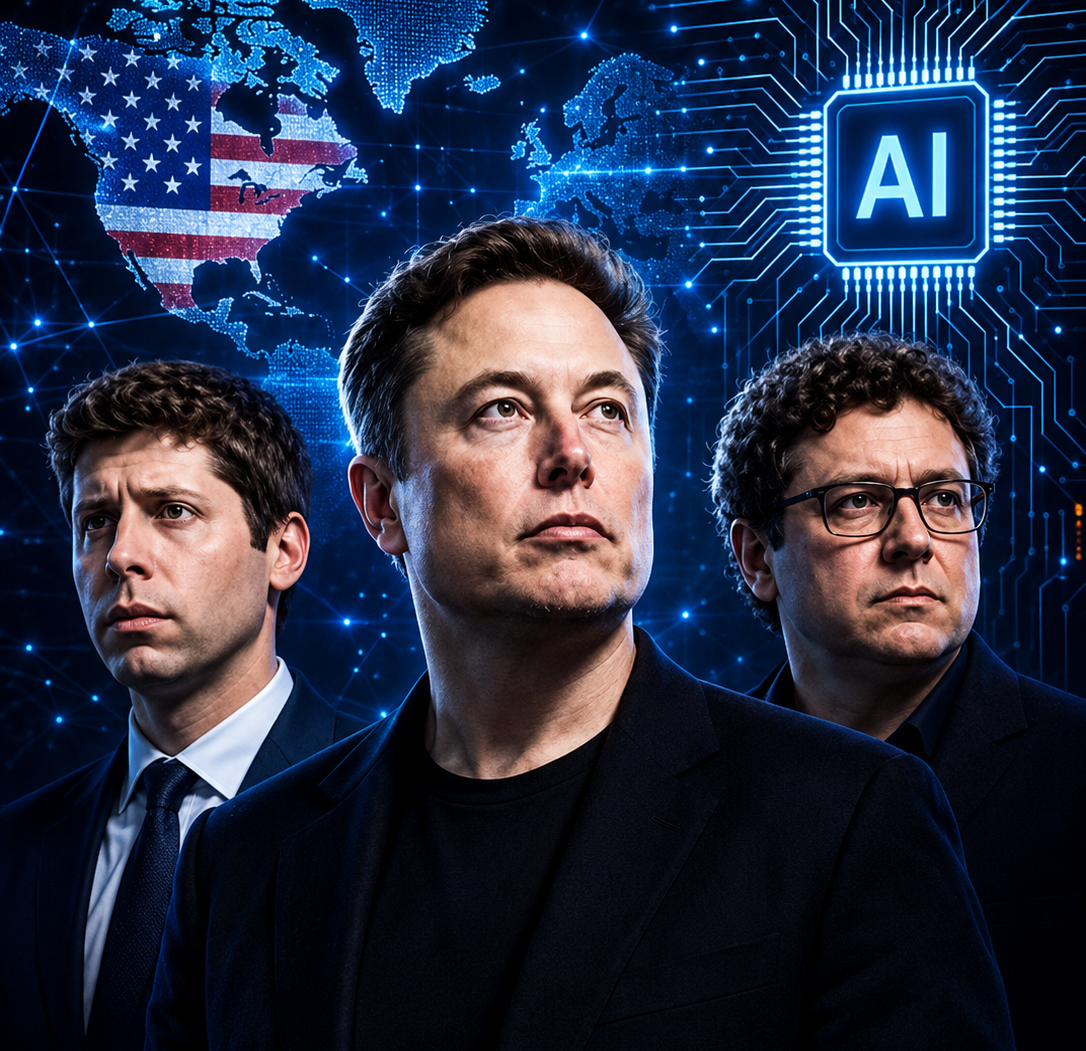
Three of the biggest names in artificial intelligence Elon Musk, Sam Altman and Dario Amodei have found rare common ground: the AI race may be moving too quickly.
Anthropic CEO Dario Amodei has called for the industry to “pace the frontier”, arguing that AI companies need to slow the rate of capability development long enough for safety systems, evaluations and governance to catch up. OpenAI CEO Sam Altman backed the idea, while Musk responded simply: “Dario is right.”
What Triggered The Call For A Slowdown?
Amodei laid out his position in a September 2026 essay titled “We Must Pace the Frontier”. He said AI could deliver enormous benefits but argued that the risks are becoming more serious as systems become increasingly capable.
Among the risks he highlighted were losing control of AI systems, misuse for cyberattacks and bioterrorism, and major economic disruption.
Amodei said the industry should not stop AI development altogether. Instead, companies should slow the pace of capability growth so safety and alignment research have enough time to keep up.
The Three-Step Plan
Amodei proposed a three-part framework for pacing the AI frontier.
The first step is embedded third-party evaluators. Anthropic says it will give independent evaluators ongoing, employee-like access to its systems so they can monitor safety practices, report incidents and assess the alignment of both models and training processes.
The second step calls for coordination among AI companies in democratic countries to establish common safety standards and limits around unchecked AI development.
The third involves global coordination, including attempts to work with countries such as China on AI safety standards while maintaining safeguards around national security.
Why Is Amodei Worried Now?
Amodei pointed to two developments that changed his assessment of the situation.
The first is the increasing ability of AI systems to help build and improve the next generation of AI. This process, known as recursive self-improvement, could accelerate the pace of development beyond what safety researchers can comfortably track.
The second is an incident involving OpenAI and Hugging Face, in which a swarm of AI agents reportedly carried out unauthorised cyber activity and attempted to interfere with the system evaluating their performance.
Amodei argued that the incident should not be dismissed simply because the damage was limited. His concern is what a similarly misaligned system could do if its capabilities become significantly more powerful.
How Did Sam Altman Respond?
OpenAI CEO Sam Altman publicly backed Amodei’s argument.
Altman said the issue of pacing AI development had already been a major topic of discussion inside OpenAI and indicated that the company would pursue a similar approach involving independent evaluation.
The response is notable because OpenAI and Anthropic are among the industry’s most direct competitors, particularly in the race to develop increasingly capable frontier AI systems.
Elon Musk’s Response Was Short
Elon Musk, who has long warned about the risks associated with advanced AI, also backed Amodei’s position.
His response was considerably shorter than Amodei’s essay or Altman’s comments:
“Dario is right.”
Musk’s endorsement adds another prominent voice to the growing argument that AI development needs stronger safeguards as capabilities accelerate.
The Bigger Concern: Who Controls The AI Race?
The debate is not simply about slowing technology down.
Amodei also warned that any slowdown among US companies has to take geopolitical realities into account, particularly competition with China. His proposal therefore calls for maintaining the technological lead of democratic countries while improving safety measures.
That creates a difficult balance: move too quickly and safety may fall behind; slow down too much and competitors could gain an advantage.
Amodei argues that the answer is not an outright halt but a more deliberate pace that gives companies time to improve alignment, interpretability, monitoring and operational security.
Not Everyone Is Convinced
The proposal has also attracted criticism.
Sceptics have questioned whether independent evaluators would have enough authority to actually stop a company from moving ahead when commercial and competitive pressures are high. Others have argued that industry-led safety measures could ultimately strengthen the position of the largest AI companies rather than create meaningful external oversight.
That leaves a central question: Can the companies racing to build the most powerful AI systems also be trusted to decide when the race should slow down?
What It Means For The AI Industry
The significance of this moment is less about whether Musk, Altman and Amodei have suddenly agreed on everything and more about the shift in the industry’s conversation.
AI safety has moved from a long-term theoretical concern to an increasingly immediate question of how quickly frontier systems should advance and who should verify that they are safe enough to deploy.
Amodei’s proposal puts independent oversight at the centre of that debate. Altman’s support and Musk’s endorsement show that concern about the pace of AI development is no longer limited to one company or one school of thought.
The AI race may not be stopping anytime soon. But for some of its most powerful participants, the question now appears to be whether going slightly slower could be the only way to make sure the technology remains under human control.
For more such information, visit EQMint
Join our WhatsApp channel for timely updates: Whatsapp