

Author: Aadarsh Patel | EQMint
Gold’s spectacular rally is facing a reality check.
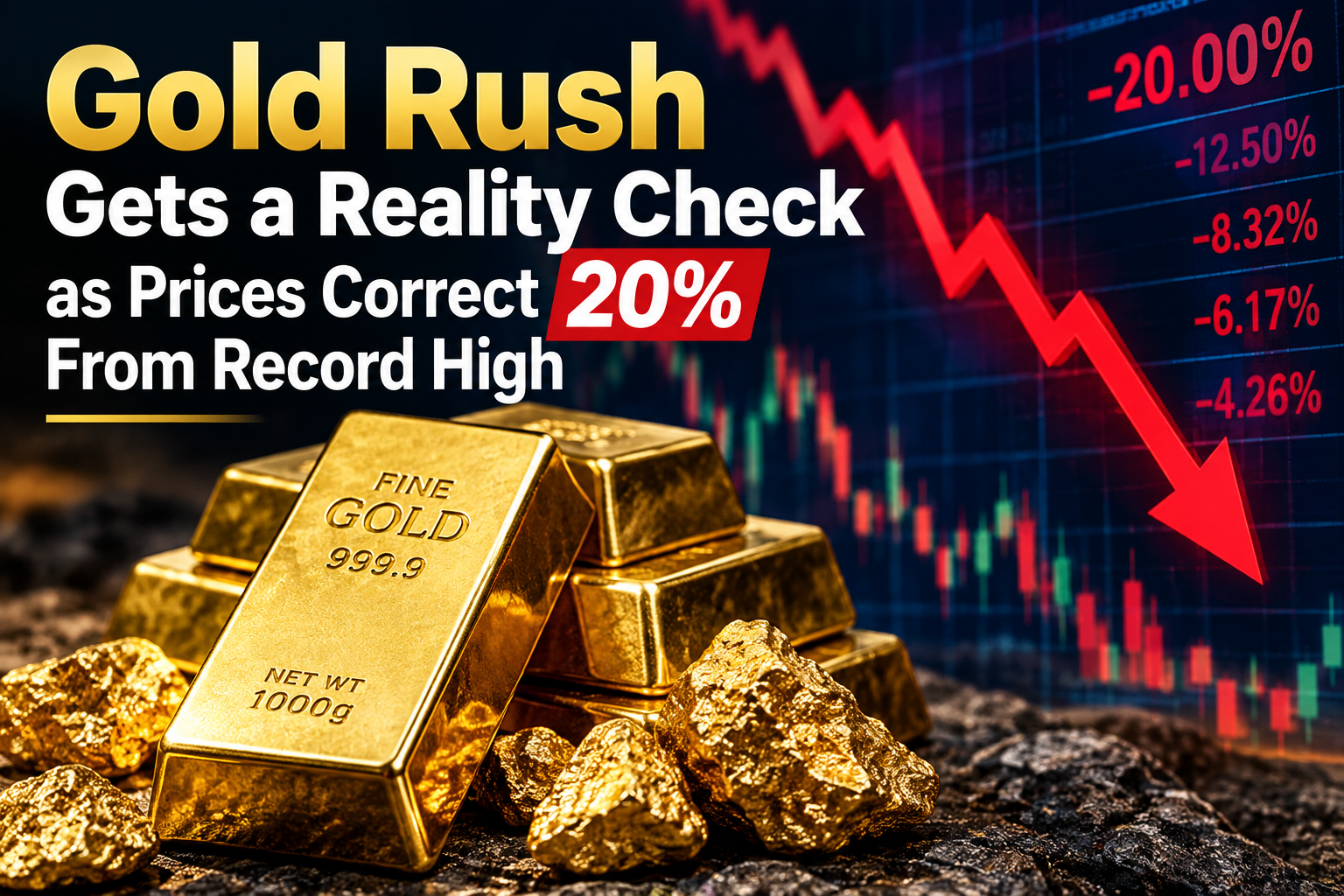
After climbing to record levels, the precious metal has seen a sharp correction, with prices falling around 20% from their peak. Yet, investor interest in gold has remained strong, particularly in India’s growing Gold ETF market.
The divergence highlights an important shift in how Indians are approaching gold. What was traditionally viewed as jewellery or a long-term store of value is increasingly being treated as a financial asset that can be accessed through exchange-traded funds.
Gold Prices Fall After Record Highs
The recent correction comes after an extraordinary rally in gold prices.
The sharp rise encouraged investors to increase their exposure to the metal, but the subsequent decline has raised questions about whether some investors entered the market primarily because of its recent performance.
According to the NDTV report, gold’s correction illustrates the difference between the long-term role of gold in a portfolio and the experience of investors who buy after a prolonged rally.
For investors who held a relatively small allocation to gold, the decline may represent a normal period of volatility. Those who substantially increased their exposure during the rally face a different situation because the correction affects a larger portion of their portfolio.
Gold ETFs Continue to Attract Indian Investors
Despite the price correction, demand for gold ETFs has remained elevated.
Data from the Association of Mutual Funds in India (AMFI) showed that Gold ETFs attracted approximately ₹2,596 crore in August 2026, up from around ₹1,558 crore in July. That represents an increase of roughly 67% in monthly inflows.
The rise indicates that Indian investors are increasingly using ETFs to gain exposure to gold without directly purchasing and storing physical metal.
Gold ETFs trade on stock exchanges and are designed to track the domestic price of gold, making them a relatively straightforward way for investors to gain financial exposure to the commodity.
Why Are Investors Still Buying Gold?
Several factors have supported gold’s popularity.
Global economic uncertainty, inflation concerns, geopolitical tensions and changes in monetary policy have historically contributed to demand for gold as a defensive asset.
The metal has also benefited from growing acceptance among investors as part of a diversified portfolio.
However, rising prices can create another dynamic: momentum-driven investing.
When an asset delivers strong returns over an extended period, investors can begin increasing their allocation because of its recent performance rather than because it fits their long-term financial objectives.
That is one of the risks highlighted by market observers following the latest correction.
The Risk of Chasing Gold After a Rally
The recent correction offers a reminder that even traditionally defensive assets can experience significant price swings.
An investor who bought gold years ago at substantially lower prices may view a 20% decline differently from someone who entered near the peak.
This makes the entry point and portfolio allocation important.
The question for investors is therefore not simply whether gold will rise or fall in the short term. It is also how much gold they hold relative to their overall portfolio and why they bought it in the first place.
Gold ETFs Become a Bigger Part of India’s Investment Landscape
Gold ETFs have become increasingly prominent as Indian investors look beyond traditional physical gold.
Recent AMFI data shows that the category has continued to attract substantial inflows. Gold ETF assets under management also rose sharply as gold prices climbed.
The growth reflects a broader change in investor behaviour.
Instead of buying jewellery or physical bars, investors can now obtain gold exposure through market-linked products that can be bought and sold through their brokerage accounts.
This has helped bring gold further into India’s mainstream investment ecosystem.
What the Correction Means for Investors
The latest fall does not by itself determine what gold will do next.
Gold prices are influenced by several factors, including global interest rates, inflation expectations, currency movements, central-bank activity, geopolitical developments and investor demand.
For individual investors, however, the correction highlights the importance of distinguishing between owning gold as part of a diversified portfolio and making a large allocation after a sustained rally.
As the NDTV report notes, investors who increased their gold exposure substantially during the rally may need to reassess whether their current allocation still matches their broader financial plan.
The Bigger Market Story
India’s relationship with gold is changing.
The metal remains deeply embedded in Indian households, but its role as an investment is becoming increasingly sophisticated. Gold ETFs, mutual funds and other financial products have made it easier for investors to participate in gold’s price movements without owning physical metal.
The recent correction, however, shows that this convenience does not remove market risk.
Gold may have a reputation as a safe-haven asset, but buying an asset after a major rally can still expose investors to substantial short-term volatility.
The current episode therefore offers two parallel stories: India’s growing appetite for financial gold and the risks that emerge when a long-running rally attracts investors chasing past returns.
For more such information, visit EQMint
Join our WhatsApp channel for timely updates: Whatsapp