

Author: Aadarsh Patel | EQMint
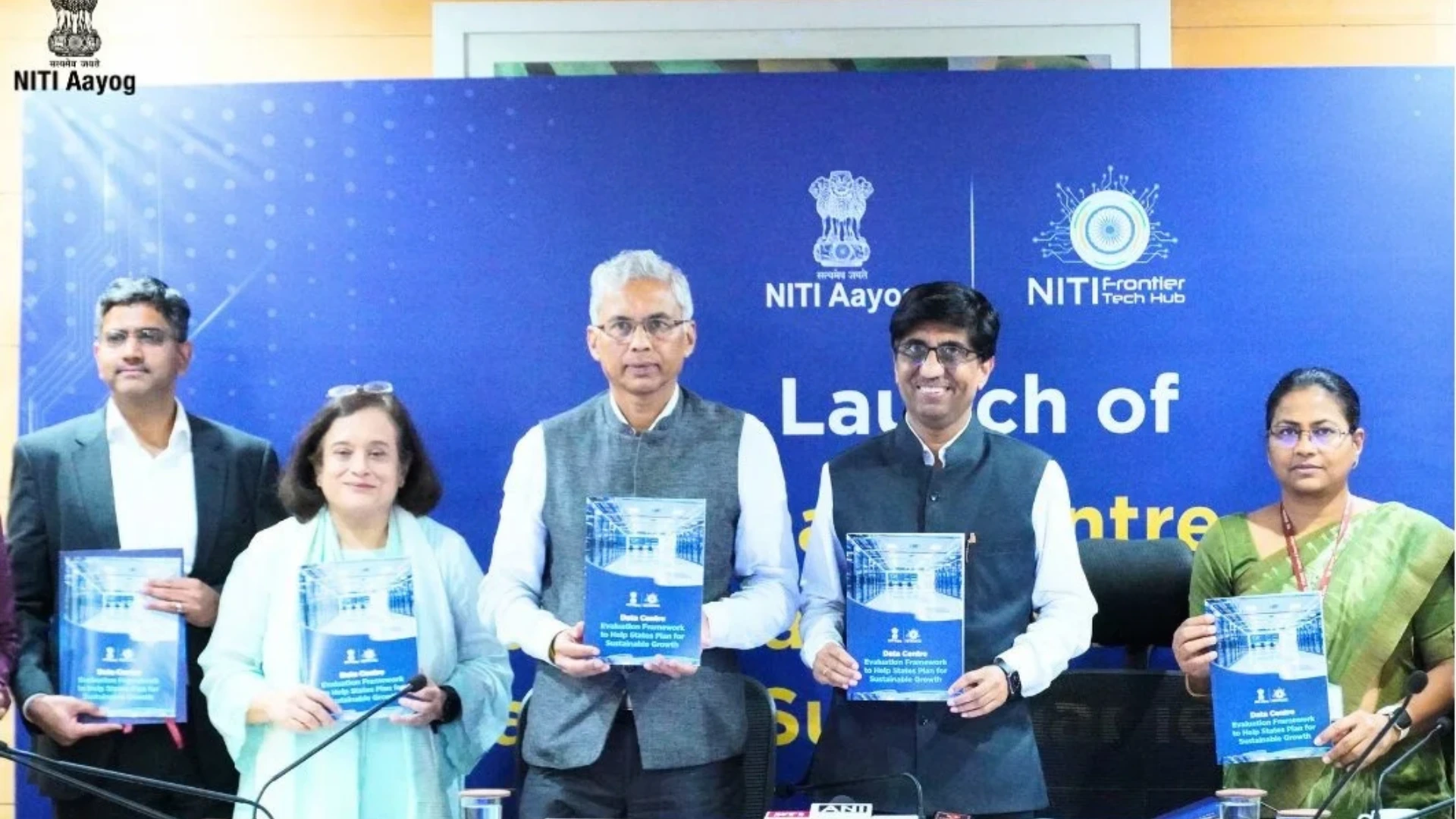
NITI Aayog’s Frontier Tech Hub released the Data Centre Evaluation Framework to Help States Plan for Sustainable data centre growth on October 14, 2026. The framework gives state governments a common method to assess data centre proposals by examining infrastructure readiness, resource requirements, investment potential and long-term economic benefits.
The report comes as demand for data centres grows with artificial intelligence (AI), cloud computing and other digital services. These facilities need large amounts of electricity, water, land and supporting infrastructure, making careful planning important for sustainable expansion.
Why now?
India is attracting investment in AI and digital infrastructure, but rapid data centre expansion can put pressure on local electricity grids and water supplies. NITI Aayog’s sustainable data centre growth encourages states to assess whether essential resources are available before committing support to proposed projects.
The approach aims to help governments prepare infrastructure in advance and reduce delays during project development, while avoiding an additional layer of regulation.
What it means?
The framework is built around 5 pillars:
-
- Power and energy: Assess electricity availability, grid capacity and energy requirements.
-
- Water and cooling: Evaluate water availability and long-term demand for cooling systems.
-
- Siting and environmental sustainability: Consider land suitability, environmental conditions and local resource constraints.
-
- Economic and strategic value: Examine the wider economic benefits of proposed investments.
-
- Policy, governance and implementation: Improve coordination, planning and project execution.
The report also recommends phased capacity development based on actual power availability. Water assessments should consider demand over a 20 to 30-year period, including peak requirements and existing local consumption.
What states are being encouraged to do
The framework encourages states to connect investment incentives with measurable outcomes, such as job creation, local procurement and renewable energy use. It also points towards identifying suitable data centre zones and improving coordination between agencies handling project approvals.
These measures could help states assess the long-term public benefits of projects alongside the capital they attract. The framework is intended as a decision-support tool, allowing states to adapt its recommendations to local priorities.
What’s next?
Implementation will depend on how state governments apply the framework to investment proposals, infrastructure planning and incentive policies. Its impact will become clearer as states translate the recommendations into project evaluation and development practices.
EQMint Take on sustainable data centre growth
India’s data centre growth depends on reliable digital infrastructure, and that infrastructure needs reliable access to power, water and land. NITI Aayog’s framework gives states a common basis for weighing investment opportunities against local resource constraints.
The next test is implementation. States that plan infrastructure early and measure the economic and environmental outcomes of projects will be better placed to support sustained growth in AI and cloud computing.
For more such information, visit EQMint
Join our WhatsApp channel for timely updates: Whatsapp