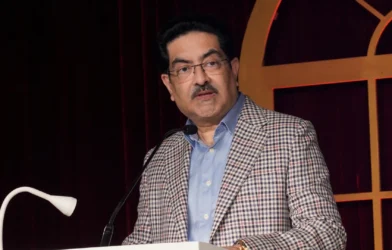


In a recent episode of the EQMint podcast, Dr. Uday Narang, founder and chairman of Omega Seiki Mobility, discussed why energy independence could shape India’s industrial future. Dr. Uday Narang Vision argument connects 3 major themes: nuclear power, indigenous manufacturing and the need for Indian businesses to think beyond short-term gains.
Author: Aadarsh Patel | EQMint Originals | Founder Stories
The central question is worth examining: Can India’s energy ambitions keep pace with its growing demand for artificial intelligence and advanced technology?
Why AI’s Future Depends on Energy
AI growth requires substantial computing infrastructure. Data centres need electricity to run servers, process information and maintain cooling systems. As businesses adopt AI tools and computing requirements expand, reliable power becomes an increasingly important part of the technology supply chain.
During the podcast, Dr. Narang connected this demand with India’s dependence on imported energy. He cited India’s heavy reliance on foreign energy supplies, arguing that energy independence is closely tied to economic strength.
His broader point is that India’s digital ambitions need a strong domestic energy base. Expanding computing capacity, manufacturing advanced products and supporting new industries will require dependable electricity over the long term.
Dr. Uday Narang’s Vision for 100 GW of Nuclear Power
One of the most striking points in the discussion was Dr. Narang’s proposed nuclear power target.
He advocated scaling India’s nuclear capacity from approximately 8–10 GW to 100 GW by 2047. The target reflects his view that nuclear energy should play a larger role in India’s long-term energy strategy.
Nuclear power can generate electricity continuously, independent of daily sunlight or wind conditions. This characteristic makes it relevant to discussions about round-the-clock electricity demand from industrial facilities and data centres.
Reaching 100 GW, however, would require substantial investment, reactor construction, skilled workers, fuel planning, regulatory oversight and a domestic supply chain capable of supporting projects over many years.
The target is therefore a long-term ambition, with execution depending on policy, financing, technology and project delivery.
The Manufacturing Opportunity Behind Nuclear Energy
The podcast also explored the importance of precision engineering in India’s energy ambitions.
Dr. Narang’s strategic investment in Prime Industries Limited connects to this theme. The company is involved in manufacturing complex industrial components, including the calandria, a key structure in certain nuclear reactor designs.
A nuclear power programme needs an extensive industrial ecosystem. Reactor components, specialised fabrication, quality assurance, testing and engineering expertise all play a role in bringing projects to completion.
Building these capabilities within India can create opportunities for domestic manufacturers and technical suppliers.
For entrepreneurs, the opportunity extends beyond operating a power plant. It can include supplying the equipment, components and engineering services required throughout the energy infrastructure chain.
India’s Next Growth Phase Could Span AI, Nuclear and Quantum Technology
Dr. Narang also discussed the need to invest in industries that could shape India’s future, including quantum technology, space exploration and renewable energy.
These sectors have different technical requirements, but they share a need for research, skilled talent, patient capital and the ability to execute complex projects.
India’s space sector provides an example of how domestic technical capabilities can grow through sustained investment and project execution. Dr. Narang suggested that similar long-term thinking could help the country develop other advanced industries.
The underlying message is that industrial progress requires businesses to build expertise over time. Research and development, manufacturing quality and execution all influence whether an idea becomes a commercially successful product or service.
Dr. Uday Narang Vision Business Philosophy: Resilience Over Short-Term Wins
The conversation also moved from industrial strategy to entrepreneurship.
Dr. Narang described resilience as a defining principle in how he approaches business. Drawing a comparison with sports, he said:
“If you ask me what is my strength on any company, we never give up. We might lose in one or two matches or three matches. We going to come back and win the world.”
He also spoke about learning from setbacks, saying:
“Take failures as a learning experience and take that across the line.”
These remarks connect his business philosophy with the long timelines associated with energy infrastructure and advanced manufacturing. Large industrial projects can take years to develop, and companies need to manage technical, financial and operational setbacks along the way.
For entrepreneurs, the lesson is to evaluate failures, improve execution and maintain a clear long-term objective.
What Nuclear Energy Could Mean for India’s Industrial Future
India’s energy strategy will influence several parts of its economy, from digital infrastructure and electric mobility to heavy manufacturing.
A larger nuclear power programme could contribute to reliable, low-carbon electricity generation. Its role will depend on how quickly projects can be built, how costs are managed and how nuclear power works alongside renewable energy, storage, transmission infrastructure and other sources.
For AI infrastructure, electricity availability is one part of a wider equation. Data centres also require suitable land, network connectivity, cooling systems, investment and dependable grid infrastructure.
The broader opportunity lies in building these capabilities together.
Dr. Narang’s perspective brings attention to a part of the AI conversation that can receive less attention than chips and software: the energy and industrial systems that allow advanced computing to operate at scale.
The Road Ahead: Building for 2047
Dr. Uday Narang’s comments on the EQMint podcast connect India’s energy ambitions with its wider manufacturing and technology goals.
His proposed 100 GW nuclear target by 2047 reflects an ambitious vision for domestic energy capacity. His comments on precision engineering and entrepreneurship point to another requirement: developing the companies and technical skills needed to build complex infrastructure in India.
The AI economy will depend on computing power, electricity, manufacturing and investment working together. India’s ability to develop these areas over the coming decades will shape its capacity to compete in advanced industries.
For business leaders and entrepreneurs, the takeaway is clear: long-term industrial growth requires patience, technical capability and consistent execution.
Frequently Asked Questions
1. What did Dr. Uday Narang say about nuclear energy in India?
Dr. Uday Narang advocated increasing India’s nuclear power capacity from approximately 8–10 GW to 100 GW by 2047. He connected nuclear power with energy independence and the electricity requirements of future industries.
2. Why is nuclear energy relevant to AI data centres?
AI data centres require reliable electricity to operate servers and cooling systems. Nuclear power can provide continuous electricity generation, making it one potential source for supporting growing computing demand.
3. What is the role of Prime Industries Limited in this discussion?
The podcast summary links Dr. Narang’s strategic investment in Prime Industries Limited with India’s precision-manufacturing capabilities, including the production of complex components such as the calandria used in certain nuclear reactor designs.
4. What other industries did Dr. Narang discuss?
He discussed quantum technology, space exploration, renewable energy, research and development, and the importance of building advanced technical capabilities in India.
5. What is Dr. Uday Narang’s approach to entrepreneurship?
He stressed resilience, learning from failure and maintaining a long-term outlook. His comments compared business setbacks with losing individual matches before returning to compete again.
6. Can nuclear energy alone meet India’s future electricity demand?
That cannot be established from the podcast summary. Nuclear power could contribute to India’s electricity supply, but meeting future demand will depend on the combined development of generation capacity, transmission networks, renewable energy, storage and other infrastructure.
For more such information visit EQMint
Join our Whatsapp channel for timely updates: Whatsapp