Synopsis: Cleantech Solar signed an MoU with Tamil Nadu on 25 November to build about 1.1 GW of solar, wind and battery storage for Rs 8,140 crore over 2027-2031. EQMint’s analysis shows a blended cost of about Rs 7.4 crore per MW and an implied capacity factor near 26%, using company figures.
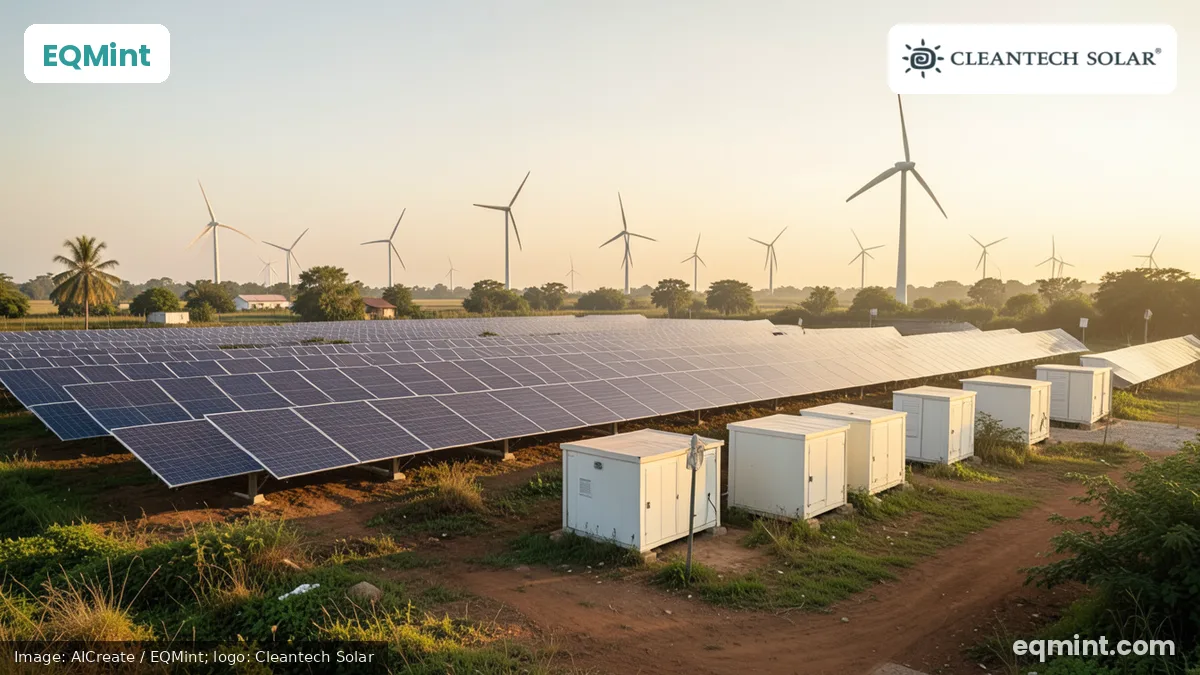
Singapore-headquartered Cleantech Solar has signed a memorandum of understanding (MoU) with the Government of Tamil Nadu to develop about 1.1 GW of new renewable energy capacity in the state, the company said in Chennai on 25 November 2026. The programme combines solar, wind and battery energy storage systems (BESS) and carries planned capital expenditure of about Rs 8,140 crore over five years, from 2027 to 2031.
The company expects the portfolio to generate about 2.49 billion kWh (249 crore units) of electricity a year and cut carbon dioxide emissions by about 1.84 million tonnes a year. The power is meant for commercial and industrial (C&I) customers in Tamil Nadu.
The MoU was signed at the second VETTRI Tamil Nadu Investment and Conversion Conclave, where the state signed 78 MoUs worth Rs 58,214 crore with projected employment of 65,786. The proposal, filed through Cleantech Solar’s Indian project arm CSE Development (India) Pvt Ltd, was the largest single commitment at the event.
EQMint analysis: cost per MW, implied output and emissions math
Cleantech Solar has not given the split between solar, wind and storage, so the numbers below are blended across all three. They use only the company’s disclosed capacity, investment, output and emissions figures, plus the conclave totals reported on the same day.
| Metric | Value |
|---|---|
| Investment per MW (blended) | About Rs 7.4 crore |
| Implied capacity utilisation factor (2.49 bn kWh / 1.1 GW x 8,760 hours) | About 25.8% |
| Implied CO2 avoided per kWh | About 0.74 kg |
| Investment per unit of annual output | About Rs 32.7 per kWh |
| New capacity vs existing Tamil Nadu assets (400 MWp) | About 2.75x |
| Share of conclave MoU value (Rs 58,214 crore) | About 14.0% |
| Share of conclave renewable MoUs (Rs 11,142 crore) | About 73.1% |
| Jobs per Rs 100 crore: this MoU vs conclave average | About 25 vs about 113 |
Source: Cleantech Solar press release (25 November 2026), conclave totals via DQ India and DT Next; ratios computed by EQMint, as of 26 November 2026.
The implied capacity factor of about 26% is a blended number for a portfolio that mixes solar and wind generation, and the true figure for each plant will depend on the final technology split. The emissions estimate works out to roughly 0.74 kg of CO2 avoided for every unit generated, which is effectively the grid-displacement factor behind the company’s 1.84 million tonne figure. The cost per MW also includes battery storage, so it should not be compared directly with solar-only project costs.
The jobs ratio highlights a common pattern: renewable projects need large upfront capital but relatively few permanent staff. DT Next reported 2,000 jobs for the CSE Development proposal, about 25 per Rs 100 crore, against an average of about 113 per Rs 100 crore across all 78 MoUs. Cleantech Solar’s own release did not give a jobs number.
Company and portfolio
Cleantech Solar supplies renewable power to companies across Asia, with about 1.2 GWp of assets in operation, under construction and in development across India, Singapore, Cambodia, Indonesia, Malaysia, Thailand and Vietnam. Its investors include Keppel Ltd and the Keppel Asia Infrastructure Fund. In Tamil Nadu, it already operates more than 400 MWp of solar parks, wind and rooftop solar assets that sell power under long-term open-access and captive agreements, including a 200 MWp park in Thoothukudi.
Chief executive Sanjay Gupta said that “Tamil Nadu is a strategic market for Cleantech Solar” and that the MoU supports faster investment in combined solar, wind and storage.
The C&I open-access market this MoU targets has been growing fast. EQMint earlier reported that open-access solar additions hit a record 8.4 GW in the first nine months of 2026, and storage is increasingly packaged with solar, as seen in Sterling Wilson’s recent solar and BESS orders.
What happens next
An MoU is a statement of intent, not a binding order. Actual capacity will depend on land, transmission connectivity, state open-access approvals and long-term contracts with industrial buyers over 2027-2031. The company has not disclosed the technology split, the districts involved or the financing plan. Tamil Nadu’s conclave signed four other renewable MoUs worth about Rs 3,000 crore combined, and the state says it is focused on converting signed proposals into projects. Industries Minister S. Keerthana said the conclave is “about what happens after the cameras leave.”
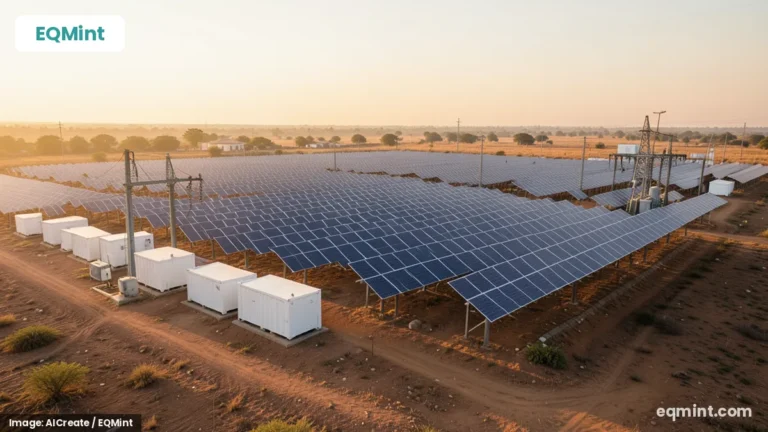
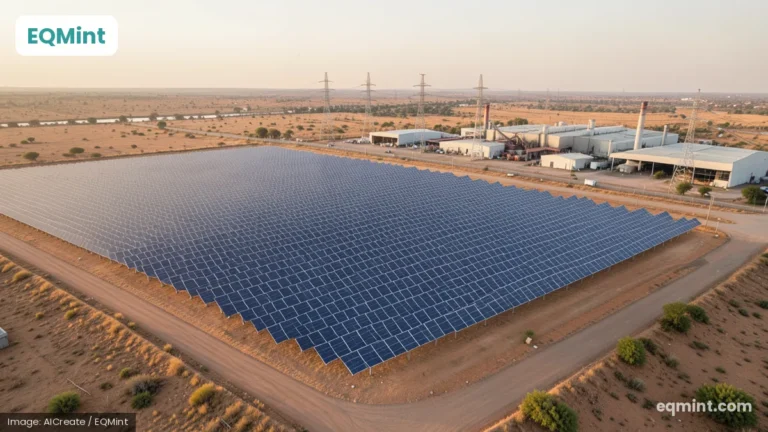
Image credit: AICreate / EQMint (representational); logo: Cleantech Solar (official website).
Sources
- Source: Cleantech Solar – MoU for INR 8,140 crore investment in Tamil Nadu
- Source: DQ India – Tamil Nadu VETTRI Conclave 2026 secures Rs 58,214 crore
- Source: DT Next – Rs 58,214 crore in investments, 65,786 jobs
- Source: Power Peak Digest – Cleantech Solar plans Rs 8,140 crore investment
Disclaimer: This article is for information purposes only and is not investment advice.
For more such information, visit EQMint
Join our WhatsApp channel for timely updates: Whatsapp
Support EQMint: tap below to add us as a preferred source on Google.
Get the EQMint Daily
Market moves, IPOs and startup funding news in your inbox every morning.