Synopsis: India’s sugar output is set to fall 15% this season, to about 265 lakh tonnes, but supply for kitchens falls only about 5%. The reason is ethanol: the 32 lakh tonnes of sugar that went into petrol blending last season has been cut to zero by the government.
Last updated on 29 November 2026.
On 25 November 2026, the Indian Sugar and Bio-Energy Manufacturers Association (ISMA) placed its first estimate of sugar production for the 2026-27 season at about 265 lakh tonnes, the lowest in about a decade. A day later, listed sugar companies’ shares rose as much as about 14%. This explainer sets out why output is falling, how ethanol blending connects sugar to petrol, and why the ethanol rule matters more for supply than the crop itself.
EQMint analysis: the ethanol ban offsets about 69% of the crop loss
ISMA’s numbers have two layers. Gross production, meaning all the sugar the cane could make, falls from 312.13 lakh tonnes to 265.21 lakh tonnes, a drop of 46.92 lakh tonnes or 15%. Net production, meaning sugar actually left for food after some is sent to ethanol, falls from 279.71 lakh tonnes to 265.21 lakh tonnes, a drop of only 14.5 lakh tonnes or about 5%.
The gap between the two is ethanol. Last season, 32.42 lakh tonnes of sugar was diverted to make ethanol. This season, ISMA assumes none. That 32.42 lakh tonnes covers about 69% of the 46.92 lakh-tonne fall in gross output (EQMint calculation). Without the ethanol rule, net supply would have fallen by roughly the full 15%.
| ISMA estimate (lakh tonnes) | 2025-26 | 2026-27 (preliminary) | Change |
|---|---|---|---|
| Gross sugar production | 312.13 | 265.21 | -15.0% |
| Sugar diverted to ethanol | 32.42 | 0 | -100% |
| Net sugar production | 279.71 | 265.21 | -5.2% |
| Cane area (lakh hectares) | 57.35 | 55.53 | -3.2% |
Source: ISMA preliminary estimate, 25 November 2026 (via ChiniMandi). Percentage changes calculated by EQMint.
Why the crop is smaller
ISMA linked the lower estimate to climate variability associated with El Niño, unseasonal rain, drought-like conditions and moisture stress in some areas, and waterlogging and floods in others. The fall is concentrated in two states:
| State (gross output, lakh tonnes) | 2025-26 | 2026-27 | Change |
|---|---|---|---|
| Maharashtra | 112.45 | 86.85 | -22.8% |
| Uttar Pradesh | 95.42 | 88.96 | -6.8% |
| Karnataka | 61.78 | 46.19 | -25.2% |
| All India | 312.13 | 265.21 | -15.0% |
Source: ISMA state-wise estimates, 25 November 2026. Changes calculated by EQMint.
Maharashtra’s cane area fell about 10% and Karnataka’s about 7%, while Uttar Pradesh’s area was flat. With Maharashtra’s drop, Uttar Pradesh is now estimated to be the largest producer this season.
How sugar ends up in petrol
India blends ethanol into petrol under its Ethanol Blended Petrol programme; E20 petrol contains 20% ethanol. Ethanol can be made from sugarcane juice, sugar syrup and molasses, or from grains such as rice and maize. When mills make ethanol from cane juice or B-heavy molasses, that cane is no longer turned into sugar, which is why it is counted as sugar “diverted” to ethanol.
In October 2026, the government decided that sugar diversion for ethanol would be reduced to zero for the 2026-27 Ethanol Supply Year, which runs from 1 November 2026 to 31 October 2027. The oil marketing companies’ tender of 16 October, for about 1,100 crore litres of ethanol, quoted the government’s direction and sought no ethanol from cane juice, sugar, syrup or B-heavy molasses. On 22 October, the Department of Food and Public Distribution told sugar mills and states that ethanol may not be made from these feedstocks during the year. The blending programme continues, with ethanol now expected mostly from grain and C-heavy molasses.
The government has done this before: it barred cane juice and syrup for ethanol in the 2023-24 supply year and lifted the curb for 2024-25.
What it means for prices and supply
Even with no diversion, ISMA’s 265 lakh tonnes is below annual consumption, which industry estimates place at about 280 to 285 lakh tonnes. The season began with stocks of about 37.5 lakh tonnes on 1 October 2026, against nearly 50 lakh tonnes a year earlier, according to industry reports, and the government approved a duty-free import quota of 10 lakh tonnes of raw sugar in August 2026.
Prices have already moved. According to Department of Consumer Affairs data cited by INDmoney, the average retail price of sugar was ₹60.86 a kg on 25 November 2026, about 28% higher than a year earlier. For mills, higher sugar prices can lift realisations, but they also lose ethanol sales from cane juice and pay a higher cane price: the fair and remunerative price rose to ₹365 a quintal for 2026-27. ISMA has said its estimate may be revised, with the next assessment due in January 2027.
For more on related themes, see EQMint’s coverage of how food is weighted in India’s new CPI series.
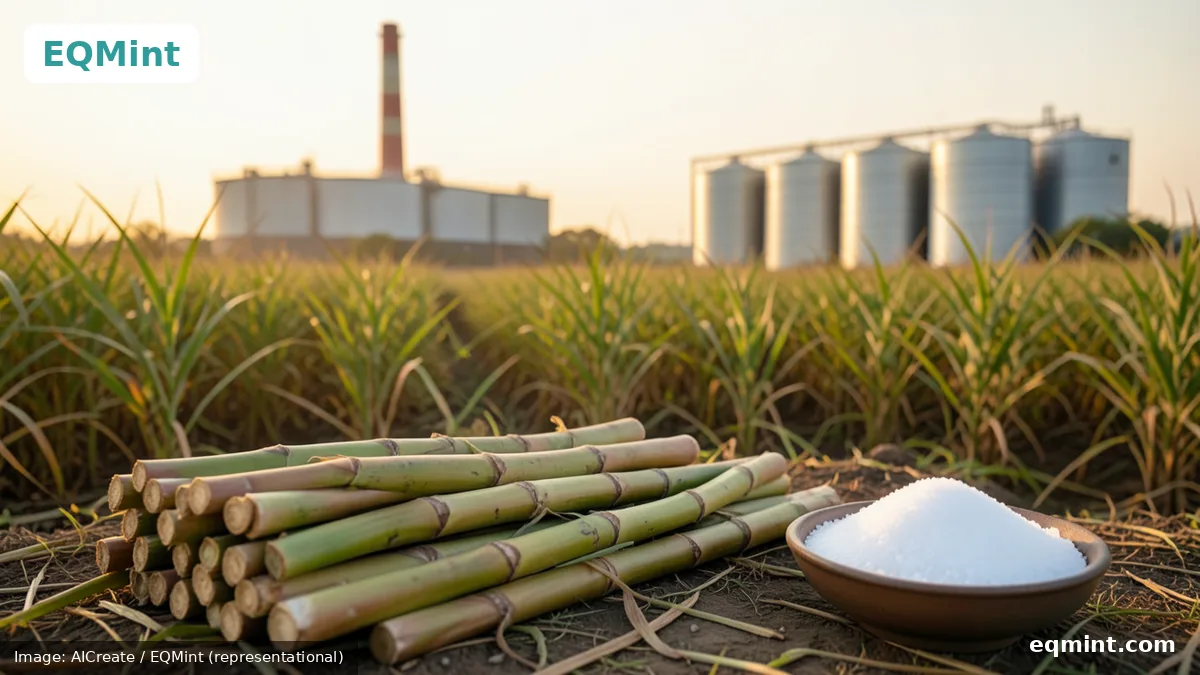
Image: AICreate / EQMint (representational).
Sources
- Source: ISMA preliminary sugar production estimates for 2026-27, via ChiniMandi (25 November 2026)
- Source: ChiniMandi, No sugar diversion for ethanol in 2026-27: ISMA (November 2026)
- Source: Transclew, OMC ethanol tender of 16 October 2026 and the zero-diversion direction
- Source: Informist, Govt bans sugar diversion for ethanol in 2026-27 (17 October 2026)
- Source: The Wire, Food Ministry letter to sugar mills (22 October 2026)
- Source: Food Business MEA, opening sugar stocks (5 October 2026)
- Source: INDmoney, retail sugar price data and import quota (November 2026)
- Source: IIFL, sugar demand estimate and 26 November share moves
- Source: Deccan Herald, 2023-24 curb lifted for 2024-25
Disclaimer: This article is for information purposes only and is not investment advice.
For more such information, visit EQMint
Join our WhatsApp channel for timely updates: Whatsapp
Support EQMint: tap below to add us as a preferred source on Google.
Get the EQMint Daily
Market moves, IPOs and startup funding news in your inbox every morning.