Synopsis: ACME Solar Holdings disclosed four battery storage blocks in Rajasthan through filings between 25 and 27 November, totalling 166.43 MW and 670.59 MWh of discharge capacity. EQMint analysis of the installed figures shows about 87.5% of installed battery energy is counted as usable discharge, with most blocks sized for four-hour supply.
ACME Solar Holdings Limited told the stock exchanges on 27 November 2026 that its wholly owned subsidiary ACME Greentech Seventh Private Limited has commissioned 70.19 MW / 280.760 MWh of battery energy storage system (BESS) capacity in Rajasthan. Commercial operation for this block is scheduled from 29 November 2026, according to the disclosure.
The filing came a day after the company reported a 63.78 MW / 255.12 MWh BESS block at its NHPC firm and dispatchable renewable energy (FDRE) project in Jaisalmer district, and two days after it disclosed two smaller blocks at Chittorgarh. Together, the four blocks add 166.43 MW and 670.59 MWh of discharge capacity across five projects in a single week.
What ACME Solar commissioned this week
The latest block is split between Kelan in Bikaner district, part of a 300 MW / 1,200 MWh project, and Sanawara in Jaisalmer district, part of a 150 MW / 600.166 MWh project. Only the battery portion is operational; the generation part is still under development.
On 26 November, ACME said its subsidiary ACME Hybrid Urja Private Limited completed the 63.78 MW block on 25 November at the NHPC FDRE project in Mehar Nagar village, Pokharan tehsil, with commercial operation from 27 November. That BESS component is rated at 280 MW / 1,120 MWh of discharge capacity, with NHPC Limited as offtaker.
On the evening of 25 November, ACME Sigma Urja Private Limited reported two blocks at Neemri village, Chittorgarh: 17.91 MW / 74.323 MWh at one FDRE project and 14.55 MW / 60.387 MWh at a separate FDRE project contracted with The Tata Power Company Limited, both operational from 26 November.
EQMint analysis: usable energy is about 87.5% of installed
ACME’s filings report two numbers for each block: installed energy (the nameplate battery size) and discharge energy (what can be delivered to the grid). The gap reflects the extra battery capacity developers build in to cover conversion losses and the gradual fall in battery capacity over a project’s life. EQMint compared the two figures for the three blocks where both are disclosed.
| Block (commissioned) | Discharge | Installed | Usable share | Hours of supply |
|---|---|---|---|---|
| Chittorgarh FDRE (24 Nov) | 17.91 MW / 74.323 MWh | 80.240 MWh | 92.6% | 4.15 |
| Tata Power FDRE, Chittorgarh (24 Nov) | 14.55 MW / 60.387 MWh | 65.195 MWh | 92.6% | 4.15 |
| NHPC FDRE, Jaisalmer (25 Nov) | 63.78 MW / 255.120 MWh | 300 MWh | 85.0% | 4.00 |
| Bikaner and Jaisalmer sites (27 Nov filing) | 70.19 MW / 280.760 MWh | Not clearly legible | n.a. | 4.00 |
| Total | 166.43 MW / 670.59 MWh | 445.435 MWh (first three) | 87.5% (first three) | 4.03 (all four) |
Source: ACME Solar Holdings exchange disclosures dated 25, 26 and 27 November 2026 as reported by SolarQuarter, EquityBulls, Business Today and Business Upturn. Installed figure for the 27 November block left out because the published text was not clearly legible. EQMint calculation.
Every block is sized for roughly four hours of supply, consistent with FDRE contracts built around peak-hour power. The NHPC block carries a wider buffer, with 85% of installed energy counted as usable, against 92.6% at the two Chittorgarh blocks. Across the three blocks with full data, 389.83 MWh of discharge capacity rests on 445.435 MWh of installed batteries.
Progress varies by project. The larger Chittorgarh FDRE project has reached 808.262 MWh of its 1,069 MWh discharge rating, or about 75.6%. At the Tata Power project, cumulative discharge capacity of 209.032 MWh now matches the 209 MWh rating. The NHPC block alone equals about 22.8% of that component’s 1,120 MWh rating; no cumulative figure was given for that site.
Why storage is moving faster than generation
In the projects disclosed this week, ACME has brought the battery component online before the solar or wind part. FDRE contracts require firm power during set hours, and storage lets a project shift daytime solar output into the evening. The filings did not disclose project cost, tariff or expected revenue, so the financial contribution of these blocks cannot be calculated from the disclosures.
EQMint earlier worked out the cost per MWh in L&T’s 900 MWh Khavda BESS order and covered Sterling Wilson’s ₹2,050 crore solar and BESS orders. On the battery supply side, see our report on Exide Energy Solutions’ latest capital infusion.
What happens next
- 29 November 2026: Scheduled commercial operation date for the 70.19 MW / 280.760 MWh block at the Bikaner and Jaisalmer sites.
- Remaining capacity: About 24.4% of the Chittorgarh FDRE project’s energy rating and most of the NHPC FDRE component are yet to be commissioned; ACME discloses each block to the exchanges on completion.
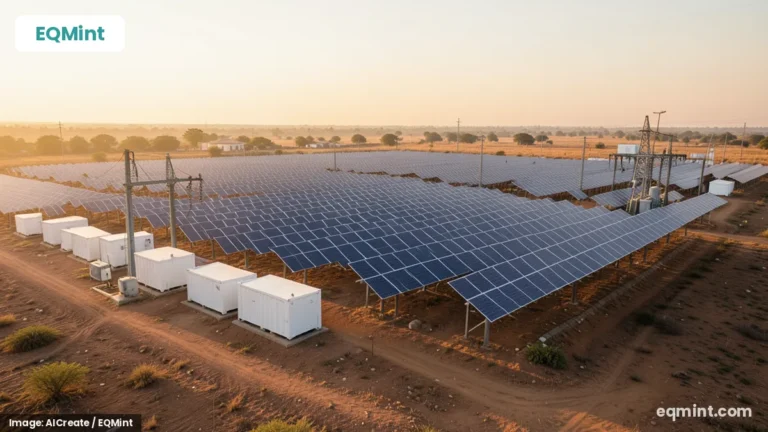
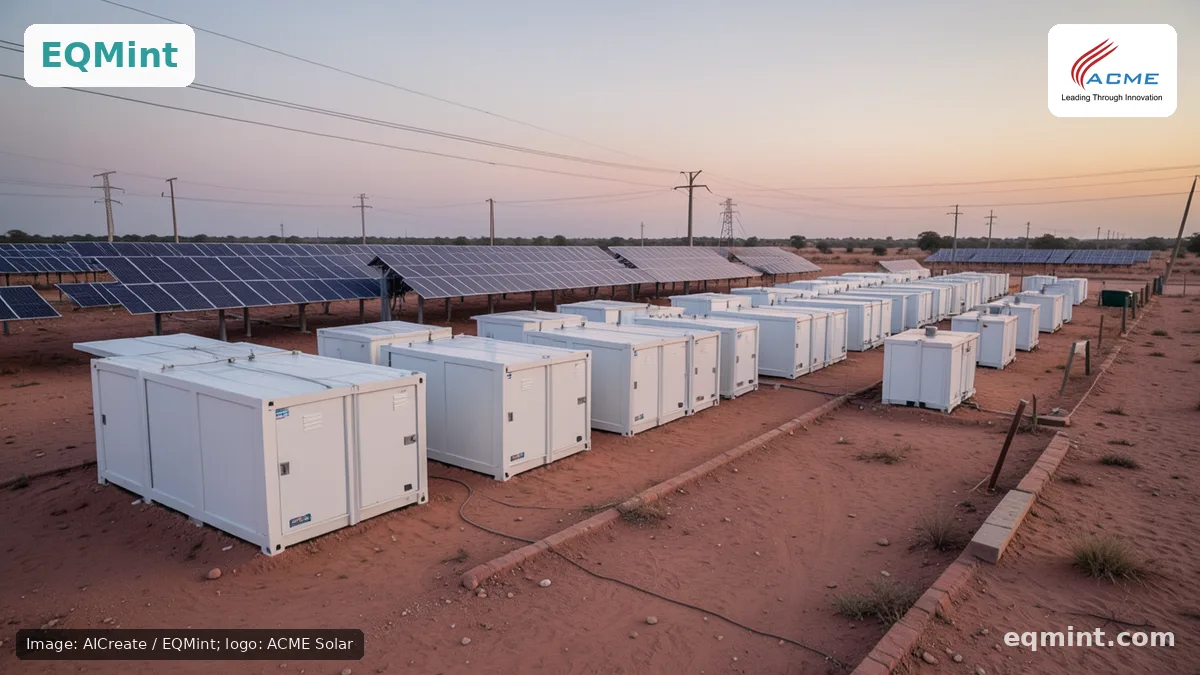
Image credit: AICreate / EQMint (representational); logo: ACME Solar (official website).
Sources
- Source: Business Upturn, ACME Solar commissions battery energy storage system project
- Source: Multibagg, ACME Solar commissions 70.19 MW BESS, COD 29 November
- Source: Business Today, ACME Solar commissions 63.78 MW BESS capacity for NHPC project
- Source: SolarQuarter, ACME Solar adds 96.24 MW BESS capacity across three FDRE projects
- Source: EquityBulls, ACME Sigma Urja commissions BESS project
Disclaimer: This article is for information purposes only and is not investment advice.
For more such information, visit EQMint
Join our WhatsApp channel for timely updates: Whatsapp
Support EQMint: tap below to add us as a preferred source on Google.
Get the EQMint Daily
Market moves, IPOs and startup funding news in your inbox every morning.