

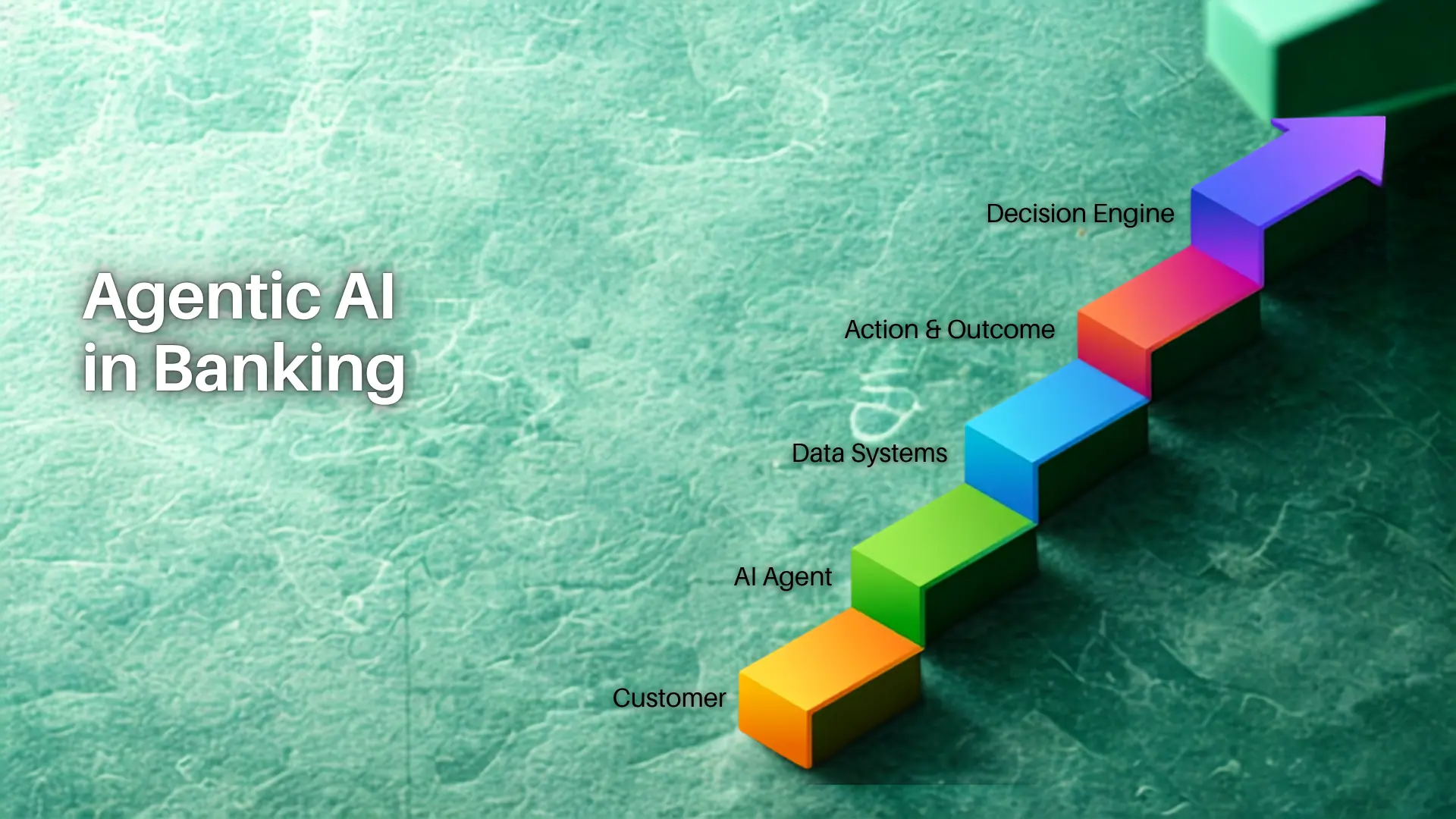
July 04, 2026: By 2027, AI agents will change Indian banking most in the back and middle office, not at the customer-facing front. An AI agent is different from a chatbot: it doesn’t just answer, it acts, planning and executing multi-step tasks like screening a loan file, reading a regulatory circular or investigating a fraud alert across systems.
Author: Aadarsh Patel | EQMint
The realistic 2027 picture is agents working as tireless junior staff under human supervision, clearing compliance backlogs, drafting reports and flagging risk, while a human still signs every consequential decision, because the RBI’s FREE-AI framework requires it.
The hype says autonomous banks are coming. The reality, gated by regulation and by the fact that only about 11% of firms have actually deployed agents despite 99% planning to, is more grounded, and arguably more useful.
The gap between what agents can technically do and what a regulated Indian bank will let them do is the whole story. Both are moving, at very different speeds.
Here’s the honest forward look: what an AI agent actually is, where it will genuinely change Indian banking by 2027, what will hold it back and what to ignore in the hype.
What makes an agent different from a chatbot
Clear this up first, because the word agent is thrown around loosely. A chatbot answers a question. A predictive model scores a risk. An AI agent does something: it takes a goal, breaks it into steps, pulls data from multiple systems, decides on an action and executes it, escalating to a human only when it’s unsure.
The practical difference is between a tool you operate and a worker you delegate to. Ask a chatbot about a loan and it explains the process. Give an agent the goal, and it can pull the applicant’s bank data through the Account Aggregator, check the documents, run the fraud screens, assemble the file and hand a human a ready-to-approve package. The human still approves. The agent did the assembling. That shift, from answering to doing, is why this matters more than the last wave of banking AI.
Where agents will genuinely change banking by 2027
Take a clear position. The real change by 2027 lands in high-volume, rule-heavy, back-office work, where agents can act inside strict guardrails and a human reviews the output. These are the areas already moving from pilot to production.
| Area | What the agent does | Human role |
| Compliance | Reads every RBI circular, maps impact | Reviews and signs off |
| Fraud | Investigates alerts end to end | Confirms and acts |
| Lending ops | Assembles and screens loan files | Approves the decision |
| Customer service | Resolves routine queries fully | Handles exceptions |
Compliance is the clearest early win, and very India-specific. Indian compliance teams manually read over 100 regulatory circulars a year from the RBI, SEBI, IRDAI and others, line by line. Agents can ingest each circular the moment it publishes, extract the provisions, map them to affected products and policies and draft an impact assessment. In a country that generates as much regulation as India, this alone saves thousands of hours.
Fraud investigation moves from alert to action. Today a fraud model raises an alert and a human investigates. By 2027 an agent will run the investigation itself, gathering transaction history, cross-referencing patterns, building the case file, and presenting a human with a recommendation and the evidence, compressing work that took hours into minutes.
Lending operations get a tireless junior analyst. Agents will assemble and pre-screen loan files end to end, pulling Account Aggregator data, verifying documents and running checks, so a credit officer spends time on the decision rather than the paperwork. This speeds approval without removing the human from the actual lending call.
Customer service handles the routine, fully. Beyond answering, agents will complete routine requests, updating details, resolving disputes, processing standard changes, and escalate only genuine exceptions to a person, freeing human staff for the hard cases.
Why the pace is set by regulation, not technology
Be honest about the brake, because it’s the single biggest factor in any 2027 prediction. The technology will run ahead of what Indian banks are permitted to let it do, and that’s by design.
The RBI’s FREE-AI framework, its approach to responsible AI in finance, insists on human oversight for consequential decisions, model documentation, bias testing and audit trails. That means an agent can prepare a loan decision but not autonomously approve it, can build a fraud case but not autonomously freeze an account, can draft a compliance response but not file it unreviewed. Every action with real consequence for a customer keeps a human in the loop. This is not a temporary limitation that lifts by 2027, it’s a deliberate guardrail, and a sensible one. So the honest prediction is agents as force-multipliers for human staff, not replacements for human judgment.
The deployment gap nobody mentions
Here’s the reality check that separates a useful forecast from hype. Intent and deployment are wildly out of step. KPMG found that while around 99% of firms plan to deploy AI agents, only about 11% actually have, and 57% say they lack the internal capability to use agentic AI well.
For Indian banks, the barriers are familiar and stubborn: fragmented data, legacy core systems, especially at public-sector banks, a shortage of AI talent and the hard work of building governance that satisfies FREE-AI. So the 2027 reality will be uneven. Large private banks with clean data will run fleets of agents in the back office. Many others will still be running careful pilots. The technology curve is steep, task-length that AI can handle autonomously has been doubling every few months, but the deployment curve in regulated Indian banking is far gentler. Predictions that ignore this gap are selling something.
What to ignore in the hype
Take a firm position, because the loudest claims are the least likely. A few things you’ll hear that won’t be true for Indian banking by 2027.
The fully autonomous bank with no humans in the loop is not arriving by 2027, and regulation ensures it won’t. Agents approving your loan or freezing your account entirely on their own is not permitted for consequential decisions. Mass replacement of bank staff is unlikely on this timeline; the realistic effect is roles shifting toward supervising agents and handling exceptions, not wholesale elimination.
And the idea that any bank can simply buy agents and transform overnight ignores the data and governance groundwork that actually decides success. Treat any vendor promising autonomous, plug-and-play transformation with the scepticism it deserves.
What it means for you, the customer
Bring it back to the person banking, since that’s who ultimately feels the change. By 2027, if the shift goes well, you won’t see the agents, you’ll feel their effects.
Loans and account requests should resolve faster because the paperwork behind them is assembled by agents. Fraud should be caught and investigated more quickly, with fewer of your genuine transactions wrongly blocked. Routine service, updating a detail, resolving a simple dispute, should get near-instant.
And thin-file borrowers who never had a credit history should find it easier to get a fair assessment, because agents can process alternative data at scale. The human touch should remain exactly where it matters, on the decisions that affect you most, since regulation keeps a person there.
The honest bottom line. By 2027, AI agents will meaningfully change Indian banking, quietly, in the back office, as diligent assistants that clear the drudgery and speed the service, while humans keep the judgment. That’s less cinematic than the autonomous-bank headlines, and far more likely to be true. The banks that win won’t be the ones with the flashiest AI story, but the ones that did the unglamorous data and governance work to let agents actually run, safely, under human eyes. The revolution is real. It just wears a lanyard and reports to a manager.
FAQ
What is an AI agent in banking?
An autonomous software system that takes a goal, breaks it into steps, pulls data across systems, decides on an action and executes it, escalating to a human when unsure. Unlike a chatbot that answers questions, an agent completes multi-step tasks.
How will AI agents change Indian banking by 2027?
Mainly in the back and middle office, automating compliance, fraud investigation, loan file preparation and routine service, while humans still approve consequential decisions. The likely effect is faster service and fewer errors, not autonomous banks.
Will AI agents replace bank employees?
Unlikely on this timeline. The realistic effect is roles shifting toward supervising agents and handling exceptions, since the RBI requires human oversight for consequential decisions. Agents act as force-multipliers, not replacements for judgment.
Can an AI agent approve my loan on its own?
No. Under the RBI’s FREE-AI framework, consequential decisions like loan approval require human oversight. An agent can assemble and pre-screen the loan file, but a human makes and signs the actual decision.
Why are Indian banks slow to deploy AI agents?
Fragmented data, legacy core systems especially at public-sector banks, a shortage of AI talent and the work of building FREE-AI-compliant governance. KPMG found 99% of firms plan to deploy agents but only about 11% actually have.
What is the difference between an AI agent and a chatbot?
A chatbot answers questions or gives information. An AI agent takes action, executing multi-step workflows across systems to complete a task, such as investigating a fraud alert or preparing a loan file, rather than just responding.
Which banking tasks will agents handle first?
High-volume, rule-heavy back-office work: reading and mapping regulatory circulars, investigating fraud alerts, assembling loan files and resolving routine customer requests. These allow agents to act within strict guardrails under human review.
Is agentic AI safe in banking?
It can be, when deployed with the governance the RBI expects: human oversight for consequential decisions, model documentation, bias testing and audit trails. The safety comes from keeping humans in the loop for anything that materially affects a customer.
EQMint is not a SEBI registered investment adviser. This article is for informational purposes only and is not investment advice, and does not recommend any specific company, product or stock. It contains forward-looking views that are inherently uncertain, and AI capabilities and regulations evolve quickly, so verify current details before relying on them.
For more such information visit EQMint
Join our Whatsapp channel for timely updates: Whatsapp