
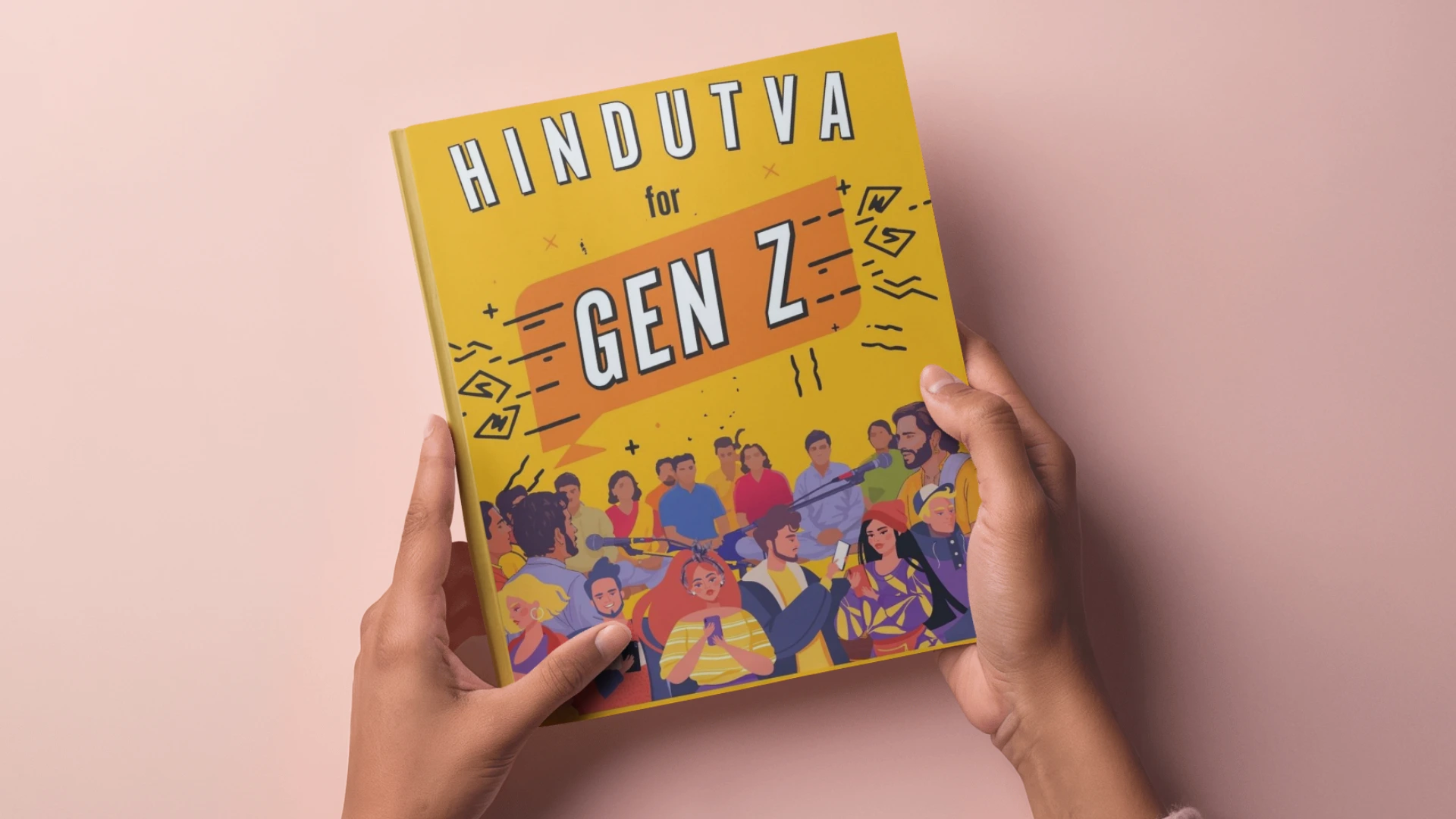
Hindutva for Gen Z by Yuvraj Pokharna presents a bold and thought-provoking interpretation of Hindutva, positioning it not as a political ideology but as a civilizational identity rooted in India’s ancient heritage.
Author: Aadarsh Patel | EQMint
The book argues that Hindutva represents a “state of being” — a cultural and philosophical framework that transcends religion and politics. It frames Bharat as a continuous 5,000-year-old civilization rather than a modern nation-state formed in 1947.
Quick Answer
“Hindutva for Gen Z” portrays Hindutva as a civilizational identity and way of life, urging India’s youth to reconnect with cultural roots while challenging colonial and modern narratives.
Core Idea: A Civilizational Identity
The central thesis of the book is that Hindutva is not a rigid doctrine but a dynamic, inclusive way of life (dharma). It emphasizes:
- Cultural continuity over political identity
- Spiritual pluralism
- Civilizational pride
The author positions Bharat as a timeless entity defined by traditions, geography, and shared ethos.
Key Themes Explored
Decolonizing the Indian Mind
The book challenges colonial narratives, particularly around caste. It argues that the rigid caste system was institutionalized during British rule rather than originating in Vedic society.
Critique of Secularism
It critiques post-independence secularism, especially what it terms “minorityism,” suggesting it has led to unequal treatment of religious communities and state control over Hindu institutions.
Cultural Revival and Identity
From temple restoration to renaming cities, the book highlights efforts to reclaim India’s cultural identity and heritage.
Inclusivity and Pluralism
The narrative emphasizes that Hindutva is inherently pluralistic, accommodating diverse beliefs, philosophies, and identities within its framework.
Historical and Intellectual Lineage
The book connects Hindutva thought to figures like:
- Chanakya
- Adi Shankaracharya
- B.R. Ambedkar
- V.D. Savarkar
It presents Hindutva as an evolving concept shaped by thinkers across centuries.
Contemporary Relevance
The book speaks directly to Gen Z, urging:
- Cultural awareness
- Reconnection with heritage
- Critical thinking about historical narratives
It frames this as a “civilizational awakening” necessary for India’s future.
Debate and Criticism
While the book presents a strong ideological standpoint, its arguments are part of a broader national debate on identity, secularism, and history. Critics may view some claims as politically charged or interpretative.
Final Take
Hindutva for Gen Z is not just a book but a perspective-driven narrative that seeks to redefine how young Indians understand their identity, history, and future. Whether seen as a cultural awakening or a contested ideology, it contributes significantly to ongoing discussions about India’s civilizational journey.
FAQs
What is the main idea of Hindutva for Gen Z?
It presents Hindutva as a civilizational identity rather than a political ideology.
Who wrote the book?
Yuvraj Pokharna.
Is the book controversial?
It engages with debated topics like secularism and identity, making it part of larger public discourse.
For more such information visit EQMint
Join our Whatsapp channel for timely updates: Whatsapp