
July 13, 2026: India’s textile and apparel sector, one of the country’s oldest and largest manufacturing industries, is undergoing a major transformation. While the industry has traditionally been known for its scale, exports and employment generation, the next phase of growth is increasingly being shaped by sustainability and circular economy principles.
Author: Aadarsh Patel | EQMint
According to a recent government policy document, India is promoting sustainable production across the textile value chain through recycling, organic fibres, cleaner manufacturing, waste recovery, eco-labelling and traceability. The objective is to strengthen the competitiveness of Indian textiles in global markets while reducing environmental impact.
Textile Industry Remains a Pillar of India’s Economy
The textile and apparel sector continues to play a vital role in India’s economic development.
According to government data:
- Contributes nearly 2% of India’s GDP.
- Accounts for around 11% of manufacturing Gross Value Added (GVA).
- Employs more than 45 million people directly.
- India is the world’s sixth-largest exporter of textiles and apparel, with nearly 4% of global exports.
With global buyers increasingly prioritizing sustainable sourcing, India’s ability to integrate circular practices into textile production is expected to become a key competitive advantage.
What Does Circular Economy Mean for Textiles?
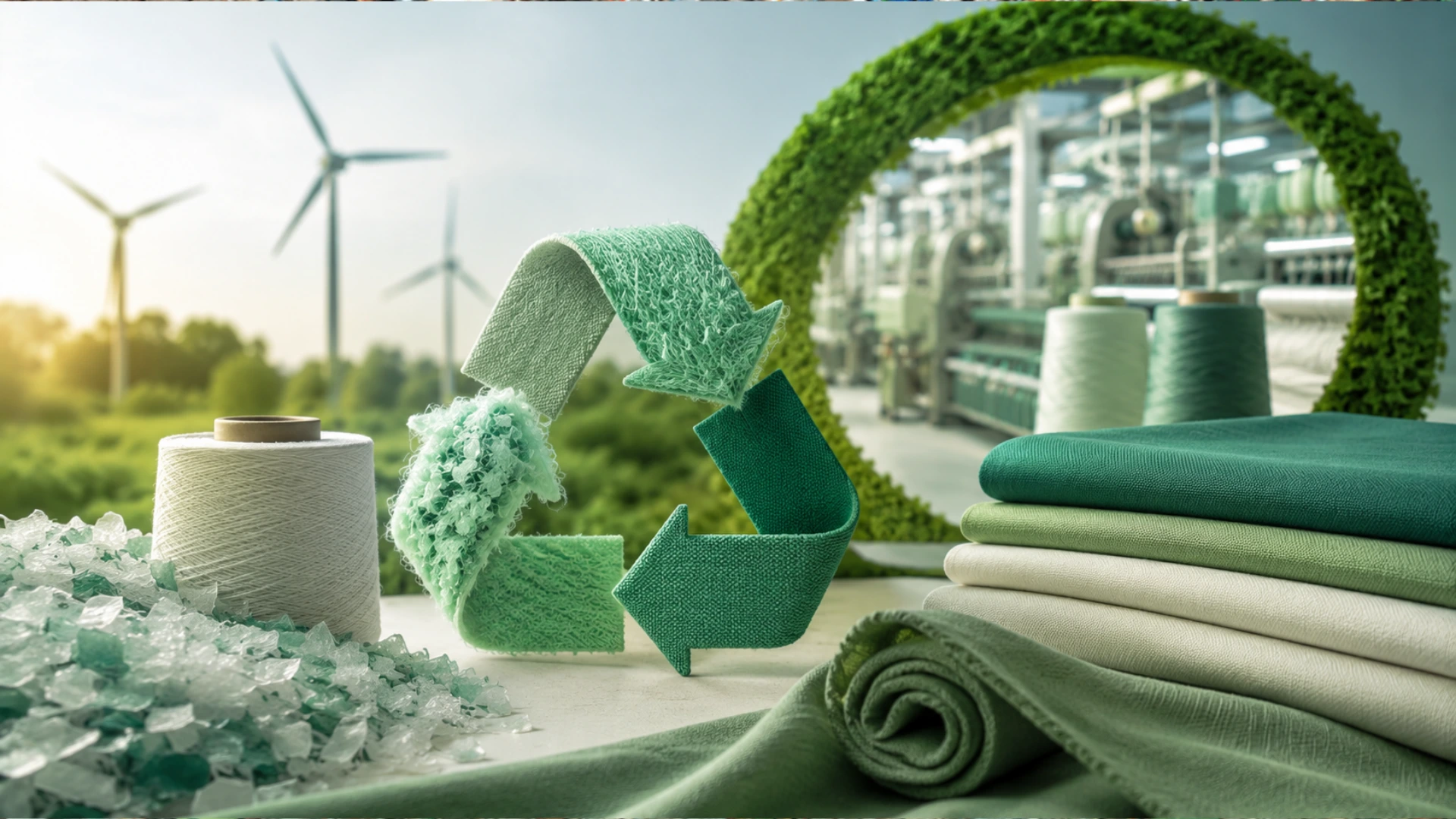
A circular economy focuses on keeping materials in use for as long as possible through reuse, recycling, repair and resource recovery instead of the traditional “make-use-dispose” model.
In the textile sector, circularity includes:
- Recycling textile waste.
- Reusing production scraps.
- Upcycling used garments.
- Reducing chemical consumption.
- Improving water efficiency.
- Promoting sustainable fibres.
This approach lowers the industry’s environmental footprint while improving resource efficiency.
India’s Textile Recycling Ecosystem is Already Strong
India has developed one of the world’s largest informal and formal textile recovery systems.
The government notes that:
- Around 7.8 million tonnes of textile waste are managed every year.
- More than 70% of textile waste is recovered through recycling, reuse, upcycling or downcycling.
- Nearly 95% of pre-consumer textile waste generated by factories is collected and reused.
- Approximately 55% of post-consumer textile waste is diverted from landfills.
- The ecosystem supports nearly 40–45 lakh livelihoods, including a significant contribution from women involved in waste collection and sorting.
These figures highlight India’s strong foundation for building a globally competitive circular textile economy.
Successful Recycling Models Across India
The report highlights several successful examples of textile circularity.
Navi Mumbai’s Textile Recovery Facility
India’s first Municipal Textile Recovery Facility in Belapur has demonstrated how urban textile waste can become a valuable resource.
The initiative has:
- Collected around 30 metric tonnes of textile waste.
- Processed more than 41,000 textile items.
- Developed over 400 upcycled product samples.
- Reached nearly 1.14 lakh households through awareness programmes.
Panipat Leads Textile Recycling
Panipat continues to serve as India’s largest textile recycling hub, processing 3,500–5,250 tonnes of textile waste per day and supplying recycled fibres to multiple industries.
Informal Networks Strengthen Circularity
Markets such as Katran Market in Delhi’s Mongolpuri play a crucial role by collecting, sorting and supplying textile cutting waste to formal recycling centres, demonstrating how informal workers remain an essential part of India’s recycling ecosystem.
Government Pushes Sustainable Manufacturing
To accelerate green manufacturing, the government is implementing several initiatives.
PM MITRA Parks
Seven PM Mega Integrated Textile Region and Apparel (PM MITRA) Parks are being developed with an outlay of ₹4,445 crore.
The parks include:
- Common Effluent Treatment Plants (CETPs)
- Wastewater recycling
- Scientific waste management
- Shared utilities
- Integrated manufacturing infrastructure
As of December 2025, investment commitments exceeding ₹27,434 crore had been secured for these parks.
Cleaner Production Technologies
Pilot programmes covering hundreds of textile factories are helping reduce hazardous chemical usage while promoting environmentally responsible manufacturing practices.
The government is also encouraging the adoption of organic cotton, natural fibres, safer dyes and sustainable chemical management throughout the textile supply chain.
Carbon Market to Encourage Greener Textile Production
The textile sector has also been brought under India’s emerging Carbon Credit Trading Scheme (CCTS).
Companies meeting greenhouse gas emission reduction targets will be eligible to earn tradable carbon credit certificates, encouraging investments in cleaner technologies and energy-efficient manufacturing.
Textile Recycling Market Set for Rapid Growth
India’s textile recycling industry is expected to witness significant expansion over the coming years.
Government estimates indicate:
- The textile recycling sector could reach USD 3.5 billion by 2030.
- Nearly one lakh green jobs could be created over the next five years through recycling, resource recovery and sustainable manufacturing.
Growing demand for sustainable fashion and stricter environmental regulations are expected to drive this growth.
Building Consumer Confidence Through Sustainability
Beyond manufacturing, the government is promoting sustainable consumption through:
- Eco-Mark certification.
- Traceability systems.
- Kasturi Cotton branding.
- Silk Mark certification.
- Public procurement of upcycled products.
- Awareness campaigns such as Circle Back and SURE (Sustainable Resolution).
These initiatives aim to improve transparency while helping Indian textile products gain greater acceptance in international markets.
EQMint Analysis
India’s textile industry is entering a new phase where sustainability is becoming a business strategy rather than merely a compliance requirement. Government initiatives spanning fibre production, cleaner manufacturing, recycling infrastructure, carbon markets and eco-labelling indicate a comprehensive approach to building a globally competitive circular textile ecosystem.
As international buyers increasingly prioritize traceability, recycled materials and lower-carbon supply chains, India’s early investments in circular economy practices could strengthen its position as a preferred global sourcing destination. Continued collaboration between policymakers, manufacturers, recyclers and technology providers will be crucial in translating these initiatives into long-term export growth, employment generation and environmental resilience.
FAQ
What is a circular economy in the textile industry?
A circular economy focuses on reusing, repairing, recycling and recovering textile materials to reduce waste and extend product life.
How much textile waste does India manage annually?
India manages around 7.8 million tonnes of textile waste every year.
How many people work in India’s textile sector?
The industry provides direct employment to more than 45 million people.
What are PM MITRA Parks?
PM MITRA Parks are integrated textile manufacturing hubs designed with sustainable infrastructure, including wastewater recycling and common effluent treatment facilities.
What is the projected size of India’s textile recycling market?
The sector is projected to reach USD 3.5 billion by 2030, creating nearly one lakh green jobs.
For more such information visit EQMint
Join our Whatsapp channel for timely updates: Whatsapp