

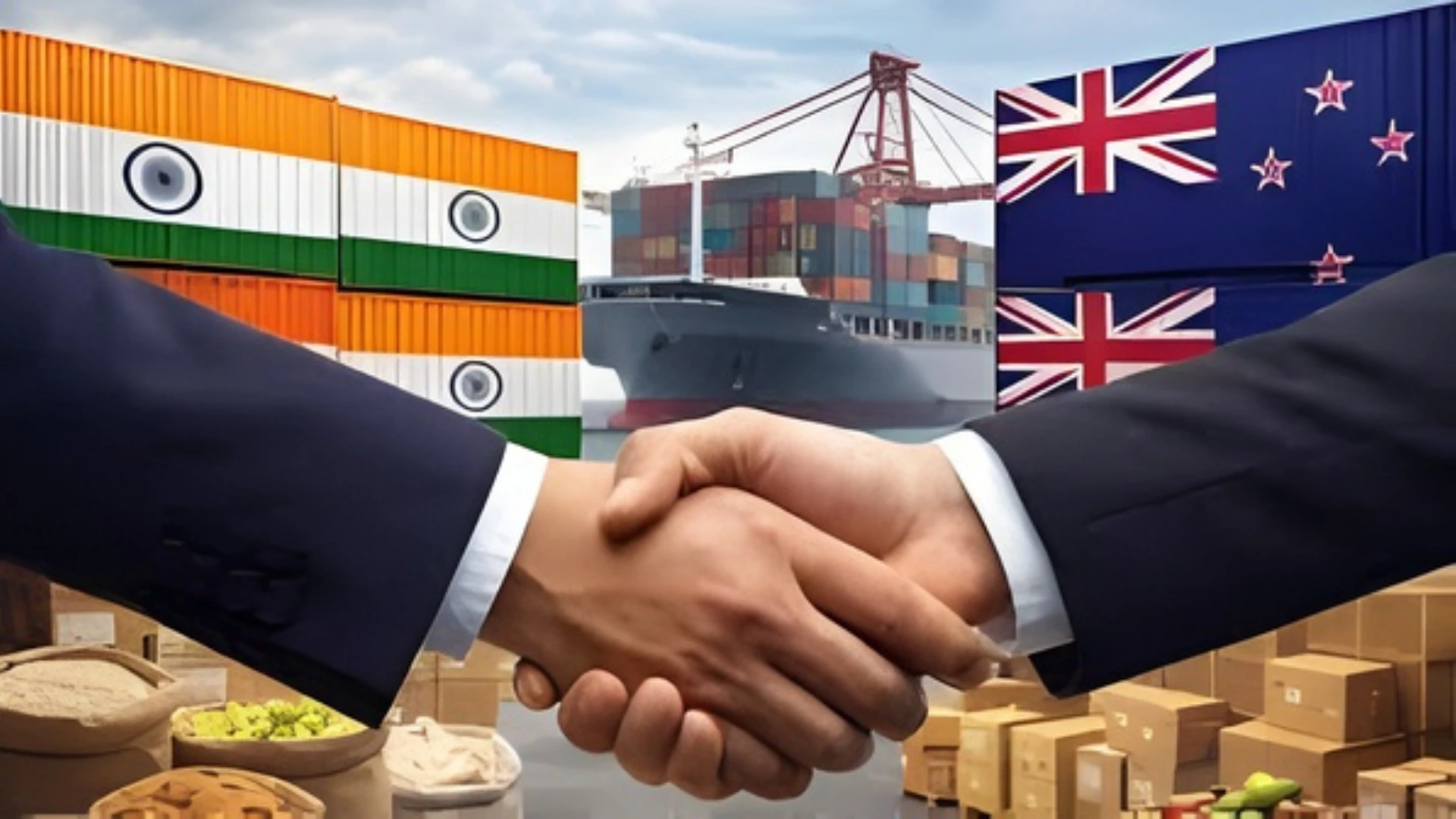
April 27, 2026 : In a major development for global trade, India and New Zealand have signed a historic trade agreement aimed at boosting bilateral commerce, strengthening economic ties, and opening new opportunities for businesses in both countries.
Author: Aadarsh Patel | EQMint
The deal marks a significant step in India’s strategy to expand its global trade footprint and diversify export markets.
Trade Key Highlights of the Trade Deal
The agreement focuses on multiple areas to enhance trade cooperation:
- Reduction or elimination of tariffs on key goods
- Improved market access for exporters
- Strengthening supply chain partnerships
- Increased cooperation in services and technology
This move is expected to make trade more seamless and cost-effective for businesses.
Which Sectors Will Benefit the Most?
Several industries are likely to gain from this agreement:
Agriculture and Dairy
New Zealand’s strong dairy sector and India’s agricultural exports could see increased collaboration.
Pharmaceuticals and Healthcare
India’s pharma exports may find better access to New Zealand markets.
IT and Services
Opportunities for Indian IT companies to expand operations and services.
Manufacturing and Textiles
Lower tariffs can boost exports from India’s manufacturing sector.
What It Means for India’s Economy
The trade deal is expected to have a broader impact:
- Boost to exports and foreign exchange earnings
- Job creation in export-driven industries
- Strengthening India’s position in global trade
It also aligns with India’s long-term vision of becoming a global manufacturing and export hub.
Why This Deal Is Important Now
The timing of the agreement is crucial as:
- Global supply chains are being reshaped
- Countries are seeking reliable trade partners
- India is actively signing bilateral agreements
This deal helps India diversify its trade relationships beyond traditional markets.
Challenges and Concerns
Despite the opportunities, certain concerns remain:
- Competition for domestic industries
- Impact on local dairy producers
- Need for strong implementation and monitoring
Balancing growth with domestic protection will be key.
What’s Next?
Going forward, focus will be on:
- Implementation of tariff changes
- Business adoption of new opportunities
- Monitoring trade balance impact
Both countries are expected to work closely to ensure smooth execution.
FAQs
What is the India–New Zealand trade deal?
It is a bilateral agreement aimed at boosting trade, reducing tariffs, and improving market access.
Which sectors will benefit the most?
Agriculture, pharmaceuticals, IT, and manufacturing are expected to gain.
How will it impact India’s economy?
It can increase exports, create jobs, and strengthen global trade presence.
Conclusion
The India–New Zealand trade deal represents a significant milestone in India’s economic journey, opening new avenues for growth and global integration. While opportunities are substantial, effective execution will determine how much both nations benefit from this historic agreement.
For more such information visit EQMint
Join our Whatsapp channel for timely updates: Whatsapp