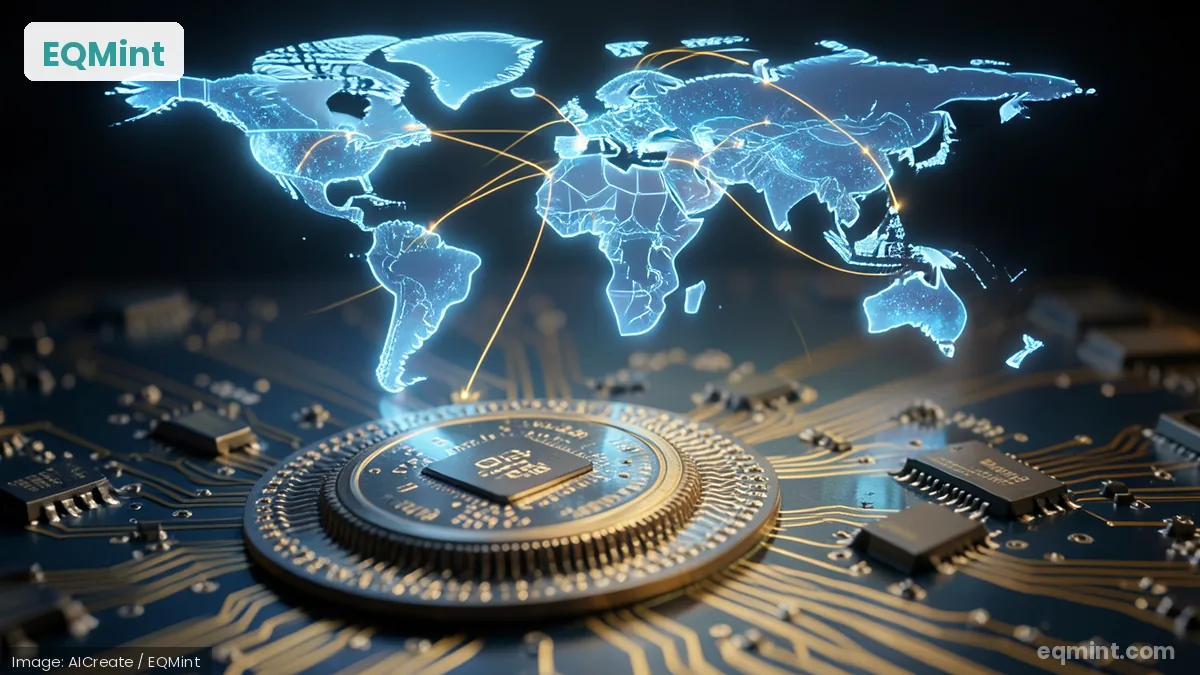
Synopsis: India has signed the San Francisco Declaration, a US-led pact under the Pax Silica initiative to protect the technologies and supply chains behind artificial intelligence. Signed on 15 November with the US, Japan, Australia, Israel, the UK, South Korea, Qatar and the UAE, it targets weak points in semiconductors, minerals, energy and manufacturing.
India has joined the United States and seven other countries in signing the San Francisco Declaration on the Secure Foundations of Enduring Prosperity, a new agreement to protect critical technologies and infrastructure that underpin AI supply chains. The declaration was signed on 15 November 2026 at the Pax Silica Founders Retreat in San Francisco, convened by US Under Secretary of State for Economic Affairs Jacob Helberg.
What the declaration does
- Signatories: the United States, India, Japan, Australia, Israel, the United Kingdom, South Korea, Qatar and the United Arab Emirates.
- More to join: Germany, Sweden, the Netherlands and the European Commission are expected to sign later, according to Helberg.
- Focus: identifying vulnerable points across semiconductors, critical minerals, energy and manufacturing, and building common protections for the systems that AI depends on.
Where Pax Silica came from
Pax Silica is a US-led initiative launched in December 2025 to strengthen AI supply chains and reduce dependence on bottlenecks controlled by China. India formally joined on 20 February 2026 during the India AI Impact Summit in New Delhi, which we covered in India joins US-led Pax Silica. The San Francisco Declaration is the first major step since then and widens the group’s work from chips into energy and minerals.
Why it matters for Indian tech
For India, the pact is a bet that closer alignment with US-led supply chains will bring chip design, packaging and electronics manufacturing investment, while securing access to advanced chips for its own AI programmes. It comes as Washington tightens scrutiny of chips reaching China. Indian semiconductor and electronics companies, and startups building AI hardware, stand to be most affected by any common rules on export controls or trusted suppliers. Read more on six sectors set to drive India’s tech growth.
Image credit: AICreate / EQMint.
Sources
- US Department of State: Economic Affairs (Pax Silica, San Francisco Declaration)
- Ministry of Electronics and Information Technology, India
- Analytics India Magazine: India joins US-led pact, 16 Nov 2026
- Outlook: India joins San Francisco Declaration, 16 Nov 2026
Disclaimer: This article is for information purposes only and is not investment advice.
For more such information, visit EQMint
Join our WhatsApp channel for timely updates: Whatsapp