Synopsis: India’s lifestyle market is growing far faster than the world’s. Global personal luxury sales are expected to rise just 2-4% in 2026, while India’s luxury market grew about 10% to $12.1 billion and its beauty market could nearly double by FY31. Experiences, fragrance, quick commerce and smaller cities are leading the shift.
From perfume and skincare to luxury cars and holidays, Indians are spending more on lifestyle. The rest of the world is spending more cautiously. Here is how India’s lifestyle market compares with global trends, and what the gap means for brands, founders and investors.
The global picture: a slow, uneven recovery
The world’s lifestyle and luxury industry is coming out of two difficult years. Bain & Company and Italian luxury association Altagamma estimate that personal luxury goods sales slipped about 2% to €358 billion in 2025 at current exchange rates. In their June 2026 update, they forecast growth of 2-4% this year, to €365-373 billion, lower than the 3-5% they had projected in November 2025 before the Middle East conflict lifted oil prices and hit consumer confidence.
The customer base is also shrinking. Bain says the number of luxury shoppers fell to about 340 million in 2025 from 400 million in 2022, as years of steep price increases pushed aspirational buyers away. In the Gulf, the luxury consumer base shrank by 15-25% in the first half of 2026. Spending is shifting towards experiences such as hotels, fine dining and cruises, which Bain expects to grow about 4% this year, faster than goods.
India: a small market growing fast
India remains a small piece of global luxury but one of its fastest-growing. Euromonitor International estimated India’s luxury goods market grew about 10% to $12.1 billion in 2025, placing it among the leaders alongside South Africa (15%) and the UAE (9%), with premium and luxury cars leading value sales. Even so, the market is less than 3% the size of China’s, according to Euromonitor data reviewed by Reuters, and a shortage of high-end mall space means brands such as Patek Philippe and Loro Piana still have no stores in India.
Beauty tells a similar story at a larger scale. An Aditya Birla Capital report estimates India’s beauty and personal care (BPC) market could nearly double from $23 billion in FY26 to $42 billion by FY31, making India the fourth-largest BPC market in the world by 2030. By contrast, McKinsey expects the global beauty market to grow about 5% a year to $590 billion by 2030.
Five trends shaping the next few years
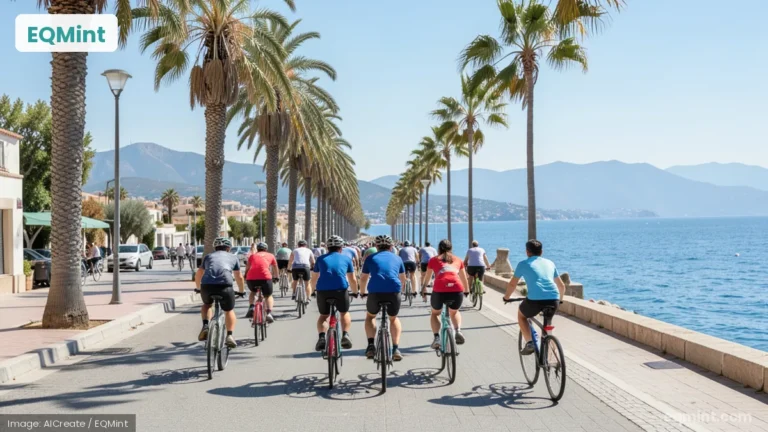
- Experiences over things: globally, spending on travel, dining and wellness is outpacing goods. In India, younger consumers often favour accessible brands, resale and experiences before moving up to high-ticket luxury.
- Fragrance is the new hero category: McKinsey expects fragrance to overtake colour cosmetics as the world’s third-largest beauty category by 2030. In India, Redseer found fragrances have overtaken deodorants in online beauty sales.
- Quick commerce rewrites beauty retail: quick commerce’s share of India’s online BPC market roughly doubled from about 9% in FY25 to nearly 18% in FY26, growing more than 120% a year, according to Redseer. Globally, McKinsey expects e-commerce to deliver most of beauty’s growth.
- Luxury moves beyond the metros: brands are following affluent buyers into cities such as Lucknow, Ludhiana, Raipur and Visakhapatnam. Mercedes-Benz India, with 160 outlets in 60 cities, added touchpoints in Bhopal, Raipur and Visakhapatnam in the first half of 2026, Business Today reported.
- Value over price hikes: after shoppers pushed back against repeated price increases, global brands are refocusing on entry products and craftsmanship. That favours India’s masstige and premium segment, where homegrown brands compete well.
What it means for founders and investors
The gap between India and the world is the opportunity. While global brands chase low single-digit growth in mature markets, India offers double-digit growth from a small base, a young population and rising wealth outside the big cities. The constraints are real: limited luxury retail space, a smaller pool of very wealthy buyers and price-sensitive consumers who trade up gradually. Founders building D2C beauty, fragrance, wellness and premium apparel brands are best placed to benefit, particularly those that use quick commerce for repeat purchases and physical stores for discovery.
Listed retail, beauty and consumer companies will be watched for whether premium demand holds up as inflation stays high; wholesale inflation rose to 12.29% in October (read our report). For more on India’s consumer economy, see Indian startups to watch in 2026 and our business news section.
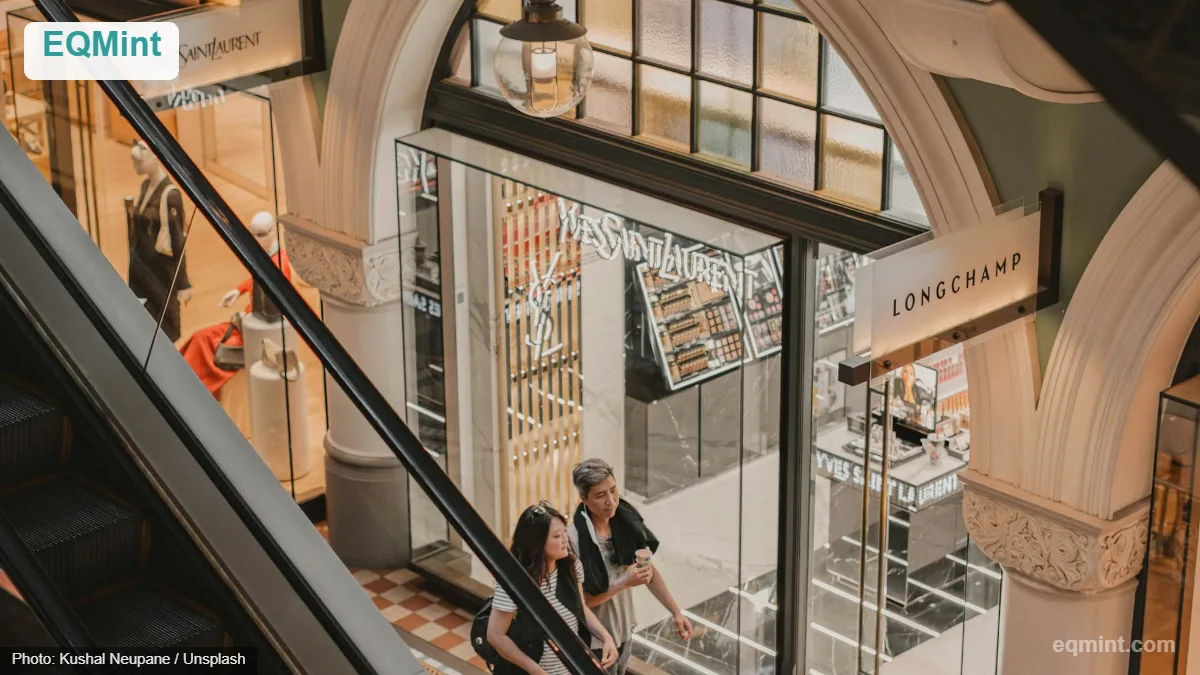
Photo: Kushal Neupane on Unsplash (free to use under the Unsplash License).
Sources
- Bain & Company: Global luxury stabilizes amid compounding disruptions (Bain-Altagamma spring update), 25 Jun 2026
- Bain-Altagamma Luxury Goods Worldwide Market Study
- Business Today: Euromonitor, India luxury market $12.1 billion
- Reuters: India’s luxury promise hits a wall, 28 Mar 2026
- Aditya Birla Capital report via news agency: India BPC to reach $42 billion by FY31, 30 Aug 2026
- McKinsey: State of Beauty, From aisle to algorithm (2026)
- BW Retail World: Redseer on India online beauty market
- Business Today: From Ludhiana to Lucknow, the expanding cityscape of luxury, 11 Nov 2026
Disclaimer: This article is for information purposes only and is not investment advice.
For more such information, visit EQMint
Join our WhatsApp channel for timely updates: Whatsapp