

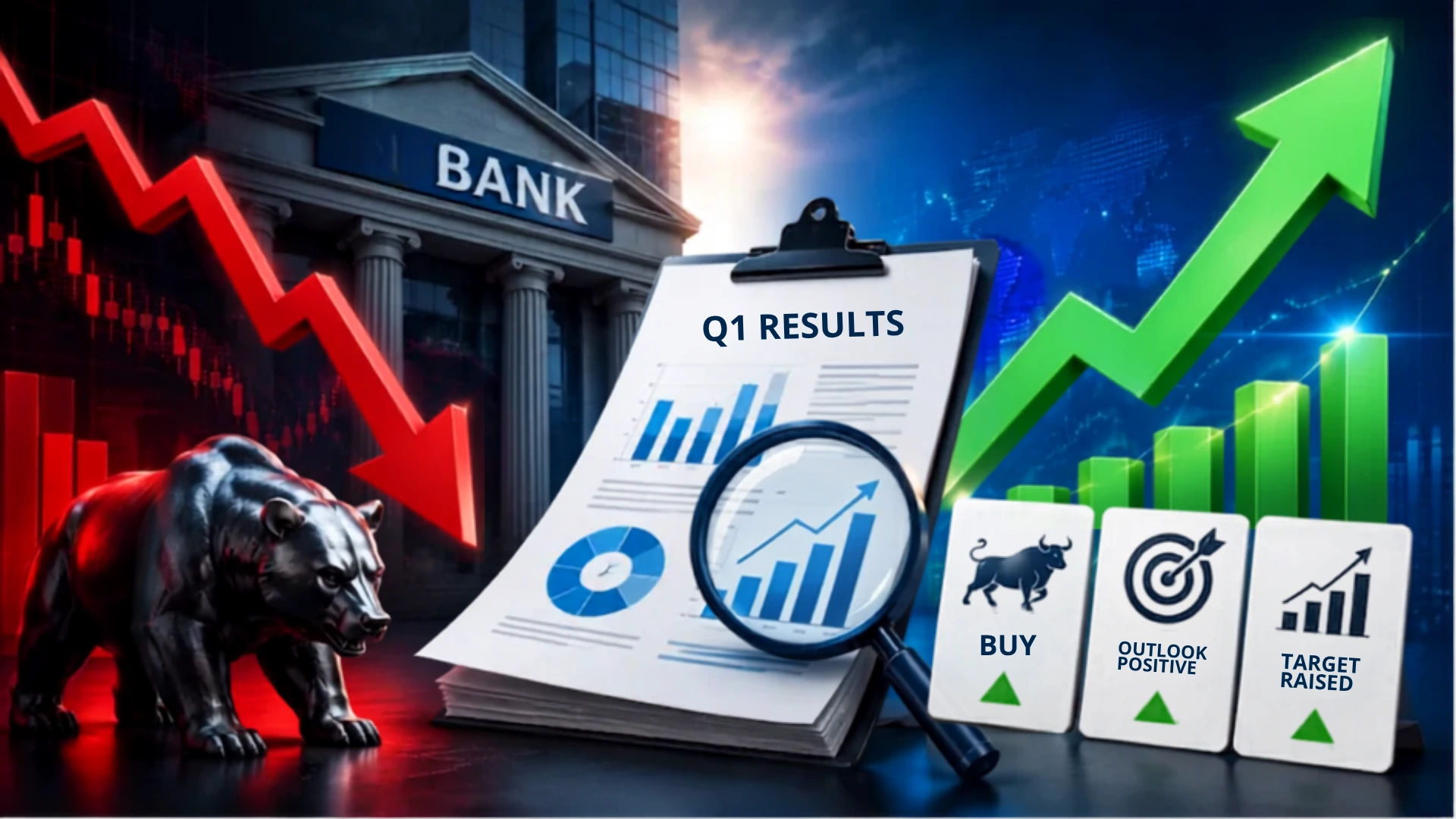
Synopsis: The Indian banking sector saw a huge new trend happening while the reports of Q1 FY27 made their news buzz within the hearts of investors. It was seen that most of the banks though incurring profits and stability in their statements, faced decline or no growth in terms of their market value. The share price of many banks like HDFC Bank, ICICI Bank and many others hold true to the argument. Although, this is not the case with all financial institutions. Some banking stocks gained investor confidence delivering strong financial results. The contradiction highlights a shift in investor priorities.
July 24, 2026: At first glance, the earnings season appeared overwhelmingly positive. HDFC Bank reported another profitable quarter, supported by steady loan growth and healthy Net Interest Income. ICICI Bank continued demonstrating strong operational performance, while several other private lenders maintained healthy asset quality and stable credit expansion. Even mid-sized institutions reported improving business momentum.
Author: Tavisha Kanodia | EQMint
Yet, the stock market reacted differently. HDFC Bank’s shares declined after the results despite meeting expectations, as investors focused on pressure in Net Interest Margins (NIMs) rather than the growth in net profit. The market’s response reflected a broader shift—investors are increasingly looking beyond earnings and asking whether profitability can remain sustainable in the coming quarters.
Margins, Deposits and Future Growth Took Centre Stage
One of the most important themes to emerge from the quarter is the importance of deposit mobilisation and funding costs. Banks are under pressure to lend in a tough market for deposits and with increasing costs to raise money.
For investors, that means headline profit growth isn’t enough anymore. Those banks which have better CASA ratios, stable deposit growth, efficient cost management and better asset quality are receiving more attention than those which are just reporting better quarterly earnings.”
The results also reaffirmed that India’s credit cycle remains healthy with retail lending, corporate credit and infrastructure financing continuing to support business growth. However, management commentary across the sector suggested that it would be increasingly difficult to maintain margins if funding costs remained elevated.
Why Ujjivan Small Finance Bank Became One of the Quarter’s Most Watched Banks
Ujjivan Small Finance Bank was one of the banking stocks that attracted a lot of investor interest this quarter. The market was looking at the ongoing transformation of the bank and future strategy, not just headline profitability, unlike larger private lenders. Investors paid close attention to management’s comments on the proposed move to a universal bank, business diversification and improvements in asset quality.
Ujjivan’s quarterly performance reflected continued efforts to strengthen its balance sheet even as it expanded the lending franchise. Investors view the bank not simply as another quarterly earnings story but as a long-term transformation play in India’s rapidly evolving financial space, which has kept the stock actively tracked. Its performance also reflects the larger opportunity and risks involved in India’s small finance banking ecosystem.
EQMint Analysis
Q1 FY27 demonstrates that India’s banking industry remains fundamentally strong. Credit demand continues to support loan growth, asset quality has remained broadly stable, and profitability across most major lenders remains healthy. However, the earnings season also signals that investors are becoming increasingly sophisticated in evaluating banks.
Rather than rewarding every profit increase, the market is now placing greater emphasis on earnings quality, sustainable margins, deposit franchises and long-term growth visibility. This explains why some banks witnessed muted or even negative stock market reactions despite delivering solid financial results.
The key takeaway from the quarter is that Indian banking is entering a new phase—one where earnings growth is just as important as operational efficiency, funding discipline and strategic execution. For investors, the next few quarters will be less about which bank made the most money and more about which institutions can grow without sacrificing profitability. That gap will probably determine the sector’s winners in FY27.
For more such information visit EQMint
Join our Whatsapp channel for timely updates: Whatsapp
Disclaimer: This article is not an investment advice and is for educational purpose only.