
Synopsis: India’s electric vehicle (EV) narrative is often viewed through the lens of passenger cars, where established automakers and new-age startups compete for consumer attention. Commercial transportation is a smaller, less-watched corner of the same transition — and Omega Seiki Mobility (OSM) has built its business there, around electric cargo three-wheelers, light commercial vehicles, and fleet mobility rather than personal vehicles. As the company seeks to raise ₹125 crore in a pre-IPO round ahead of a planned listing, the more useful question isn’t whether the strategy is sound in theory, but whether OSM can execute it at scale against far larger, better-capitalised rivals.
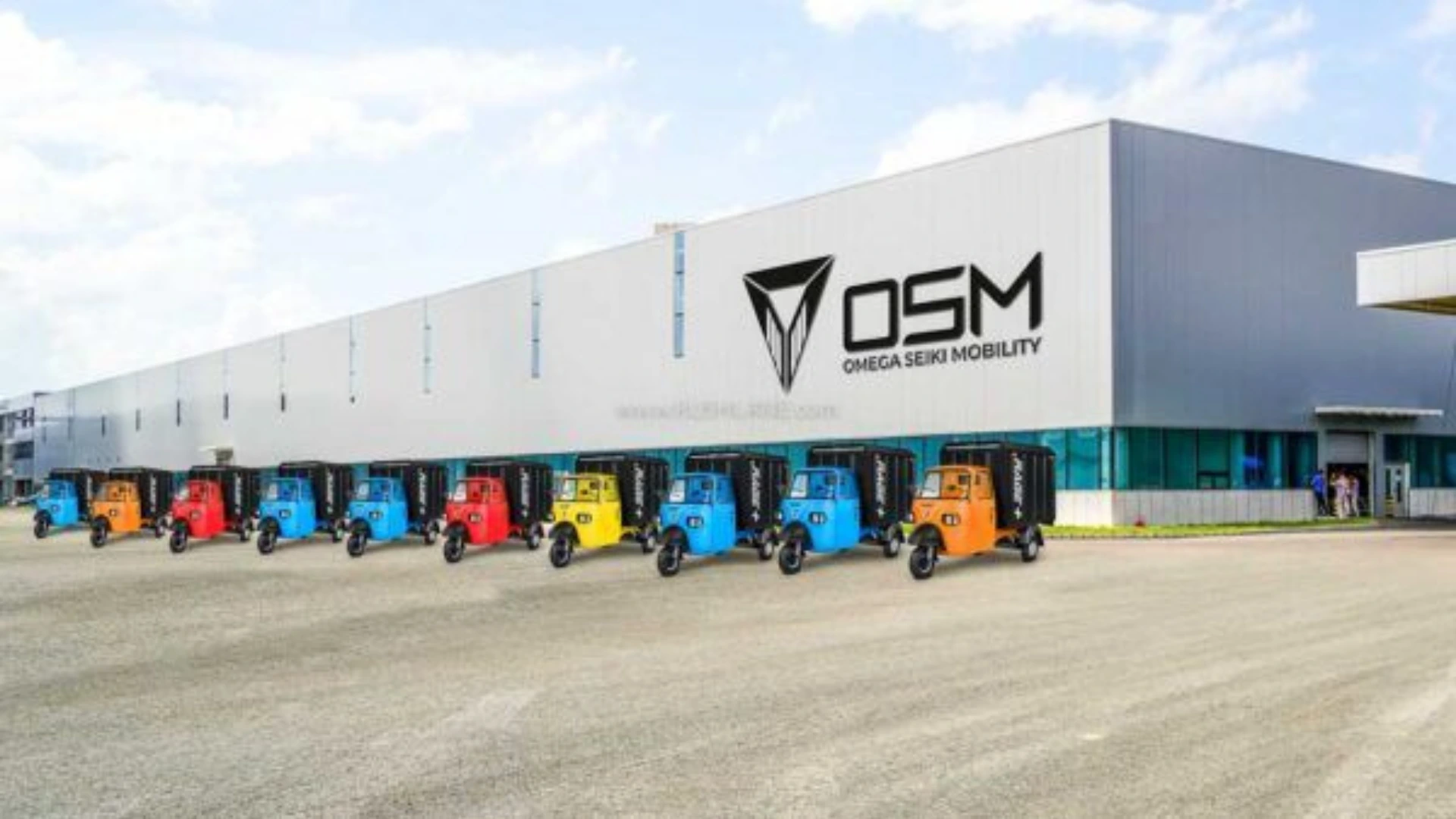
July 16, 2026: Faridabad-based Omega Seiki Mobility has announced plans to raise around ₹125 crore in pre-IPO funding, with management reportedly aiming to close the round by the end of the current quarter. The company says the capital will go toward expanding manufacturing capacity, R&D, and distribution as it works toward a public listing targeted for the end of the next financial year. OSM reported FY26 revenue of roughly ₹330 crore and has already put about ₹250 crore into manufacturing facilities across Delhi-NCR and Pune.
Author: Tavisha Kanodia | EQMint | EQMint Originals
Why Commercial EVs, Not Passenger Cars
India’s EV coverage is dominated by passenger vehicle players — Tata Motors, Mahindra, MG Motor, Hyundai, BYD. OSM has instead built around cargo vehicles, electric three-wheelers, and light commercial vehicles for logistics firms, fleet operators, and businesses — a segment where purchasing decisions are driven by total cost of ownership rather than brand or aesthetics.
That’s a real structural tailwind: the growth of e-commerce, quick commerce, food delivery, and organised retail has pushed up demand for last-mile transport, and electric commercial vehicles can recover their higher upfront cost through lower fuel and maintenance spend on high-utilisation routes. But it’s also a segment OSM doesn’t have to itself. Mahindra Last Mile Mobility, Bajaj Auto, and TVS Motor all compete in electric three-wheelers, and each has an existing distribution and service network that a smaller, independent player has to build from scratch.
What the ₹125 Crore Actually Buys
OSM frames the raise as scaling an existing opportunity rather than plugging a funding gap. The stated use — manufacturing capacity, product development, and market presence ahead of listing — is consistent with a company trying to show growth metrics before an IPO, which is a fairly standard pre-IPO playbook rather than something unique to OSM.
One structural point worth noting: OSM has largely funded itself through promoter capital and its strategic investor, Japan’s Exedy Corporation, rather than the venture-capital-heavy model common among EV startups. That can mean more disciplined capital allocation — or it can mean the company has had a harder time attracting institutional investors than VC-backed rivals. Both readings are plausible, and it’s a distinction investor evaluating the eventual IPO should weigh rather than take as an unambiguous positive.
Where the Real Test Lies
Fleet operators evaluate vehicles on utilisation rates, running costs, and uptime — not brand loyalty — which is exactly why the commercial EV segment is exposed to sectors like logistics, warehousing, pharma distribution, and municipal services. Government support for cleaner transport and domestic manufacturing helps the tailwind, but it doesn’t remove the execution risk.
That risk is significant. Battery costs, charging infrastructure, supply-chain resilience, and financing access will all shape whether OSM can scale profitably — and its competitors have deeper balance sheets to absorb the same pressures. Enterprise customers also expect nationwide after-sales support, which is an operational build-out, not a product one. OSM has described itself as having reached operational profitability, but that’s a company-reported claim rather than an independently verified one, and it’s worth treating it that way until audited numbers are public.
EQMint View
OSM’s bet on commercial mobility over passenger EVs is a defensible read of where India’s logistics economy is heading. Whether it translates into a successful public listing depends less on the thesis and more on unglamorous execution — manufacturing yield, service network build-out, and whether the company can compete on cost against rivals with far larger balance sheets. The ₹125 crore raise is a step toward testing that, not proof that it’s already working.
For more such information visit EQMint
Join our Whatsapp channel for timely updates: Whatsapp
Disclaimer: This article is not an investment advice and is for educational purpose only.