
Reliance Industries Limited (RIL), India’s industrial powerhouse led by Mukesh Ambani, reported its third-quarter (Q3 FY26) financial results on January 16, 2026. While the conglomerate posted modest growth in revenue and profit across key segments led by Jio and Oil-to-Chemicals (O2C) its stock witnessed selling pressure as investors weighed margin concerns and earnings expectations. In this article, we unpack the numbers, dissect performance by business verticals, and explore what these results mean for the company and its shareholders.
Author : Aashiya Jain | EQmint | Corporate Announcements
Solid Top-Line Growth Amid Easing Headwinds
Reliance posted a consolidated revenue of approximately ₹2.65 lakh crore for Q3 FY26, marking a year-on-year rise of more than 10% compared to the same quarter last year.
This increase highlights a broad revenue expansion across RIL’s diversified business structure from digital services to petrochemicals. While raw revenue figures show improvement, investors had anticipated stronger profit expansion, leading to a cautious reaction in the stock market.
Profit Growth: A Modest Upside
Despite the encouraging revenue figures, growth in profitability was relatively modest in this quarter. Reliance reported a net profit of around ₹22,167 crore, which represents an increase of about 1.6–1.7% year-on-year compared to Q3 last year.
The profit uptick, although positive, was smaller than what some market participants had hoped for this contributed to the drop in share prices following the earnings announcement. According to market reports, Reliance’s shares slipped by over 2.5–3.3% as traders digested the earnings outcome.
EBITDA An Indicator of Operational Strength
One of the more encouraging aspects of RIL’s quarterly performance was in EBITDA (Earnings Before Interest, Tax, Depreciation and Amortisation) a measure of core operational profitability. The company’s consolidated EBITDA rose by around 6% to close to ₹50,900+ crore in Q3.
This improvement was driven by gains in the digital services division and the O2C business, partially offsetting weaker performance in upstream oil and gas activities. Higher transportation fuel crack spreads and greater fuel retail volumes also helped boost O2C margins.
Segmental Review: Jio Leads the Charge
Digital & Telecom (Jio Platforms)
In a world where connectivity is king, Reliance Jio continued to shine. The telecom arm reported strong operational metrics, including:
- Over 515 million subscribers
- More than 250 million 5G users
- Average revenue per user (ARPU) up by more than 5%
- JioAirFiber services crossing the 11.5 million subscriber mark
These numbers reflect robust consumer demand and steady monetisation of Jio’s digital services.
Furthermore, Jio’s net profit grew by double digits, underscoring its central role in Reliance’s future growth narrative.
Retail: Growth With Caution
Reliance’s retail arm continued to expand, posting a solid revenue increase of around 8% in Q3. However, growth was cushioned by factors like festive demand shifting between quarters and changes in tax rates that affected timing across categories.
Despite these challenges, the retail business grew its store network significantly, operating close to 20,000 outlets across formats.
Oil-to-Chemicals and Oil & Gas Mixed Signals
RIL’s traditional strength in oil refining and petrochemicals showed resilience with revenue and EBITDA expansion. However, the upstream oil and gas segment encountered headwinds due to declining output at aging fields and global pricing pressure.
Overall, the O2C business benefited from higher transportation fuel cracks but was challenged by rising freight costs and lower downstream chemical margins.
Market Reaction: Sentiment Matters
Even with credible numbers, markets moved negatively following the earnings release. Investors reacted to the company’s relatively flat profit growth especially in the backdrop of higher operating costs, taxation, and investor expectations set by previous quarters.
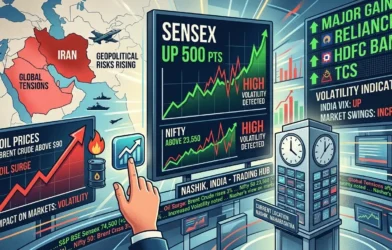
On broader indices, Reliance’s softer performance contributed to a downturn in Indian benchmark indices in mid-January trading.
Looking Ahead Strategic Investments and Long-Term Vision
Reliance continues to invest aggressively in 5G infrastructure, retail expansion, and new energy solutions. Capital expenditure remained elevated in Q3, underlining the company’s commitment to future growth corridors particularly digital, consumer, and energy transitions.
While short-term investor sentiment was lukewarm, analysts remain optimistic about Reliance’s evolving earnings mix shifting from cyclical fossil fuels toward digital and consumer businesses that promise more stability and scalability.
Conclusion: A Quarter of Balanced Outcomes
Reliance Industries’ Q3 FY26 performance reflected both progress and challenges. The company delivered respectable revenue growth and operational profitability, especially in Jio and O2C segments. Yet profit growth was modest, and market reactions hinted at investor desire for stronger margins and earnings momentum.
As RIL steers through investments in future technologies and expands core businesses, how it balances profitability with growth will be key to sustaining investor confidence in the quarters ahead
For more such information: EQmint
Resource Link : TheHindu