

Author: Chetan Pareek
The Road Train Revolution Has Already Started in India
The logistics industry is undergoing rapid transformation. Rising fuel prices, increasing toll and green tax charges, driver shortages, growing customer expectations, and sustainability goals are forcing transport companies to rethink traditional freight movement.
For years, Road Trains were considered a transportation solution unique to countries like Australia and Canada. Today, however, India has officially entered the Road Train era.
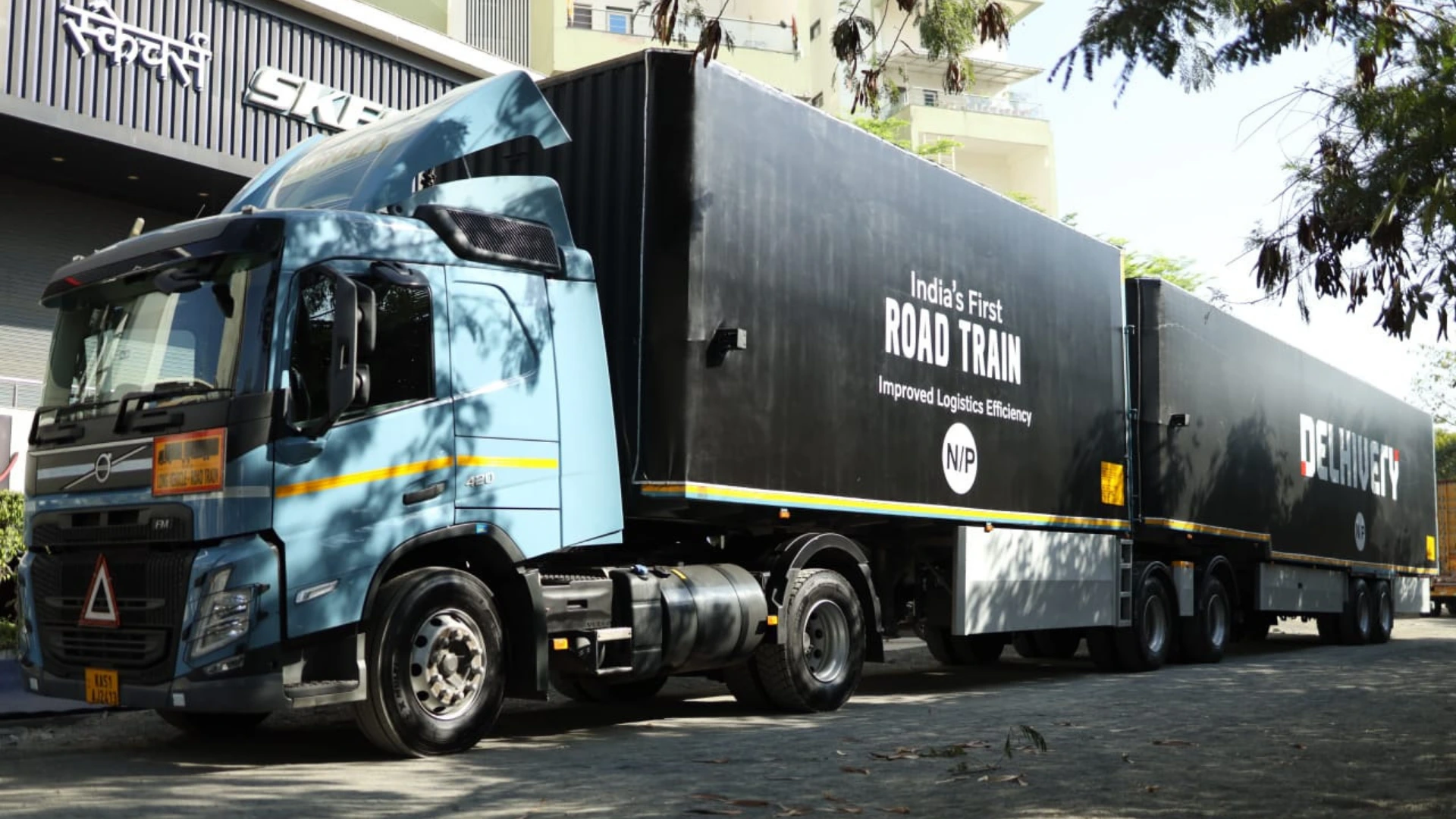
The recent launch of India’s first certified Road Train operation by Volvo Trucks India and Delhivery marks a significant milestone for the country’s transportation sector. More importantly, it offers a glimpse into what the future of freight transportation could look like.
What Exactly is a Road Train?
A Road Train consists of a single tractor unit pulling multiple trailers connected in sequence, allowing significantly higher cargo capacity compared to conventional truck-trailer combinations.
Instead of deploying multiple trucks and drivers to transport the same volume of goods, a Road Train can move larger loads in a single trip, improving efficiency across the supply chain.
The Volvo–Delhivery Road Train, operating on the Nagpur–Bhiwandi corridor, can carry approximately 50% more cargo volume than a standard semi-trailer, demonstrating how the concept can work effectively in India.
Why Road Trains Matter More Than Ever
1. Lower Transportation Costs
Transporters today are facing increasing operational challenges:
- Rising diesel prices
- Higher toll and green tax charges
- Escalating maintenance expenses
- Driver shortages
Road Trains directly address these challenges by transporting more cargo with fewer vehicle movements.
Benefits include:
- Lower fuel cost per ton-kilometer
- Reduced driver cost per shipment
- Better vehicle utilization
- Lower overall operating expenses
For logistics companies operating high-volume corridors, the cost savings can be substantial.
2. Improved Fleet Productivity
Every fleet owner aims to maximize revenue from every kilometer traveled.
Road Trains allow operators to move significantly larger cargo volumes without proportionally increasing operating costs.
This translates into:
- Higher revenue per trip
- Better asset utilization
- Increased fleet productivity
- Stronger return on investment
For a sector constantly working on thin margins, productivity improvements of this nature can be transformative.
3. Sustainability and Reduced Carbon Emissions
Sustainability is becoming a business necessity rather than a choice.
By consolidating freight movement, Road Trains:
- Reduce the number of trucks on highways
- Lower fuel consumption per ton transported
- Reduce carbon emissions
- Ease road congestion
As India advances toward cleaner transportation and net-zero ambitions, efficient freight solutions like Road Trains will play an important role.
Technology Behind Modern Road Trains
Today’s Road Trains are powered by far more than mechanical engineering.
Modern systems incorporate:
- GPS and route optimization
- Advanced telematics
- Electronic braking systems
- Stability control technologies
- Real-time fleet monitoring
- Driver assistance systems
Looking ahead, Road Trains could integrate:
- Truck platooning
- Artificial intelligence
- Predictive maintenance
- Semi-autonomous and autonomous driving technologies
These innovations will further improve safety, efficiency, and operational reliability.
Enhancing Supply Chain Efficiency
Road Trains offer benefits beyond transportation companies.
For manufacturers, distributors, and retailers, they can help:
- Improve inventory planning
- Reduce handling costs
- Enhance delivery reliability
- Increase supply chain visibility
- Reduce transportation lead times
By moving more freight with fewer vehicles, Road Trains can contribute to a more efficient and resilient logistics ecosystem.
Can Road Trains Scale Across India?
The answer is yes—but strategically.
While they may not be suitable for congested urban areas, Road Trains are ideally suited for:
- Dedicated Freight Corridors
- Industrial Corridors
- Expressways
- Port-to-Hinterland Routes
- High-volume logistics lanes
Potential sectors that could benefit include:
- E-commerce
- FMCG
- Automotive
- Steel
- Cement
- Agriculture
- Containerized Cargo
As India’s infrastructure continues to improve through initiatives such as the Delhi-Mumbai Industrial Corridor, Bharatmala, and Dedicated Freight Corridors, the opportunity for Road Train adoption becomes increasingly realistic.
Challenges That Must Be Addressed
Before Road Trains become mainstream, several factors need attention:
Infrastructure Readiness
Highways, parking areas, rest stops, and logistics parks must be designed to accommodate longer vehicle combinations.
Regulatory Framework
Clear policies will be required regarding:
- Vehicle dimensions
- Weight limits
- Driver certification
- Safety requirements
- Operating permissions
Public Awareness and Safety
Education and awareness will be critical to ensure safe interaction between Road Trains and other road users.
My Perspective
As someone actively involved in the transportation industry, I see Road Trains as more than just a new vehicle configuration. They represent a new way of thinking about freight movement.
At a time when transporters are dealing with rising fuel costs, increasing toll charges, higher operating expenses, and growing customer expectations, solutions that improve productivity without proportionally increasing costs will become increasingly important.
The Volvo–Delhivery initiative proves that Road Trains are no longer a concept for the future—they are already operating on Indian roads.
The real question is not whether Road Trains will come to India.
The real question is how quickly the logistics ecosystem can adapt and scale this innovation.
Final Thoughts
The future of transportation will be defined by three key pillars:
Efficiency: Moving more freight with fewer resources.
Sustainability: Reducing emissions while supporting economic growth.
Technology: Leveraging innovation to improve safety, visibility, and productivity.
Road Trains sit at the intersection of all three.
For fleet owners, logistics providers, manufacturers, and policymakers, this could be one of the most important developments in Indian road transportation over the next decade.
The journey has already begun.
The companies that understand and prepare for this shift today may be the ones leading the logistics industry tomorrow.
For more such information visit EQMint
Join our Whatsapp channel for timely updates: Whatsapp
