Synopsis:
- SpaceX’s blockbuster 2026 IPO has brought the commercial space industry into mainstream investor attention, but industry executives believe its biggest growth opportunities are still ahead.
- Leaders from Firefly Aerospace, Muon Space and Roundhill Investments identified satellite infrastructure, launch services, defence technology and orbital data centres as emerging growth areas.
- While gigawatt-scale AI computing in space may take longer to become commercially viable, satellite networking, storage and in-space data processing are already being deployed.
- Growing demand for launch capacity, satellite connectivity and space-based national security infrastructure could create opportunities for companies beyond SpaceX.
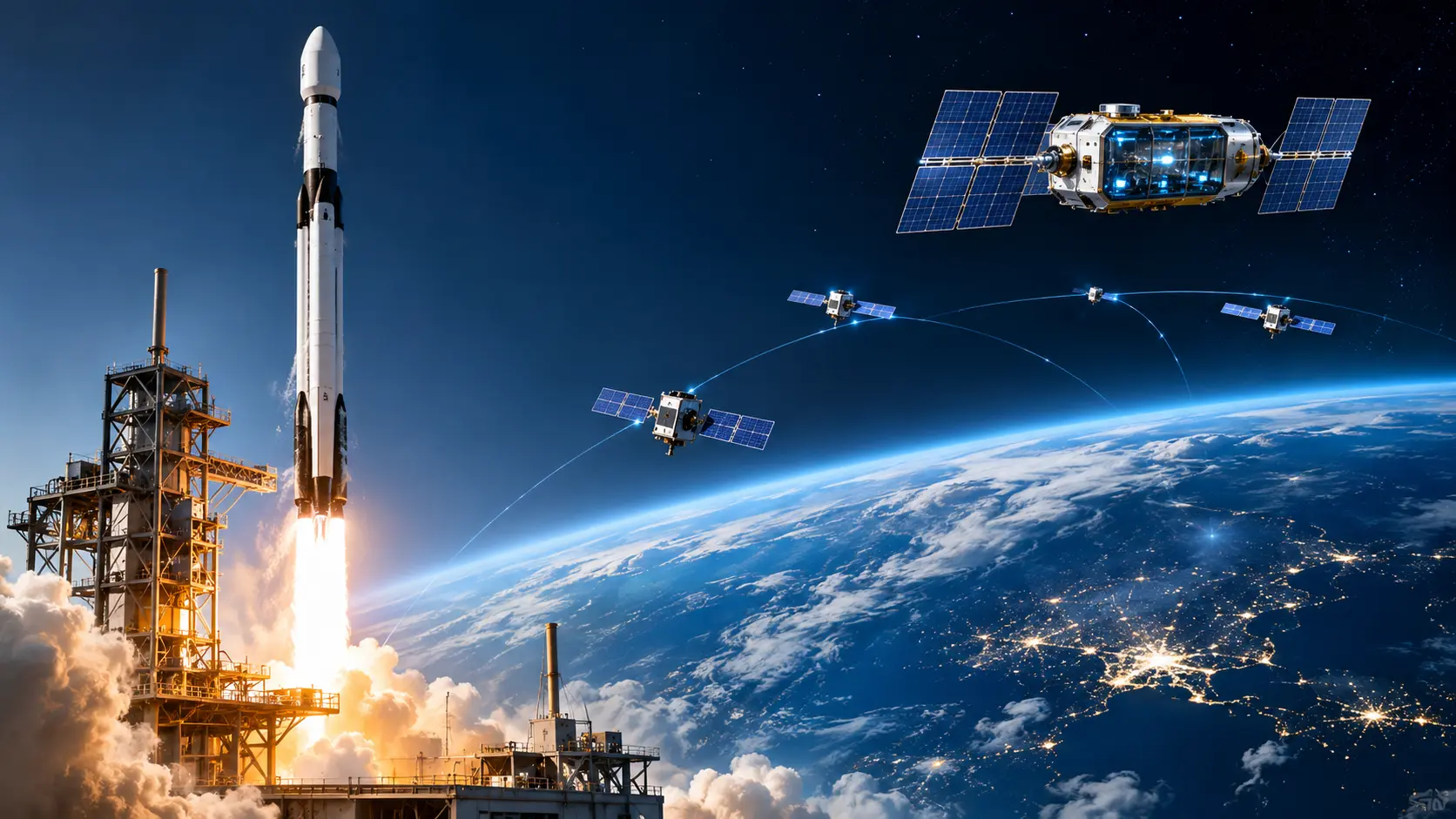
SpaceX’s landmark initial public offering has brought the commercial space industry firmly onto Wall Street’s radar. However, executives across the sector believe the investment opportunity extends far beyond rockets and satellite internet, with the next phase of growth potentially emerging from orbital data centres, defence infrastructure and advanced satellite networks.
The outlook was discussed during a panel titled From Rockets to Revenue: Sizing Up the Space Economy at Yahoo Finance’s Invest Conference earlier this week. The discussion featured Firefly Aerospace CEO Jason Kim, Muon Space CEO Jonny Dyer and Roundhill Investments ETF strategist Thomas DiFazio.
Their central message was that the commercial space industry remains in its early stages, despite the attention and capital attracted by SpaceX’s IPO.
Dyer, a former SpaceX employee, described the public listing as a turning point for the industry, bringing space technology into the mainstream investment conversation after decades of being dominated by government agencies and defence programmes. He believes the convergence of infrastructure on Earth and in space is still in its earliest innings.
Launch Demand Creates Opportunities Beyond SpaceX
One of the strongest opportunities identified by industry executives is the growing demand for launch services.
According to DiFazio, the space industry has evolved significantly from the late 1950s and early 1960s, when annual launches were limited to single-digit numbers. Today, hundreds of launches are taking place, transforming space from a largely government-led activity into a commercial infrastructure market.
However, launch capacity continues to struggle to keep pace with demand.
Firefly Aerospace CEO Jason Kim said customers are actively seeking additional launch capacity, highlighting the importance of companies developing reliable launch vehicles.
Firefly is expanding production of its Alpha rocket while progressing development of its medium-lift Eclipse rocket. The company has also been advancing its Miranda engine programme, reporting more than 175 hot-fire tests and over 4,200 seconds of cumulative testing.
Kim also highlighted Firefly’s agreement with AST SpaceMobile, under which AST SpaceMobile can license Firefly’s intellectual property to manufacture its own Miranda engines. The arrangement provides AST with greater control over launch economics and scheduling, while helping Firefly accelerate Eclipse development.
Firefly is also expanding beyond launch services through lunar infrastructure projects. The company secured a $75 million NASA Jet Propulsion Laboratory Moonfall mission to transport drones to the Moon, building on its Blue Ghost lander’s lunar surface operations.
Satellites Are Becoming Faster and Cheaper to Deploy
Another major opportunity lies in the next generation of satellite infrastructure.
Muon Space CEO Jonny Dyer explained that satellite constellations can now be developed and deployed at significantly lower costs and faster speeds than historically possible.
One example is FireSat, a wildfire-detection satellite constellation that Muon began deploying in 2026 in collaboration with fire and public safety agencies worldwide.
The company is also supporting commercial applications through projects such as Hubble Network, which is developing a space-based Bluetooth Low Energy network. The technology aims to allow connected devices to communicate across the globe, including locations without conventional mobile network coverage.
These developments demonstrate how satellite infrastructure is expanding beyond traditional telecommunications into applications involving environmental monitoring, asset tracking and connected devices.
Defence Technology Could Become a Major Growth Driver
Space-based defence infrastructure is another area attracting increasing attention.
Dyer described the opportunity as a generational technology transition, particularly as the United States faces growing competition from China in space capabilities.
He argued that traditional national security infrastructure, which has historically relied on expensive and large satellites, needs to evolve towards smaller, more agile and interconnected systems.
The emerging model involves software-defined satellites capable of communicating with one another and processing information closer to where it is collected.
This could improve the speed at which governments and defence organisations access critical information while creating opportunities for companies developing satellite networks, sensors and data-processing technologies.
Are Orbital Data Centres the Next Big Opportunity?
Perhaps the most closely watched development discussed during the panel was the possibility of moving data centre infrastructure into space.
With AI computing demand increasing, companies are exploring whether orbital infrastructure could eventually provide an alternative to conventional data centres on Earth.
SpaceX has been particularly vocal about this opportunity. However, industry executives believe the transition towards large-scale AI training facilities in orbit may take longer than some current expectations suggest.
Dyer said he was less optimistic about the immediate timeline for gigawatt-scale AI training in space. He pointed out that several other data centre applications, including networking, storage, content delivery and in-space processing, are already being deployed.
Kim expressed a more optimistic view of orbital computing, while highlighting Firefly’s focus on regional data centre infrastructure.
Firefly’s acquisition of SciTec has also expanded its capabilities in data centre software and frameworks used by the US Space Force under the $800 million FORGE programme.
The distinction is important: while large-scale AI computing in orbit remains a longer-term ambition, smaller and more specialised space-based computing applications are already creating commercial opportunities.
Space Connectivity and Debris Removal Add to the Opportunity
Beyond launch services and computing, satellite connectivity remains one of the most visible commercial applications of the space economy.
DiFazio highlighted how services such as Starlink connectivity on commercial flights and satellite messaging through smartphones are increasingly connecting everyday consumers with space-based infrastructure.
As satellite constellations expand, these services could become more integrated into telecommunications and consumer technology.
Another emerging opportunity is space debris removal.
With low-Earth and high-Earth orbits becoming increasingly crowded, removing defunct or malfunctioning equipment is emerging as a potential commercial market. DiFazio pointed to a Japan-based company within his investment fund that has secured government contracts for removing space debris.
This creates another layer of demand for companies developing technologies that can monitor, approach and remove non-operational equipment from orbit.
The Space Economy’s Next Growth Phase
The discussion at Yahoo Finance’s Invest Conference highlighted how the commercial space industry is expanding into several interconnected markets.
Launch services, satellite manufacturing, defence infrastructure, connectivity, orbital computing and debris removal are all emerging as potential areas of growth.
While SpaceX’s IPO has helped bring the sector into the investment mainstream, the next phase could involve a much wider range of companies building the infrastructure required to support commercial activity in space.
For investors, the opportunity is no longer limited to identifying the next rocket company. It increasingly involves understanding which businesses can turn space-based technology into scalable commercial services.
As industry executives emphasised, the commercial space economy is still in its earliest innings.
Sources
Disclaimer: This article is for information purposes only and is not investment advice.
For more such information, visit EQMint
Join our WhatsApp channel for timely updates: Whatsapp.