

Author: Nishtha Mehrotra | EQMint
Synopsis:
-
- Sandeep Goyal compares Ramdev, Sadhguru and Sri Sri Ravi Shankar with D2C brand founders, highlighting content, community and tiered offerings.
-
- Patanjali’s growth and the spiritual organisations’ marketing strategies offer lessons in audience engagement, brand loyalty and perceived value.
-
- The Supreme Court’s August 2026 ruling on the Art of Living’s ₹5 crore Yamuna case provides important legal context missing from the commercial comparison.
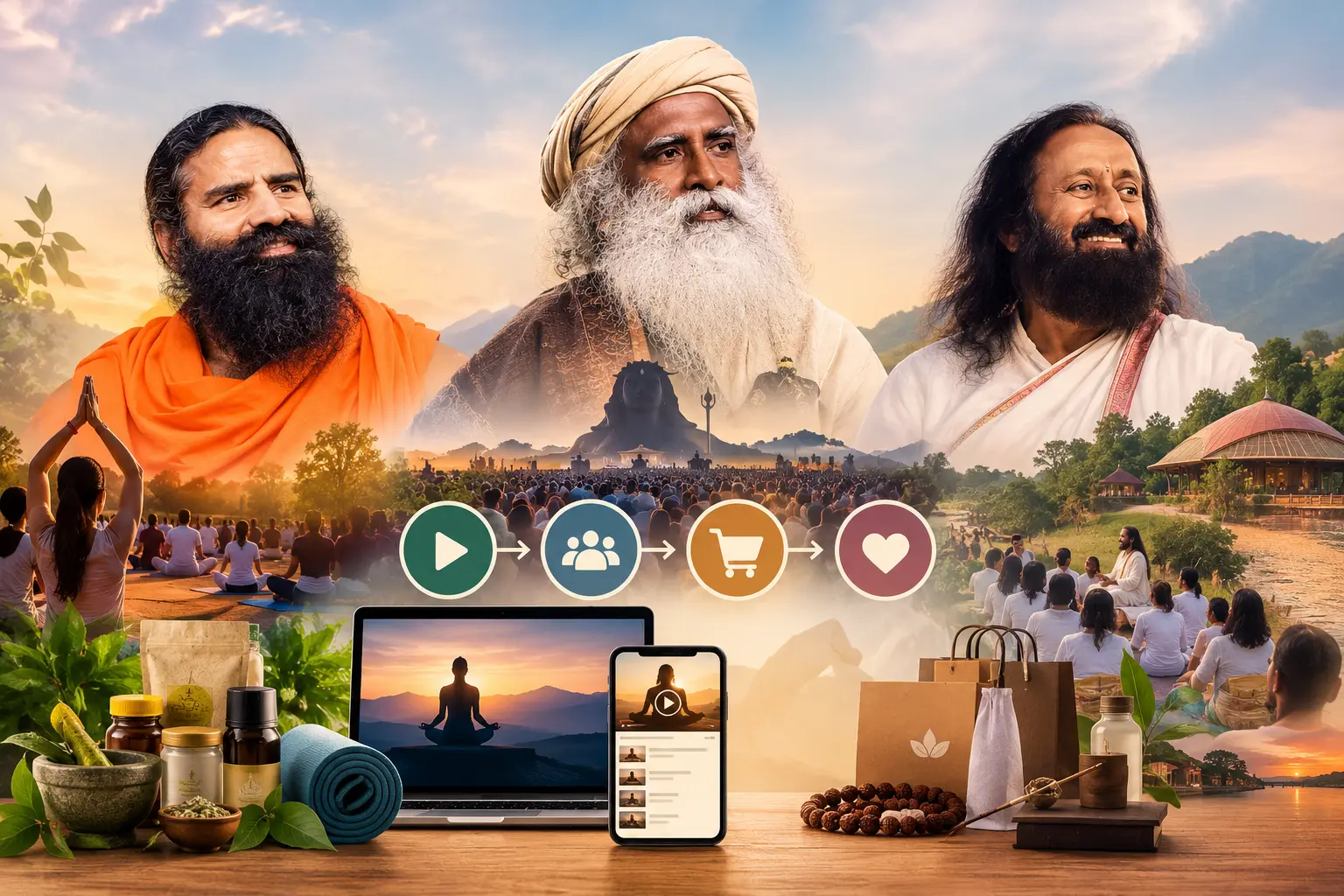
Spirituality D2C brands are the focus of a September 2026 Business Standard opinion column by advertising executive Sandeep Goyal. Titled India’s Best D2C Brand Has a Beard, it compares Ramdev, Sadhguru and Sri Sri Ravi Shankar with consumer-brand founders, examining how content, community and paid offerings build large audiences.
Goyal’s central argument is that spiritual organisations benefit from strong community networks and audience trust, reducing their dependence on conventional advertising. However, the column is satire and opinion, and several figures cited require independent verification.
Patanjali: Content to consumer products
Goyal presents Patanjali as a mass-market brand built around yoga, traditional wellness and consumer products. Free content and community engagement helped establish an audience before products became the commercial offering.
Patanjali Ayurved reported revenue of approximately ₹10,216 crore in 2016–17, while the wider group recorded around ₹10,561 crore. Although the column suggests revenue subsequently fell to ₹6,000 crore, that figure was not independently verified in the supplied research. The group’s acquisition of Ruchi Soya later expanded its business reach.
The Coronil controversy also highlights the reputational risks that can arise when health-related claims are challenged.
Sadhguru: Free content and premium programmes
Goyal compares Isha Foundation’s approach with premium lifestyle brands. Free online videos introduce audiences to programmes such as Inner Engineering, while events, volunteering and merchandise provide additional ways to participate.
The column cites programme prices, volunteer numbers and livestream audiences, but these figures should be treated as the columnist’s claims unless independently confirmed. The comparison illustrates a tiered engagement model without establishing the organisation’s commercial profitability.
Art of Living: Scaling through teachers
Sri Sri Ravi Shankar’s Art of Living Foundation is presented as an example of a distributed teaching network. Trained instructors deliver programmes across locations, while the organisation also offers publications and consumer products.
The franchise comparison is an analogy rather than evidence that a spiritual foundation operates like a conventional commercial franchise. Their legal structures, finances and objectives can differ significantly.
Actionable Advice for D2C Founders
-
Prioritise content: Educate customers through useful videos, product explainers and social media posts before scaling ad spend.
-
Build a community: Use newsletters, events and customer groups to strengthen engagement and loyalty.
-
Deliver on brand values: Build trust through product quality, transparency and consistent messaging.
-
Encourage repeat purchases: Introduce loyalty programmes and personalised customer experiences.
-
Track meaningful metrics: Monitor customer acquisition costs, repeat purchases and customer lifetime value to measure sustainable growth.
The ₹5 crore Yamuna case
The Art of Living Foundation’s 2016 World Culture Festival led to an NGT order for ₹5 crore in environmental compensation. However, on 22 August 2026, the Supreme Court set aside the order and directed the Delhi Development Authority to refund the amount.
This later ruling is important context when discussing the case. Goyal’s column also refers to donations reportedly raised after the original payment, but that claim was not independently verified in the supplied research.
What marketers can learn
The column offers five broader lessons for brands:
-
- Free content builds awareness: Useful material can attract audiences before a paid offer.
-
- Tiered offerings widen participation: Different price points serve different audiences.
-
- Community encourages engagement: Shared identity can support long-term participation.
-
- Meaning shapes perceived value: Stories and experiences influence how people evaluate products.
-
- Credibility matters: Growth must be supported by quality, responsible claims and public trust.
Goyal’s comparison offers an interesting marketing framework, but its figures and legal characterisations must be distinguished from satire and verified facts. Spiritual participation cannot be reduced entirely to customer retention, and the organisations discussed operate under different structures and motivations.
Disclaimer: This article is for information purposes only and is not investment advice.
For more such information, visit EQMint
Join our WhatsApp channel for timely updates: Whatsapp