
September 02, 2026: A small businessman missing an EMI can quickly find himself facing questions about his personal assets, collateral, guarantees, credit history, and repayment capacity. Now consider the very different situation of a large corporate promoter whose group defaults on thousands of crores. In such a case, the question is no longer simply whether the company can repay its debt. It becomes a much larger question: how much is the promoter’s personal guarantee actually worth when the business itself is no longer able to meet its obligations?
Author: Tejraj Singh | Financial Consultant & People Styles Expert. Decode People Build Trust
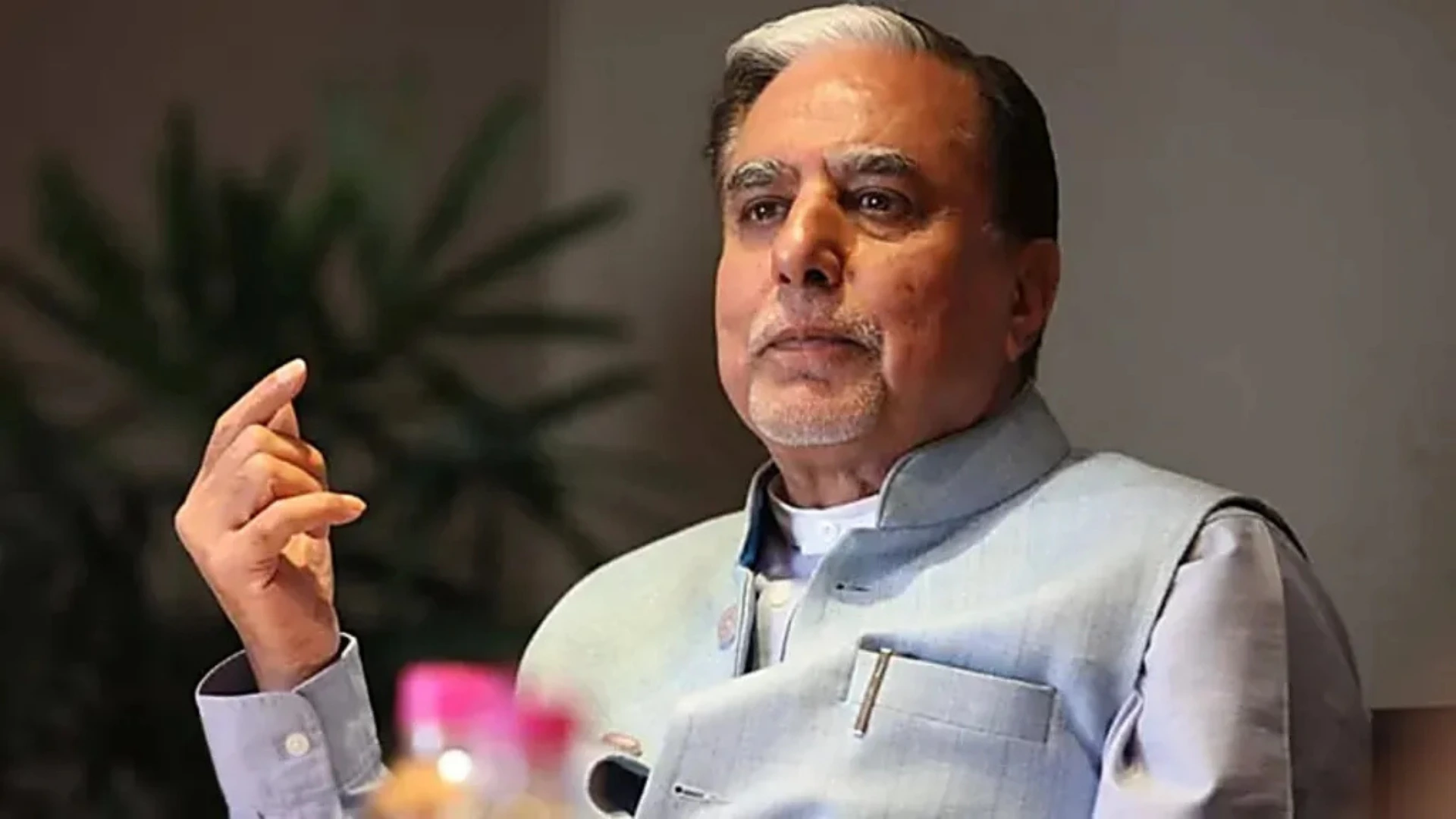
The recent insolvency resolution involving Subhash Chandra, founder of the Essel Group and Zee, brings this question sharply into focus. The numbers involved are striking. The claims admitted against him in the personal insolvency proceedings amounted to ₹22,006.57 crore, while the approved resolution plan proposed a payment of ₹6.25 crore to creditors, with the total amount including insolvency-process costs coming to approximately ₹6.5 crore. On the surface, the difference appears extraordinary and represents what looks like a 99.97% haircut.
However, the numbers require important context. This was not a situation in which Subhash Chandra personally borrowed ₹22,000 crore and then received a waiver after paying ₹6.5 crore. A significant portion of the claims arose from personal guarantees he had provided for borrowings by Essel Group-linked companies. That distinction is important because the underlying corporate borrowings, the guarantees, and the promoter’s personal insolvency proceedings are not the same thing. At the same time, the distinction makes the central question even more significant: what is a personal guarantee actually worth when it is tested during a financial crisis?
What Is a Personal Guarantee Really Worth?
When a bank provides thousands of crores of financing to a corporate group, a promoter’s personal guarantee can provide an additional layer of comfort. The implicit message behind such a guarantee is that if the company is unable to repay its obligations, the promoter will stand behind the loan. On paper, this can appear to strengthen the lender’s position and provide additional confidence when a large credit facility is sanctioned.
The difficulty arises when the amount guaranteed is significantly greater than the promoter’s realistically recoverable personal wealth. A guarantee may carry a very large numerical value, but that does not necessarily mean that the creditor can recover an equivalent amount. The practical value of a guarantee depends on the assets supporting it, their liquidity, their ownership, their encumbrances, and the legal and financial circumstances surrounding them at the time recovery becomes necessary.
This issue becomes clearer when we compare a typical small-business loan with a large corporate exposure. A businessman borrowing ₹1 crore may be required to provide property as collateral, personal guarantees, financial statements, cash-flow projections, security documentation, and detailed credit information. The lender is expected to examine the borrower’s ability to repay and the security available if repayment fails.
In contrast, when a large corporate group borrows thousands of crores, the promoter’s reputation and history of success can become part of the overall perception of creditworthiness. The business may grow rapidly, the promoter may become a celebrated business personality, and banks may continue lending as the group expands. But when financial distress eventually arrives, the lender may discover that the personal guarantee is nowhere near equivalent to the amount guaranteed. This raises a fundamental question: did the bank ever really have ₹22,000 crore of security, or did it have a guarantee whose face value was much larger than its realistically recoverable value?
Reputation Is Not Collateral
One of the biggest lessons from this situation is the importance of separating reputation from repayment capacity. In business, reputation, influence, relationships, past success, and credibility can easily become confused with the ability to repay debt. They may contribute to a promoter’s standing in the business community, but they do not automatically generate the cash required to service a loan.
A successful promoter may possess a powerful vision, an impressive track record, excellent relationships, access to capital, strong business connections, and the ability to inspire investors and bankers. These qualities can be extremely valuable when building and expanding a business. However, when debt has to be repaid, the fundamental question remains whether the business generates sufficient cash flow and whether the lender has access to sufficient assets if things go wrong.
The distinction is crucial because a promoter’s perceived wealth may not translate into recoverable value. A person may have a substantial net worth on paper, but if that wealth is concentrated in shares of their own companies, illiquid investments, pledged assets, disputed assets, group companies, or properties carrying encumbrances, the amount that a creditor can realistically recover may be considerably lower.
This leads to a simple but important principle: net worth is not the same as recoverable value. For a creditor, recoverable value is ultimately what matters.
The Uncomfortable Question for Banks
Banks may therefore need to approach promoter guarantees with a more practical question. Instead of asking only how much a promoter is worth on paper, the more important question may be: if everything goes wrong tomorrow, how much money can the bank realistically recover from this guarantee?
That question requires a deeper assessment of the promoter’s financial position. It requires understanding the quality and liquidity of the assets, the level of existing liabilities, the extent of pledges and encumbrances, and the relationship between the promoter’s personal wealth and the businesses for which the guarantee has been provided.
A promoter may appear extremely wealthy during a period of business expansion, but the value of that wealth can change dramatically when the underlying businesses face financial distress. If a significant portion of the promoter’s wealth depends on the value of the same companies that are facing difficulties, the apparent strength of the guarantee can weaken at precisely the moment when the lender needs it most.
For this reason, a personal guarantee should not be treated simply as a large number written into a loan document. Its real value should be evaluated according to what can actually be recovered under adverse circumstances.
Is This a ₹22,000-Crore Loan Waiver?
It would be misleading to describe the situation simply by saying that Subhash Chandra borrowed ₹22,000 crore and paid ₹6.5 crore. The ₹22,006.57 crore figure relates to admitted claims in the personal insolvency proceedings and is substantially connected with guarantees for corporate borrowings. The underlying companies and other recovery mechanisms remain separate matters, and the resolution plan also envisages recovery from the principal borrowers.
At the same time, the difference between the admitted claims and the amount proposed through the personal resolution plan naturally raises questions. If claims of more than ₹22,000 crore were associated with guarantees provided by a promoter, why was the promoter’s personal resolution ultimately capable of producing only a few crores for creditors?
That is arguably the more meaningful question. Rather than focusing only on the headline numbers, the discussion should examine how the original lending decisions were made, how the guarantees were valued, and whether the risks associated with the promoter’s financial position were adequately understood when the credit was extended.
The Questions Ordinary Borrowers Will Ask
This case also creates an obvious comparison in the minds of ordinary entrepreneurs. A small business owner who borrows ₹50 lakh and later struggles with repayments may quickly face demands relating to personal assets, collateral, guarantees, recovery proceedings, credit scores, and legal notices. When the numbers involved in a large corporate case run into thousands of crores, the contrast can naturally create questions about fairness.
From a legal perspective, the circumstances of an ordinary borrower and a large corporate promoter can be completely different. Insolvency laws, corporate structures, guarantees, creditor rights, and recovery mechanisms can create very different outcomes. However, from a public-perception perspective, the comparison is understandable.
The broader question is therefore not necessarily whether every borrower should be treated identically, but whether the financial system is consistently assessing risk, repayment capacity, and recoverable security across different categories of borrowers.
We Should Also Be Fair to the Banking System
It would be easy to reduce the entire issue to the statement that banks forgive billionaires while aggressively pursuing small borrowers. But that would oversimplify the functioning of the insolvency system.
India’s Insolvency and Bankruptcy Code provides a structured mechanism for dealing with financial failure. Creditors evaluate and vote on resolution plans, assets are assessed, and recovery prospects are considered. In certain circumstances, accepting a smaller amount can make economic sense if the alternative is years of litigation and an even lower recovery.
Therefore, the existence of a large haircut does not automatically prove that the insolvency system has failed. A more difficult and potentially more useful question is whether the original lending decision was sound and whether the lender had adequately assessed the risks before providing the financing.
The Problem May Have Started Years Before Insolvency
This may be the most important lesson of all. The real problem, if there was one, may not have begun when the company finally defaulted. It may have started years earlier, when the bank first sanctioned the loan and decided how much risk it was willing to accept.
By the time a ₹10,000-crore or ₹20,000-crore exposure becomes a serious problem, the lender may have very limited options. The important questions should therefore have been asked at the beginning. What was the promoter’s genuine financial capacity? What was the group’s consolidated leverage? How much debt existed across related entities? What was the quality of the collateral? What would happen if the promoter’s flagship company lost significant value? How much of the promoter’s reported net worth was actually liquid?
Most importantly, if the promoter’s personal guarantee was supposed to represent the last line of defence, the bank needed to understand exactly how much that line of defence was worth.
The “Too Successful to Question” Problem
There is also a behavioural dimension to this issue. When a businessman has been successful for many years, people can gradually begin to assume that the success will continue. Past performance can quietly become a substitute for independent risk analysis.
An entrepreneur may project strong future growth because the business has grown consistently in previous years. A banker may find those projections credible because the promoter has delivered on earlier promises. A new project may be presented as transformative because previous projects have succeeded. Over time, confidence can become credibility, credibility can become credit, credit can become leverage, and leverage can eventually become systemic risk.
The danger is not confidence itself. Successful entrepreneurs often need confidence to make difficult decisions, take calculated risks, attract talent, raise capital, and build businesses. The danger arises when confidence begins to replace verification and when a strong track record becomes a reason to stop asking difficult questions.
Where People Styles Becomes Relevant
This is where the People Styles framework becomes relevant to the discussion. Successful promoters can often display strong Eagle and Parrot characteristics. The Eagle represents qualities such as decisiveness, ambition, competitiveness, boldness, and a willingness to take risks. The Parrot represents persuasion, charisma, relationship-building, optimism, vision, and strong communication.
These qualities can be extremely valuable in entrepreneurship. They can help a leader build an organisation, attract employees, develop relationships, raise capital, and persuade stakeholders to support an ambitious vision.
However, the same characteristics can also influence the people surrounding the entrepreneur. A highly charismatic entrepreneur may make a high-risk proposition appear to be a high-potential opportunity. A highly confident leader may make aggressive projections appear almost inevitable. When this happens, people may begin evaluating the person instead of independently evaluating the proposition.
That is why bankers, investors, and business partners need an Owl mindset alongside the confidence and energy represented by the Eagle and Parrot. The Owl asks questions, examines data, challenges assumptions, verifies numbers, and separates the person from the proposition.
A banker does not need to dislike or distrust an entrepreneur personally. The responsibility is simply to maintain enough analytical distance to separate personality from risk.
The Lesson for Entrepreneurs
The case also carries an important message for entrepreneurs. Business growth should not automatically be interpreted as personal wealth. Revenue does not necessarily mean cash flow, valuation does not necessarily mean liquidity, reputation does not constitute collateral, and a personal guarantee does not represent unlimited personal wealth.
Debt can amplify success during periods of rapid expansion, allowing businesses to invest, acquire assets, enter new markets, and grow faster. But the same leverage can amplify failure when business conditions change. A company may look exceptionally strong during an expansion cycle, while a downturn can expose how dependent that growth was on borrowed capital.
Entrepreneurs therefore need to understand not only how much they can borrow, but also how much risk they are personally accepting when they provide guarantees for corporate borrowing.
The Lesson for Banks
For banks, the central lesson is equally clear. Credit decisions should not be based primarily on the personality, reputation, or fame of the promoter. Lending decisions need to be grounded in cash flow, assets, business fundamentals, governance, risk-adjusted returns, and genuine repayment capacity.
Where a personal guarantee is involved, the guarantee should be valued realistically rather than emotionally. The assessment should not depend on whether the promoter is famous, successful, well connected, or widely believed to be wealthy. It should depend on what the bank can reasonably expect to recover if the business fails and the guarantee has to be enforced.
The objective is not to eliminate trust from business relationships. It is to ensure that trust does not replace financial analysis.
The ₹22,000-Crore Question
The Subhash Chandra case therefore raises a question much larger than the circumstances of one businessman. It brings together issues of entrepreneurship, banking, risk, leverage, personal guarantees, and accountability.
The headline may be ₹22,000 crore to ₹6.5 crore. But the more important question may be how a personal guarantee associated with claims of more than ₹22,000 crore ultimately had such limited recoverable value through the promoter’s personal resolution plan.
Answering that question honestly requires looking beyond the headline. It requires examining the original lending decisions, the assumptions behind the credit, the quality of the guarantees, the promoter’s actual financial capacity, and the way risk was assessed over the years.
The lesson is not that entrepreneurs should never receive large loans or that every large insolvency represents a failure of the banking system. The deeper lesson is that entrepreneurial success and creditworthiness are not the same thing.
A great entrepreneur may build extraordinary businesses, inspire people, attract capital, and create significant value. But when it comes to lending, the ultimate questions remain much more fundamental: What is the cash flow? What are the assets? What is the repayment capacity? And if things go wrong, what can actually be recovered?
That is perhaps the most important lesson the Subhash Chandra case offers to bankers, investors, and entrepreneurs alike.
For more such information visit EQMint
Join our Whatsapp channel for timely updates: Whatsapp
Disclaimer: This article is not an investment advice and is for educational purpose only.