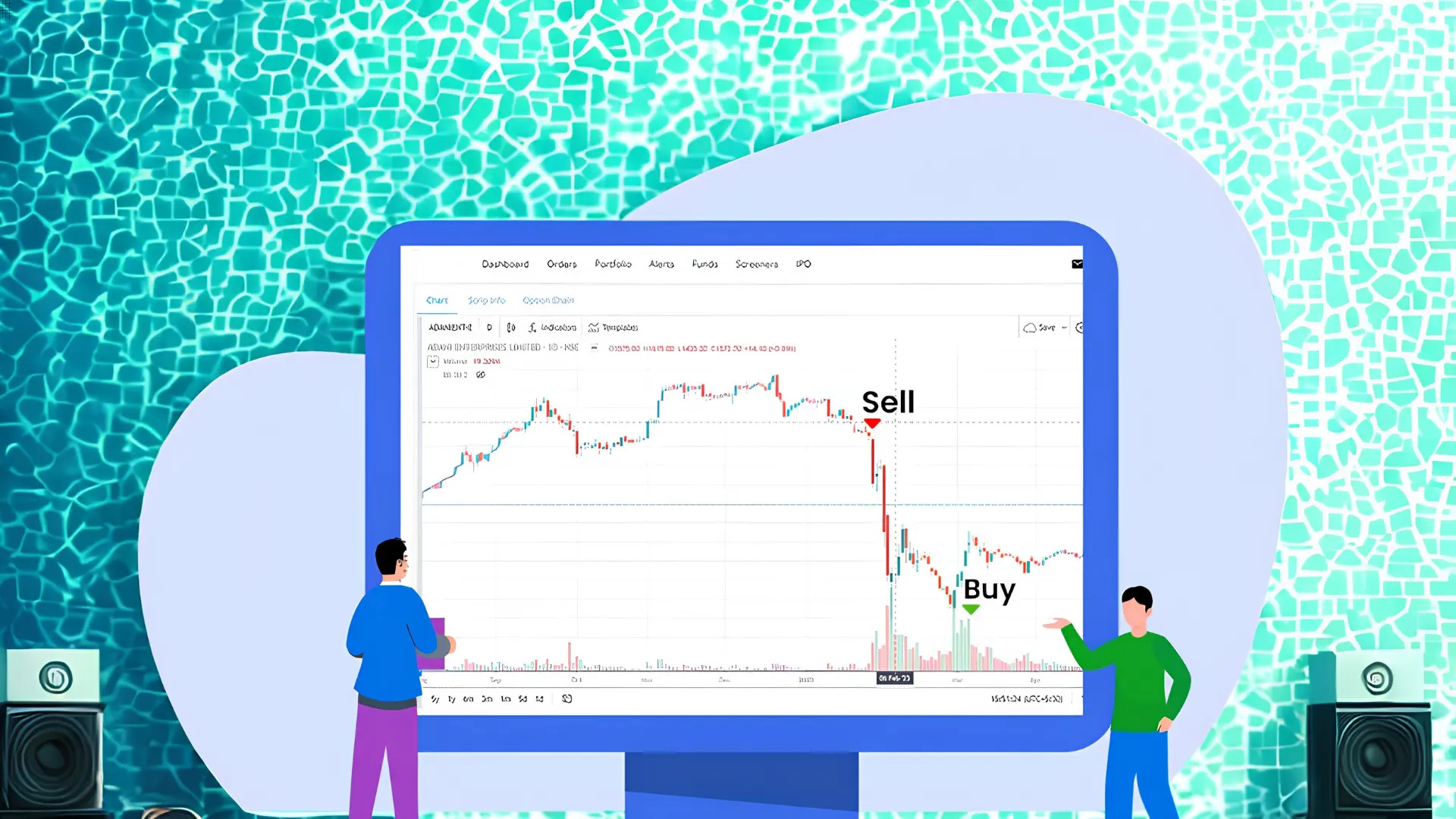
Short selling is selling a stock you don’t own, in the hope of buying it back cheaper later and pocketing the difference. You profit when the price falls, the reverse of normal investing. And yes, Indian retail investors can legally do it, but within strict SEBI limits.
Author: Aditya Pareek | EQMint
You can short intraday in the cash market (squaring off before close), short on a delivery basis through the Securities Lending and Borrowing (SLB) mechanism, or short via futures and options. What you cannot do, and what SEBI banned back in 2007, is naked short selling: selling shares you have not borrowed or arranged to borrow.
So the answer is yes, with guardrails. The harder question is whether a retail investor should, because shorting carries a risk most beginners badly underestimate.
Here’s how short selling works, the three legal routes in India and the one feature that makes it far more dangerous than buying.
How does short selling work?
Normal investing is buy low, sell high. Short selling flips the order: sell high first, buy low later.
The mechanics go like this. You borrow shares (or use a route that doesn’t need physical borrowing), sell them at today’s price, wait for the price to fall, buy them back cheaper and return them. The gap between your selling price and your lower buying price is your profit.
Say a stock trades at 1,000 and you expect it to drop. You short it at 1,000. It falls to 800. You buy back at 800 and keep the 200 difference per share, minus costs. If instead it rises to 1,200, you’ve lost 200 per share. That asymmetry is the whole story, and we’ll come back to it.
Is short selling legal in India?
Yes, it’s legal and SEBI-regulated. Both retail and institutional investors are allowed to short sell. But the rules are deliberately tight, shaped by a market crash in 2007 that SEBI linked to abusive shorting.
The one hard prohibition is naked short selling, selling shares you have neither borrowed nor arranged to borrow. Every investor must be able to honour delivery at settlement. This rule exists to stop the kind of manipulation that can drive a stock down on selling pressure that isn’t backed by real shares.
There’s also a key difference between players. Institutional investors must declare a short sale upfront when placing the order and cannot square off intraday. Retail investors get more flexibility, including the ability to disclose by end of the trading day and to square off the same day.
The three ways a retail investor can short in India
Three legal routes, each suited to a different situation.
| Route | How it works | Time horizon |
| Intraday cash | Sell, then buy back same day | Same day only |
| SLB | Borrow shares through the exchange | Days to months |
| Futures and options | Sell a futures contract or buy a put | Up to expiry |
Intraday in the cash market. The simplest route. You short a stock and must buy it back before the market closes the same day. If you don’t, your broker squares off your position automatically, often at a poor price. This is the most common way retail traders short, and it’s confined to a single day.
Securities Lending and Borrowing (SLB). The route for holding a short overnight or longer in the cash market. You borrow actual shares through the exchange’s SLB platform for a fee, sell them, and return them later. SLB works only for eligible stocks, settles on a T+1 basis and is the legitimate way to short on a delivery basis without going naked.
Futures and options. The route most active retail traders actually use. You don’t borrow shares at all. You sell a futures contract or buy a put option to bet on a fall. It allows overnight positions up to expiry, but it sits in the F&O segment, where SEBI data shows over 91% of individual traders lose money.
The one feature that makes shorting dangerous
Take a clear position here, because this is the point most curiosity-driven articles bury. When you buy a stock, your maximum loss is capped. When you short one, it is not.
Buy a share at 1,000 and the worst case is it goes to zero. You lose 1,000, no more. Your downside is limited and your upside is open.
Short a share at 1,000 and there is no ceiling on how high it can climb. If it doubles to 2,000 you lose 1,000. If it triples you lose 2,000. The loss on a short is theoretically unlimited, because a price can rise without limit, while your potential gain is capped at the price falling to zero. Shorting inverts the normal risk profile: limited upside, unlimited downside.
This is why a short squeeze is so feared. If a heavily shorted stock starts rising, short sellers rush to buy back and cut losses, that buying pushes the price higher still, which forces more buying. The losses can spiral fast and hard.
Why retail investors rarely short, and mostly shouldn’t
The asymmetry above is the core reason, but there’s more stacked against the retail short seller.
Timing has to be near-perfect. Even if you’re right that a stock is overvalued, it can stay irrational longer than your margin can survive. Markets trend up over the long run, so you’re betting against the general direction. Costs and borrowing fees eat into returns. And the intraday-only limit in the cash market means most retail shorts are squeezed into a single day, the hardest timeframe to be right on.
The honest takeaway. Short selling is a legitimate tool used by sophisticated investors and activist funds to express a view or hedge a portfolio. For a retail beginner, it’s one of the fastest ways to lose more than you put in. Understanding it is worthwhile. Using it without deep experience usually isn’t.
When does short selling actually make sense?
It has genuine uses, just not as a beginner’s profit engine.
Hedging is the soundest one. An investor holding a large portfolio might short an index future to protect against a broad market fall, offsetting losses on holdings. Experienced traders also short to express a researched conviction that a specific company is overvalued or troubled, the way activist short sellers publish reports and bet against a stock. Both require skill, capital and risk control a beginner rarely has.
For almost everyone starting out, the better move is to simply not own what you don’t believe in, rather than actively betting against it. Avoiding a bad stock costs nothing. Shorting it can cost more than everything.
FAQ
What is short selling?
Selling a stock you do not own, aiming to buy it back later at a lower price and keep the difference. You profit when the price falls, the opposite of normal buy-and-hold investing.
Is short selling legal in India?
Yes. Both retail and institutional investors can short sell under SEBI rules. However, naked short selling, selling shares you have not borrowed or arranged to borrow, has been banned since 2007.
Can retail investors short sell in India?
Yes, through three routes: intraday short selling in the cash market, the Securities Lending and Borrowing mechanism for delivery-based shorts, and futures and options in the derivatives segment.
What is naked short selling?
Selling shares you have neither borrowed nor arranged to borrow, with no ability to deliver at settlement. It is prohibited in India to prevent market manipulation.
Can I hold a short position overnight in India?
Not in the cash market through intraday trading, where you must square off before close. To hold a short longer you must use the SLB mechanism or the futures and options segment.
Why is short selling so risky?
Because the loss is theoretically unlimited. A stock you short can rise without any ceiling, so your potential loss has no cap, while your maximum gain is limited to the price falling to zero.
What is a short squeeze?
When a heavily shorted stock rises and short sellers rush to buy back to limit losses, that buying pushes the price even higher, forcing more buying and accelerating losses for those still short.
Should beginners try short selling?
Generally no. The unlimited-loss profile, the need for near-perfect timing and the market’s long-term upward trend make it one of the fastest ways for a beginner to lose money. It suits hedging and experienced traders, not newcomers.
EQMint is not a SEBI registered investment adviser. This article is for informational purposes only and is not investment advice. Short selling carries a high and theoretically unlimited risk of loss, so consult a SEBI-registered financial adviser before attempting it.
For more such information visit EQMint
Join our Whatsapp channel for timely updates: Whatsapp