
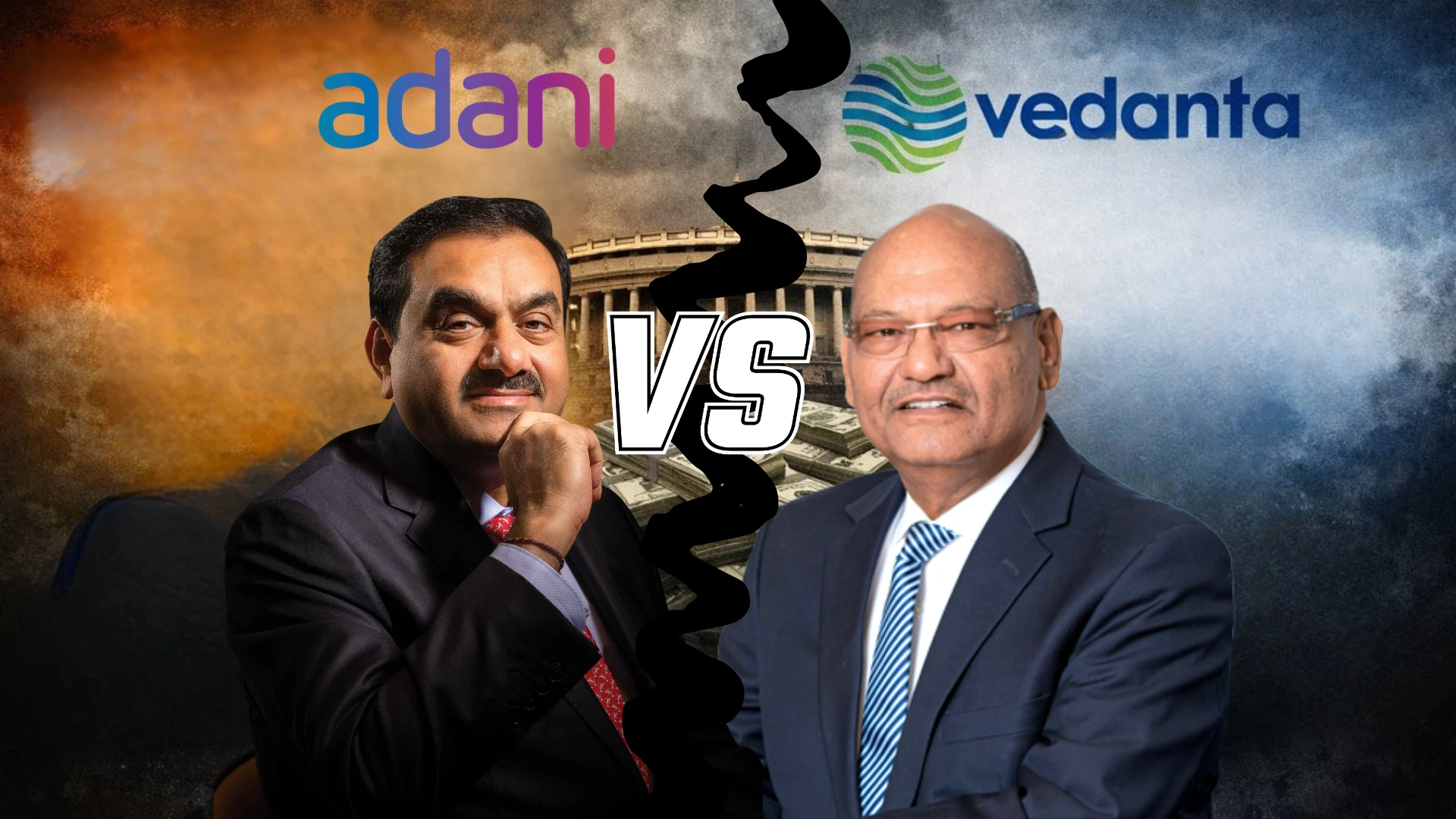
The battle for Jaiprakash Associates’ assets has triggered investor interest in Adani and Vedanta. But this is not just an acquisition story—it is a High-risk bet on leverage, execution, and turnaround.
Author: Aadarsh Patel | EQMint
The potential acquisition of Jaiprakash Associates Limited (JAL) assets has turned into a strategic contest involving two of India’s most aggressive conglomerates—Adani Group and Vedanta Group.
At first glance, the deal appears to be a classic distressed asset play. JAL, burdened with debt and operational challenges, presents an opportunity for large players to acquire valuable infrastructure assets at discounted valuations.
However, for investors, the real question is not who wins the bid—but whether backing these companies at this stage is worth the risk.
The Real Angle: This Is Not a Growth Story, It’s a Leverage Story
Unlike traditional acquisitions aimed at expansion, this battle is fundamentally about balance sheet strategy and capital allocation.
Both Adani and Vedanta are already:
-
- Highly leveraged
-
- Capital-intensive businesses
-
- Operating in cyclical sectors
Acquiring JAL assets could:
-
- Strengthen long-term positioning
-
- But increase short-term financial stress
This makes the opportunity as risky as it is potentially rewarding.
Why JAL Assets Are Attractive
Despite its financial troubles, Jaiprakash Associates holds strategic assets across:
-
- Cement
-
- Infrastructure
-
- Real estate
For bidders, this offers:
-
- Entry into key sectors at discounted valuations
-
- Synergy opportunities with existing businesses
-
- Long-term capacity expansion
However, distressed assets come with hidden challenges—legal liabilities, operational inefficiencies, and restructuring costs.
Adani vs Vedanta: Different Strategies, Same Risk
Adani Group: Scale and Integration Play
The Adani Group has consistently pursued aggressive expansion across infrastructure, cement, and energy.
For Adani:
-
- JAL assets could strengthen its cement and infrastructure footprint
-
- Fit into its broader vertical integration strategy
Risk:
Further expansion could increase leverage concerns, especially given existing debt levels.
Vedanta Group: Value Unlocking Approach
Vedanta’s strategy often revolves around acquiring undervalued assets and improving operational efficiency.
For Vedanta:
-
- JAL presents a turnaround opportunity
-
- Potential to extract value through restructuring
Risk:
Vedanta already faces scrutiny over debt and cash flow management, making another acquisition a sensitive move.
Analysts’ View: Opportunity with Caution
Market analysts are divided on the implications of this deal.
Bullish View
-
- Distressed assets offer long-term value
-
- Acquisition at low cost can enhance profitability over time
-
- Strong players can turn around inefficient operations
Bearish View
-
- Increased debt burden could strain balance sheets
-
- Execution risks in turning around JAL assets
-
- Market sentiment may remain volatile
The Bigger Trend: Rise of Distressed Asset Investing in India
This battle reflects a broader shift in India’s corporate landscape.
With multiple companies undergoing insolvency or restructuring, large conglomerates are increasingly:
-
- Targeting stressed assets
-
- Expanding through inorganic growth
-
- Leveraging financial strength to acquire undervalued businesses
However, success in this strategy depends heavily on:
-
- Execution capability
-
- Financial discipline
-
- Market conditions
What Investors Should Watch
1. Debt Levels Post-Acquisition
The biggest risk lies in how the acquisition is financed. A significant increase in debt could impact stock performance.
2. Integration and Turnaround Execution
The ability to revive JAL’s assets efficiently will determine long-term value creation.
3. Market Sentiment and Regulatory Developments
Distressed asset deals often face regulatory and legal hurdles, which can delay or impact outcomes.
Risk vs Reward: Is It Worth the Bet?
For investors, this is not a straightforward opportunity.
Potential Upside
-
- Long-term value creation from undervalued assets
-
- Market share expansion
-
- Improved operational efficiency
Key Risks
-
- Rising leverage
-
- Execution challenges
-
- Short-term volatility
Conclusion
The battle for Jaiprakash Associates is more than a corporate acquisition story—it is a test of financial discipline and strategic execution.
For Adani and Vedanta, the deal could unlock long-term value.
For investors, however, it represents a high-risk, high-reward proposition.
In the current market environment, the key question is not just who acquires JAL—but who can afford to do so without compromising financial stability.
For more such information visit EQMint
Disclaimer: This article is not an investment advice and is for educational purpose only