
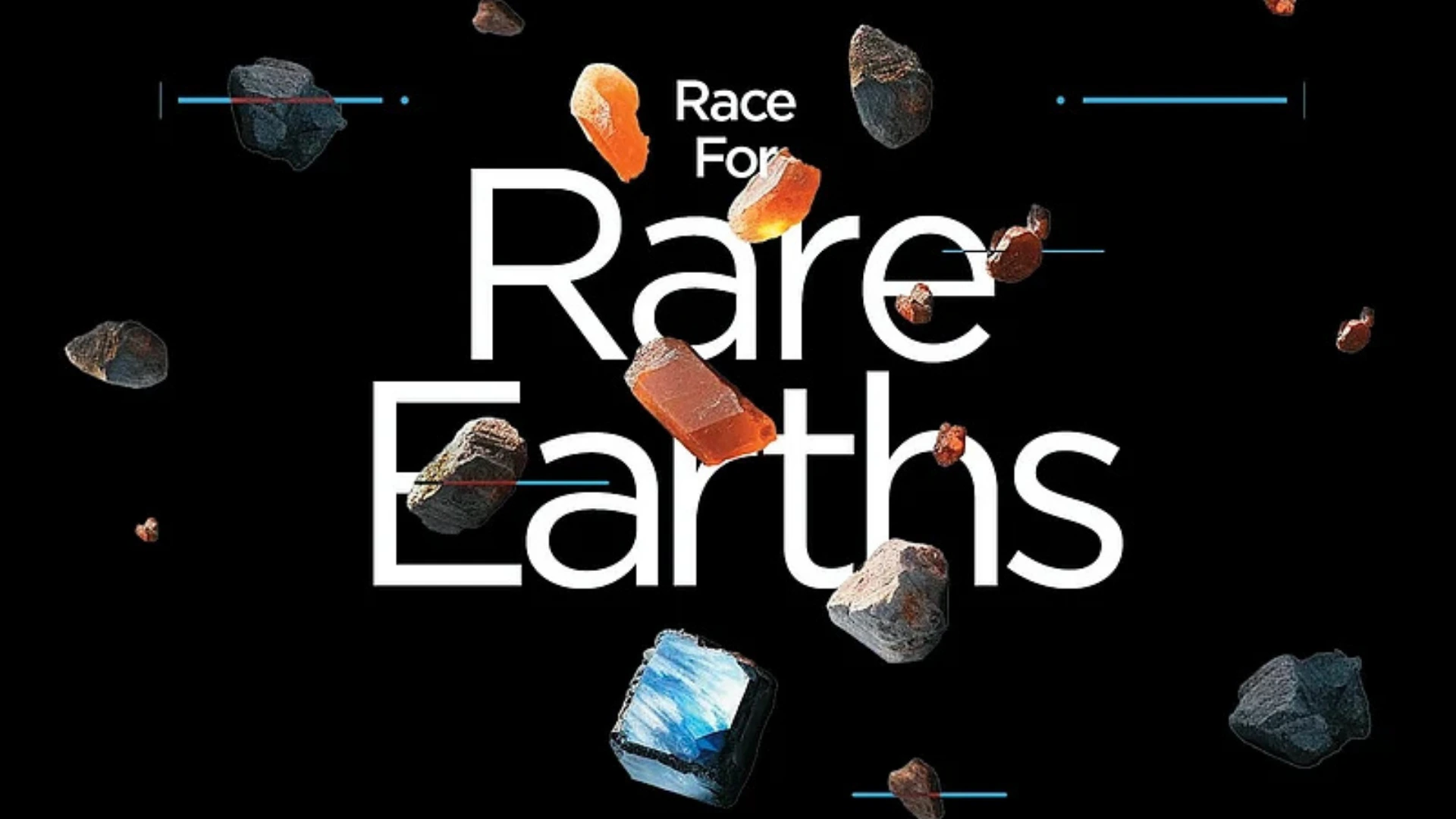
Synopsis: Rare earth elements (REEs) have quietly become one of the world’s most strategically important resources. Despite their name, these 17 critical minerals are essential for manufacturing electric vehicles (EVs), wind turbines, smartphones, defence equipment, semiconductors, and advanced electronics. For years, China has dominated the global rare earth supply chain, controlling both mining and processing. However, recent export restrictions imposed by China have renewed global concerns over supply chain security. As countries look to diversify their sources, India’s rare earth strategy is focusing on its own rare earth reserves and policy framework to strengthen critical mineral security and support domestic manufacturing.
July 7, 2026: Rare earth elements rarely make headlines, but they have become central to the global technology race. China currently accounts for the majority of the world’s rare earth processing capacity and remains the dominant supplier of refined rare earth materials used across multiple industries. Recent export restrictions on several rare earth products have intensified concerns among manufacturers worldwide, particularly in sectors such as electric vehicles, clean energy, defence, semiconductors, and consumer electronics.
Author: Tavisha Kanodia | EQMint
For India, this development presents both an opportunity and a challenge. The country possesses significant rare earth reserves, particularly in coastal mineral sands across states such as Odisha, Andhra Pradesh, Kerala, and Tamil Nadu. However, possessing reserves alone does not automatically translate into industrial leadership. The real challenge lies in mining, refining, processing, and integrating these critical minerals into domestic manufacturing while strengthening India’s rare earth supply chain.
India Has the Resources, but the Ecosystem Is Still Developing
India is among the countries with notable rare earth reserves, yet its participation in the global rare earth value chain remains relatively limited. Mining activities have largely been led by IREL (India) Limited, a government-owned enterprise that extracts rare earth-bearing minerals from coastal deposits.
Extracting rare earth minerals from ore is only the first step. Converting them into high-purity materials suitable for magnets, batteries, semiconductors, and defence systems requires advanced chemical processing, specialised technology, environmental safeguards, and significant investment in rare earth processing infrastructure.
Recognising this gap, the Government of India has increased its focus on strengthening critical mineral security through policy initiatives, international partnerships, and domestic exploration. Recent efforts include identifying critical mineral blocks for auction, encouraging private-sector participation, and securing overseas mineral assets through strategic collaborations. These initiatives are expected to support India’s semiconductor ecosystem, electronics manufacturing, and the country’s long-term industrial ambitions.
Why Rare Earths Matter for India’s Future Industries
Electric vehicles require rare earth magnets for high-performance motors. Wind turbines depend on powerful permanent magnets for efficient electricity generation. Defence systems, including missiles, radar technologies, and advanced communication equipment, also rely on rare earth elements. Even smartphones, laptops, medical devices, semiconductor manufacturing, and advanced electronics require various rare earth components.
As India expands domestic manufacturing under initiatives such as Make in India and strengthens its semiconductor ecosystem, securing reliable access to these critical minerals becomes increasingly important. Dependence on imported processed materials could expose manufacturers to geopolitical disruptions, supply chain risks, and price volatility. Developing a stronger domestic rare earth supply chain would also support India’s ambitions in EV manufacturing, renewable energy, and strategic technologies.
The Opportunity Is Real, but So Are the Challenges
Despite growing optimism, industry experts caution that developing a competitive rare earth industry is a long-term undertaking. Environmental regulations surrounding mining and chemical processing are stringent due to the complex nature of rare earth extraction. Establishing processing facilities also requires substantial investment, skilled manpower, advanced technology, and reliable infrastructure.
Global competition is another major hurdle. Countries including the United States, Australia, Japan, and members of the European Union are investing heavily to diversify rare earth supply chains and strengthen their access to critical minerals. India must therefore compete not only with China’s established ecosystem but also with other nations pursuing similar strategic objectives.
Moreover, critical mineral security cannot be achieved through mining alone. Success will depend on building an integrated value chain that includes exploration, refining, advanced materials, manufacturing, research, recycling, and international partnerships.
From Strategic Resource to Economic Opportunity
China’s export restrictions have reminded the world that critical minerals are no longer merely commodities—they are strategic assets capable of influencing industries, trade, and national security. For India, the current global realignment presents a unique opportunity to strengthen its position within an emerging rare earth industry and the global critical minerals economy.
Ultimately, India’s rare earth strategy will not be judged solely by the quantity of minerals it extracts but by its ability to create an end-to-end ecosystem that supports manufacturing, innovation, and strategic resilience. As global industries search for diversified rare earth supply chains, India’s next opportunity may lie not beneath the ground alone, but in how effectively it transforms these critical minerals into engines of economic growth.
Bibliography
- Reuters. China’s export controls on rare earths and critical minerals.
https://www.reuters.com/ - International Energy Agency (IEA). Global Critical Minerals Outlook.
https://www.iea.org/reports/global-critical-minerals-outlook - Ministry of Mines, Government of India. Critical Minerals Mission and related policy initiatives.
https://mines.gov.in/ - IREL (India) Limited. About Rare Earths and Mineral Operations.
https://irel.co.in/ - Geological Survey of India (GSI). Critical Mineral Exploration Reports.
https://www.gsi.gov.in/ - Ministry of Commerce & Industry, Government of India. Critical Minerals and Manufacturing Ecosystem.
https://commerce.gov.in/
or more such information visit EQMint
Join our Whatsapp channel for timely updates: Whatsapp
Disclaimer: This article is not an investment advice and is for educational purpose only.