
Synopsis: India’s e-commerce industry has long been dominated by large digital marketplaces that connect millions of buyers and sellers through closed platforms. While this model has transformed online shopping, it has also raised questions about market concentration. The Open Network for Digital Commerce (ONDC), a government-backed initiative, seeks to introduce a fundamentally different approach by creating an open digital network where buyers and sellers can transact across multiple applications. As ONDC continues to expand, an important question emerges: is it merely another competitor in India’s e-commerce market, or is it redefining how digital commerce itself operates?
July 7, 2026: From Marketplaces to Open Networks
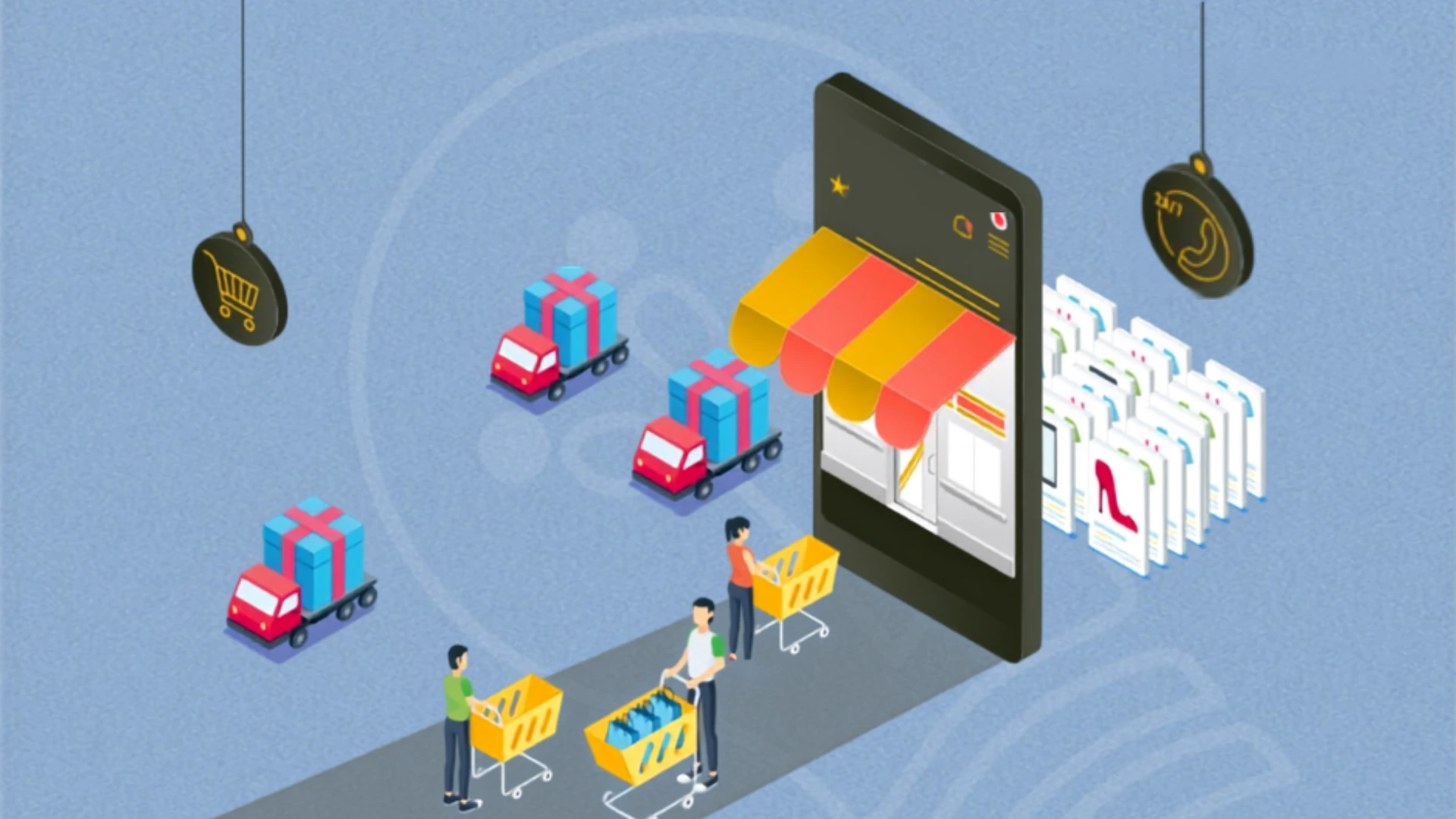
India’s digital commerce sector has witnessed extraordinary growth over the past decade. Rising smartphone penetration, affordable internet access, digital payments through UPI, and improved logistics have enabled millions of consumers to embrace online shopping. Large platforms such as Amazon and Flipkart have played a significant role in this transformation by creating integrated ecosystems that manage product discovery, payments, logistics, customer service, and seller onboarding.
Author: Tavisha Kanodia | EQMint | EQMint Originals
However, these platforms operate as closed ecosystems. Buyers and sellers interact within a single platform, meaning merchants often become dependent on one marketplace for visibility and customer acquisition. This dependence has generated ongoing discussions around commissions, algorithmic rankings, platform policies, and the bargaining power of small businesses.
Recognising these structural challenges, the Government of India launched the Open Network for Digital Commerce (ONDC) in 2022. Instead of creating another e-commerce marketplace, ONDC introduces an open network built on interoperable protocols. Similar to how UPI transformed digital payments by allowing transactions across different banking applications, ONDC aims to enable buyers and sellers to connect regardless of the application they use.
A Different Model, Not Just Another Competitor
Amazon functions as a centralised marketplace where sellers list products directly on its platform, and customer’s complete purchases within the Amazon ecosystem. Every stage of the transaction—from product discovery to payment and delivery—is largely managed by a single company.
ONDC follows a decentralised model. Buyers may search for products using one application, complete payments through another, and receive deliveries through independent logistics partners, while sellers remain accessible across the entire network rather than being tied to one platform.
This interoperability has the potential to lower entry barriers for small businesses, local retailers, restaurants, and service providers. Instead of investing heavily in customer acquisition on multiple marketplaces, businesses participating in ONDC can become discoverable across numerous buyer applications connected to the network.
Can ONDC Transform India’s MSME Landscape?
Traditional e-commerce platforms have enabled many small businesses to reach national markets, but participation often involves platform fees, advertising expenditure, and dependence on marketplace algorithms for visibility. Smaller merchants frequently struggle to compete against larger brands with greater marketing budgets.
ONDC attempts to address this challenge by reducing platform dependence and enabling broader digital participation. The network has already expanded beyond retail to include sectors such as food delivery, grocery, mobility, logistics, and financial services, reflecting its ambition to become a common digital commerce infrastructure rather than a single marketplace.
Government support, integration with digital public infrastructure, and participation by banks, fintech companies, logistics providers, and technology firms have further strengthened the initiative’s ecosystem. If adoption continues to expand, ONDC could become an important tool for improving digital inclusion among smaller enterprises.
The Road Ahead: Evolution Rather Than Replacement
Despite its ambitious vision, ONDC remains in the early stages of its journey. Building an open network capable of competing with well-established e-commerce giants requires significant improvements in user experience, seller onboarding, customer trust, dispute resolution, logistics efficiency, and service consistency.
Amazon and other established platforms continue to possess substantial advantages, including extensive warehousing networks, sophisticated recommendation systems, strong brand recognition, and years of operational expertise. These strengths are unlikely to disappear simply because a new network has emerged.
The debate, therefore, is not about whether ONDC will replace Amazon. Rather, it is about whether India’s digital economy is moving towards a more open and interoperable model of commerce. Just as UPI transformed digital payments without eliminating banks, ONDC may reshape digital commerce without replacing existing marketplaces. Its success will ultimately depend on whether businesses and consumers embrace openness over platform dependence.
or more such information visit EQMint
Join our Whatsapp channel for timely updates: Whatsapp
Disclaimer: This article is not an investment advice and is for educational purpose on