
Author : Aashiya Jain | EQMint | Political
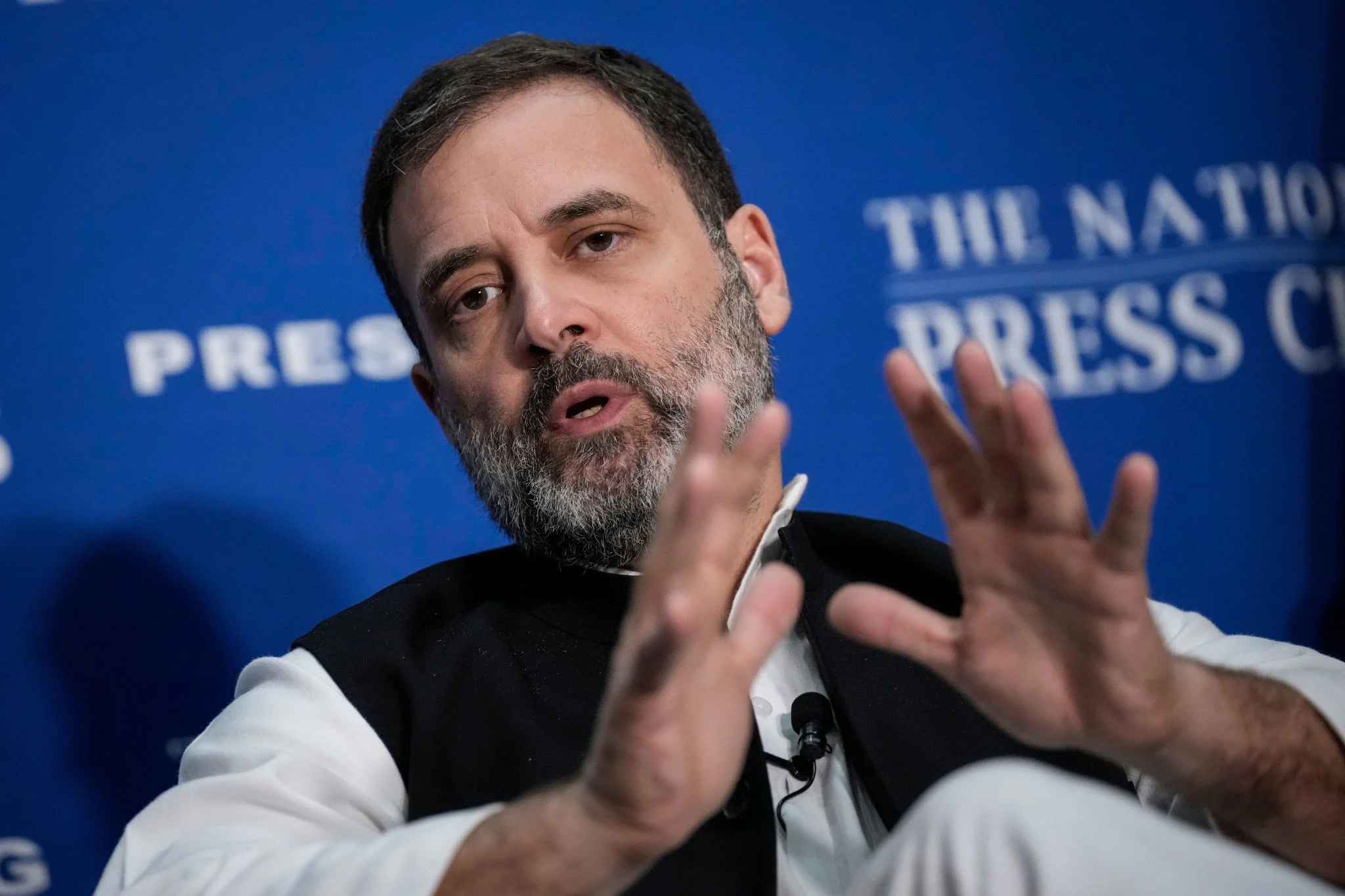
In a sharp political attack aimed at the ruling establishment, Rahul Gandhi, Leader of the Opposition in the Lok Sabha, on Tuesday accused the Bharatiya Janata Party (BJP) of promoting a “feudal mindset” that, he claimed, systematically empowers large monopolies while pushing small traders, entrepreneurs, and ordinary citizens into economic distress. His remarks came through a strongly worded post on social media, reigniting a long-running debate over economic concentration, inequality, and the direction of India’s development model.
Rahul Gandhi’s tweet struck a familiar but forceful tone. “India is not meant to be run for a handful of monopolies,” he wrote, asserting that the country’s economic policies should empower millions of small traders, farmers, and young entrepreneurs rather than a few powerful corporate groups. Describing the current approach as a continuation of a “feudal way of thinking,” he argued that decision making has become centralized and exclusionary, benefiting those with proximity to power while leaving the majority to struggle for survival.
According to Rahul Gandhi, small traders once considered the backbone of India’s economy are bearing the brunt of policies that allegedly favour large corporations. Rahul Gandhi pointed to rising compliance burdens, uneven access to credit, and market structures that, in his view, make it increasingly difficult for micro, small, and medium enterprises (MSMEs) to compete. “When monopolies thrive, competition dies. And when competition dies, opportunity dies with it,” he said in his post, framing the issue not just as an economic concern but as a democratic one.
The Congress leader Rahul Gandhi also linked the issue to employment, a subject he has consistently highlighted in recent months. He suggested that the dominance of a few large players has failed to generate sufficient jobs, especially for India’s youth. “Young Indians are full of talent and ambition,” Gandhi noted, “but they are being denied fair opportunities because the system is tilted in favour of a few.” He argued that a healthy economy requires diversity of businesses, ideas, and ownership rather than excessive concentration of wealth and influence.
Political observers see Rahul Gandhi’s remarks as part of a broader narrative the Congress has been building ahead of key state elections and the next general election. By invoking the term “feudal mindset,” Gandhi sought to draw a contrast between what he described as an outdated, top down model of governance and the Congress’s vision of a more participatory, inclusive economy. The phrase also appears designed to resonate with small traders, shopkeepers, and informal workers who have expressed anxieties about rising costs and shrinking margins.
The Bharatiya Janata Party, however, has repeatedly rejected such accusations. BJP leaders maintain that their economic policies are aimed at improving ease of doing business, formalising the economy, and attracting investment that can drive long term growth. They argue that reforms such as the Goods and Services Tax (GST), digitalisation, and infrastructure expansion have created a more transparent and efficient economic environment, benefiting businesses of all sizes. According to the BJP, allegations of favouritism towards select corporates are politically motivated and overlook broader gains in connectivity, logistics, and market access.
Yet, the perception of growing economic concentration remains a potent political issue. Critics of the government often cite data showing rising corporate profits alongside stagnant or uneven income growth for smaller businesses. Gandhi’s tweet tapped into this sentiment, portraying the struggle of small traders as emblematic of a deeper imbalance in the economy. “India’s strength lies in its people, not in monopolies,” he wrote, calling for policies that restore what he described as fairness and balance.
Beyond economics, Gandhi also framed the issue as a moral and constitutional question. In his post, he suggested that empowering monopolies undermines the spirit of equality enshrined in the Constitution. He urged citizens to “fight this feudal mindset together,” positioning the debate as a collective effort to reclaim democratic and economic space. This appeal aligns with his recent speeches, in which he has increasingly emphasised constitutional values, social justice, and decentralisation of power.
The reaction to Gandhi’s tweet was swift on social media, drawing both support and criticism. Supporters praised him for voicing concerns of small traders and questioning corporate concentration. Many echoed his call for a more people centric economy, sharing personal stories of business challenges and job insecurity. Critics, on the other hand, accused him of oversimplifying complex economic issues and ignoring global trends that favour scale and efficiency. Some BJP supporters countered by pointing to welfare schemes and startup initiatives as evidence of inclusive growth.
As India continues to navigate economic uncertainty, inflationary pressures, and global headwinds, the debate over monopolies versus small enterprises is likely to intensify. Rahul Gandhi’s intervention underscores how economic policy has become a central battleground in Indian politics, not just in terms of numbers and growth rates, but in narratives about fairness, opportunity, and the kind of society India aspires to be.
Whether his accusations translate into electoral traction remains to be seen. What is clear, however, is that Gandhi’s tweet has once again pushed the spotlight onto a critical question: should India’s future be shaped by a few powerful players, or by the collective energy of millions of small businesses and workers? As political rhetoric heats up, the answer to that question may well influence the country’s political and economic direction in the years ahead.
For more such Information : EQMint
Resource link : ET