
Synopsis: For decades, the Serum Institute of India (SII) has quietly built one of the world’s most influential vaccine manufacturing businesses while remaining privately owned. From supplying childhood vaccines across the globe to playing a defining role during the COVID-19 pandemic, the Pune-based company has become synonymous with affordable, large-scale vaccine production. Its latest partnership with the Gates Medical Research Institute (Gates MRI) to manufacture the experimental M72/AS01E tuberculosis (TB) vaccine marks another significant milestone—not only for global healthcare but also for India’s growing role in pharmaceutical innovation and manufacturing.
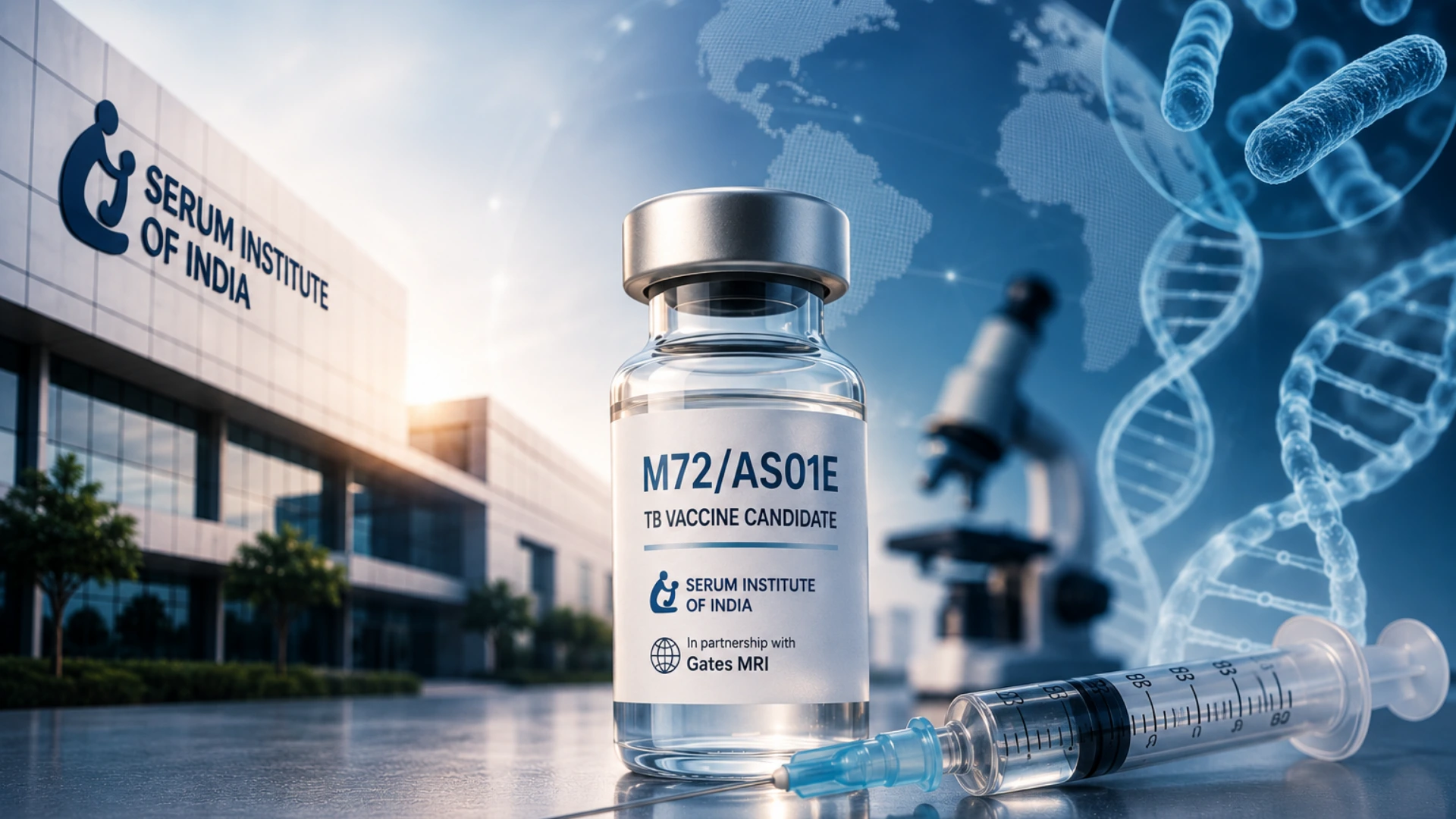
July 20, 2026: The Serum Institute of India has entered into a landmark agreement with the Gates Medical Research Institute (Gates MRI) to manufacture the experimental M72/AS01E tuberculosis vaccine candidate, currently in late-stage Phase III clinical trials. Under the partnership, Gates MRI will transfer manufacturing technology to Serum Institute, while the company plans to invest over US$100 million to prepare production facilities ahead of regulatory approval. The agreement also involves GSK, which will continue supplying the vaccine’s proprietary AS01E adjuvant. If approved, M72/AS01E could become the first new tuberculosis vaccine in over 100 years, potentially transforming global efforts to combat one of the world’s deadliest infectious diseases. (Reuters)
Author: Tavisha Kanodia | EQMint
The Company That Quietly Became the World’s Vaccine Factory
Founded in 1966 by Dr. Cyrus Poonawalla, the Serum Institute of India began with a simple mission—to manufacture life-saving vaccines that were otherwise expensive and difficult to access in India. Over the decades, that vision evolved into something far larger. Today, under the leadership of Adar Poonawalla, the company has become the world’s largest vaccine manufacturer by volume, producing billions of doses annually and supplying vaccines to more than 170 countries through organisations such as the World Health Organization (WHO), UNICEF, and Gavi. (Wikipedia)
The company’s portfolio extends far beyond COVID-19. It manufactures vaccines for measles, mumps, rubella, polio, meningitis, influenza, rotavirus, cervical cancer, malaria, rabies, and tuberculosis. During the pandemic, Serum Institute’s production of Covishield positioned India as one of the world’s largest vaccine suppliers, demonstrating the country’s ability to support global public health at unprecedented scale. Rather than relying solely on research breakthroughs, Serum Institute has built its competitive advantage around affordable manufacturing, operational efficiency, and global distribution.
Why Tuberculosis Is the Next Big Opportunity
While COVID-19 dominated headlines over the past few years, tuberculosis remains one of the world’s most persistent public health challenges. According to the World Health Organization, around 10.7 million people developed TB in 2024, while 1.23 million people lost their lives to the disease, making it the world’s deadliest infectious disease despite being preventable and curable. India continues to carry the highest burden of TB cases globally. (ThePrint)
The currently available BCG vaccine, introduced more than a century ago, primarily protects young children and offers inconsistent protection against pulmonary tuberculosis in adults. This has left a significant gap in global disease prevention.
The M72/AS01E vaccine candidate aims to address that gap. Developed over two decades and now in advanced clinical trials, it has the potential to become the first major breakthrough in TB vaccination in more than 100 years. According to WHO estimates cited in reports, a vaccine with the expected efficacy of M72/AS01E could prevent 76 million new TB cases, save 8.5 million lives, and generate US$41.5 billion in economic benefits over the next 25 years. (Reuters)
Why Gates MRI Chose Serum Institute
The partnership is not merely about manufacturing another vaccine—it reflects confidence in Serum Institute’s ability to scale innovation for global access.
While Gates MRI is leading the clinical development of the vaccine, successful deployment depends on producing hundreds of millions of affordable doses if regulatory approvals are secured. Few companies possess that capability. Serum Institute’s decades of manufacturing expertise, global supply network, and experience producing vaccines for international immunisation programmes made it a natural partner.
The company’s commitment to invest more than US$100 million even before commercial approval also signals long-term confidence in the vaccine’s potential and in future global demand. (Fortune India)
EQMint Analysis
This partnership is significant not only because of its healthcare implications but also because it highlights the strategic strength of Serum Institute of India as one of India’s most valuable unlisted companies.
Unlike listed pharmaceutical companies that operate under quarterly market expectations, Serum Institute has largely pursued a long-term strategy focused on manufacturing excellence, research collaborations, and global healthcare partnerships. Its private ownership has enabled sustained investment in capacity expansion, technology, and innovation without the pressures of public market reporting.
The Gates MRI collaboration reinforces another important trend: India is no longer viewed simply as a low-cost pharmaceutical manufacturer. Increasingly, global institutions are relying on Indian companies as strategic partners capable of producing next-generation healthcare solutions at scale.
For business observers, Serum Institute represents an important case study in long-term value creation. Despite remaining outside the stock market, it has built global influence through operational scale, scientific partnerships, and manufacturing leadership. As interest in India’s largest unlisted companies continues to grow, developments such as this strengthen the view that some of the country’s most valuable businesses are creating impact well before they ever consider a public listing.
Whether Serum Institute eventually chooses to go public or remain privately held, its latest partnership demonstrates that strategic relevance is not measured by a stock market listing alone—it is measured by the ability to solve global problems while building enduring business value.
Bibliography
- Reuters – India’s Serum Institute partners with Gates MRI to make experimental TB vaccine. (Reuters)
- ThePrint – Century after last TB vaccine, India’s Serum Institute partners with Gates MRI for novel jab. (ThePrint)
- Fortune India – Serum Institute, Gates Medical Research Institute partner to manufacture new TB vaccine. (Fortune India)
- GSK – Manufacturing agreement for the M72/AS01E TB vaccine candidate. (GSK)
For more such information visit EQMint
Join our Whatsapp channel for timely updates: Whatsapp
Disclaimer: This article is not an investment advice and is for educational purpose only.