
Synopsis: Behind every lithium-ion battery lies another material that receives zero acknowledgment —graphite. Tanzanian billionaire Mohammed Dewji’s planned $250 million investment in battery-grade graphite, highlighting a growing information across the global energy industry that without graphite, the EV revolution simply cannot happen. As demand for electric vehicles accelerates, graphite is quietly emerging as one of the world’s most strategic commodities.
July 17, 2026: According to ECGA about 95% of the lithium-ion batteries are made up of graphite and with the growth of EV’s the production of lithium batteries has risen. Due to which the extraction of graphite has also skyrocketed. Adding to which, Tanzanian industrialist Mohammed Dewji has announced plans to invest nearly $250 million in battery-grade graphite production, positioning Tanzania to play a larger role in the rapidly expanding electric vehicle supply chain. While lithium continues to dominate headlines, Dewji’s investment focuses on a material that many consumers rarely associate with EVs—graphite. The move reflects a broader shift in global manufacturing as governments and companies race to secure the raw materials required for next-generation batteries.
Author: Tavisha Kanodia | EQMint
The Lithium Talk
The increase in lithium demand is directly linked to the global transition towards cleaner transportation. Governments across Europe, China, India, and North America are encouraging the adoption of electric vehicles through subsidies, stricter emission norms, and investments in charging infrastructure. At the same time, automakers including Tesla, BYD, Hyundai, Volkswagen, and several Indian manufacturers are investing heavily in EV production.
Lithium-ion batteries have become the 1st preference in energy storage technology because they offer high energy density, longer battery life, and faster charging compared to older battery technologies. As EV sales continue to grow globally, demand for lithium has surged, transforming it into one of the world’s most sought-after critical minerals.
The Hidden Hero Inside Every EV Battery
One of the biggest misconceptions surrounding electric vehicles is that lithium is the dominant material inside a lithium-ion battery.
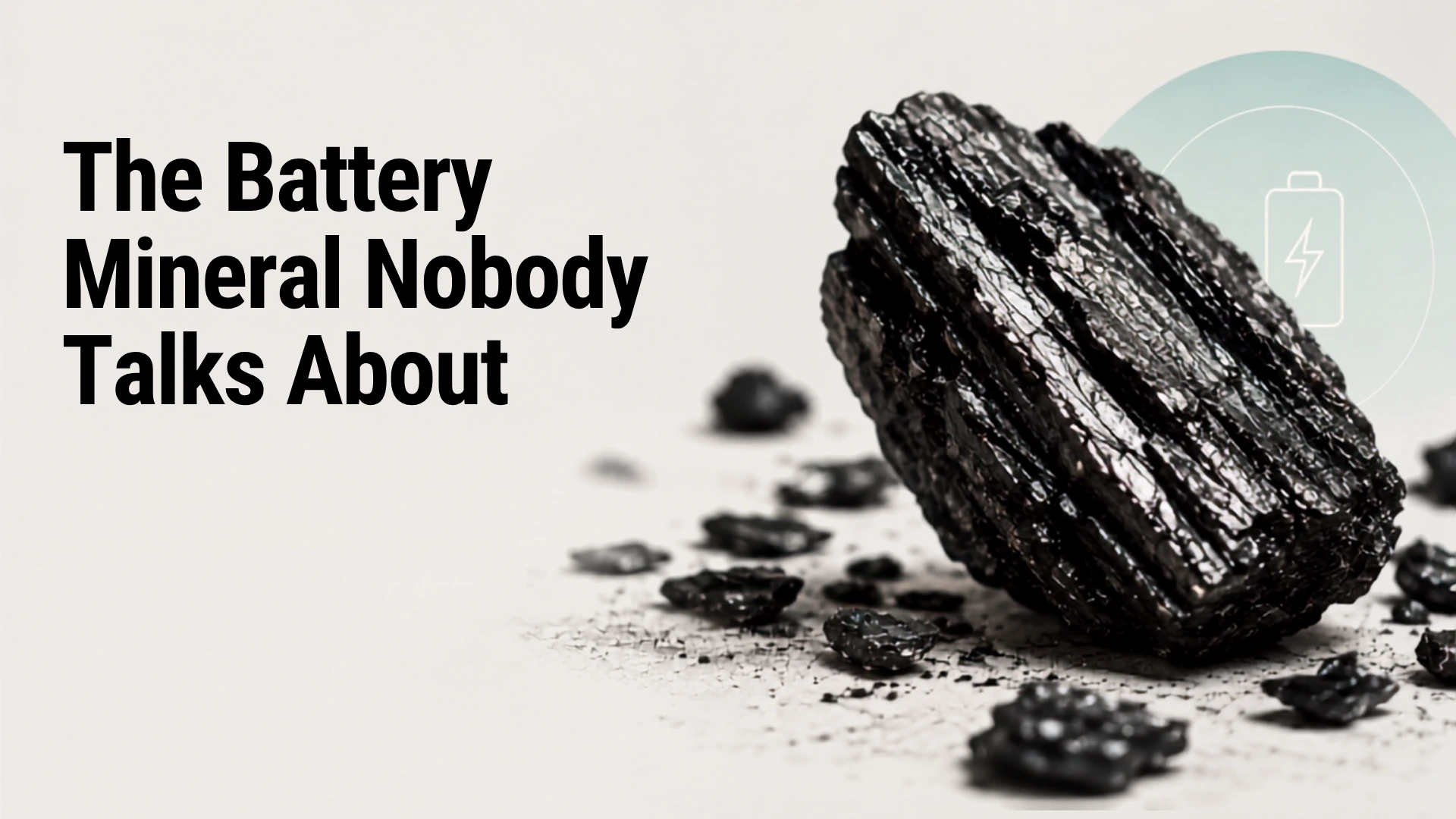
In reality, graphite forms the anode—the component that stores and releases lithium ions during charging and discharging—and accounts for a far larger share of the battery by weight than lithium itself. Without high-purity battery-grade graphite, lithium-ion batteries cannot function effectively.
This helps us understand why battery manufacturers are increasingly treating graphite as an important resource alongside lithium, nickel, and cobalt. As EV production scales globally, demand for battery-grade graphite is expected to rise significantly, creating new opportunities for countries with abundant graphite reserves.
Why Tanzania Is Betting on Graphite Instead of Lithium
Unlike countries such as Australia, Chile, and Argentina, Tanzania is not a major lithium producer. Rather than competing in lithium mining, Tanzania is seeking to capitalise on a different part of the battery value chain by processing graphite into battery-grade material. This method allows the country to move beyond exporting raw minerals and instead go in deep, higher-value manufacturing linked to the global clean-energy economy. For Mohammed Dewji, the investment represents more than a mining project. It is a strategic bet that demand for battery materials will continue to grow as electric mobility expands worldwide.
The timing is significant. Battery manufacturers are actively seeking to diversify supply chains, particularly as graphite processing remains heavily concentrated in China. New processing facilities in regions such as Africa could help manufacturers reduce supply-chain concentration while strengthening long-term resource security.
EQMint Analysis
Much of the conversation surrounding electric vehicles focuses on automakers, battery manufacturers, and charging infrastructure. However, the companies and countries controlling critical minerals may ultimately capture some of the greatest long-term value.
Graphite illustrates this perfectly. While lithium became the face of the battery revolution, graphite has quietly become one of its most indispensable components. As battery production expands, manufacturers will require not only more lithium but also significantly larger quantities of battery-grade graphite.
For investors and businesses, this signals a broader shift. The clean-energy transition is creating opportunities far beyond vehicle manufacturers. Mining companies, mineral processors, advanced material producers, battery technology firms, and supply-chain operators are becoming equally important participants in the EV ecosystem.
Dewji’s investment therefore represents more than a Tanzanian industrial project. It reflects a global recognition that the future of electric mobility depends not only on building better batteries, but also on securing the critical materials that make those batteries possible. In the coming decade, the biggest winners in the EV economy may not be the companies selling electric cars—but those supplying the minerals hidden inside them.
For more such information visit EQMint
Join our Whatsapp channel for timely updates: Whatsapp
Disclaimer: This article is not an investment advice and is for educational purpose only.