

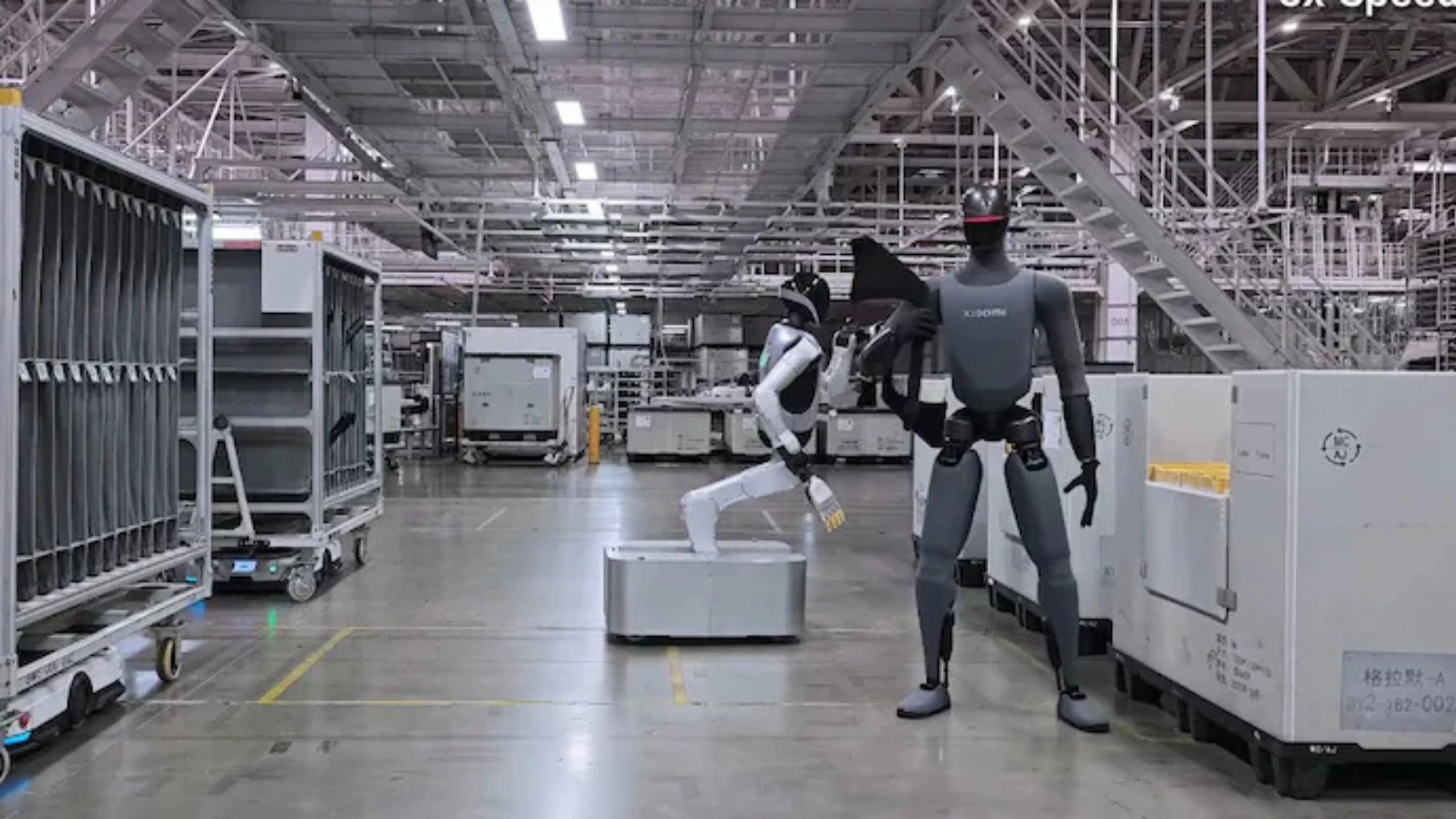
Synopsis: A video shared by CEO Lei Jun showing humanoid robots inside a Xiaomi factory has begun discussions about the future of industrial automation. While the company is yet to announce any commercial robotics product, the video has generated expectations about signals of a strategic shift that extends beyond gadgets. It reflects how such a huge technological company is increasingly viewing humanoid robots as the next frontier of productivity, manufacturing efficiency, and artificial intelligence.
July 17, 2026: Xiaomi has always been one of the best known for smartphones, smart home devices, and electric vehicles, proving users with devices which are need of the hour and cost efficient. Xiaomi is also known to keep up with the market trends and needs, always keeping a customer centric approach.
Recently, Xiaomi has offered a glimpse into what could become the next phase of industrial automation after CEO Lei Jun shared a video of humanoid robots performing tasks inside one of the company’s manufacturing facilities. Although Xiaomi has yet to formally unveil a commercial humanoid robot or announce production timelines, the demonstration indicates that the Chinese technology giant is actively exploring AI-powered robotics as part of its long-term manufacturing strategy.
Author: Tavisha Kanodia | EQMint
Out of The Box: Xiaomi’s Expanding AI Ecosystem
Over the past decade, Xiaomi has grown from a smartphone manufacturer into one of the world’s largest technological ecosystems, and creating a market position. Today, the diversity of the company ranges from smartphones, IoT devices, smart home appliances, wearables, electric vehicles, cloud services, and artificial intelligence.
Humanoid robotics may be one of the most revolutionary products of Xiaomi if launched attracting market’s eyes, as it will not only show innovation, but the difference AI can create when used as a problem-solving agent. Unlike traditional industrial robots that perform repetitive movements in fixed environments, AI-powered humanoid robots are designed to operate in spaces built for humans. Their ability to walk, inspect equipment, move components, and adapt to changing environments could make them significantly more versatile within modern manufacturing facilities.
The robots showcased by Xiaomi appear to be undergoing real-world industrial testing rather than serving as a consumer-facing product, suggesting the company’s immediate focus is factory automation rather than retail robotics.
Behind the Scenes
Technology companies around the world are investing billions of dollars into humanoid robotics. Tesla continues to develop its Optimus robot, while firms such as Figure AI, Boston Dynamics, and several Chinese robotics companies are working to integrate artificial intelligence with physical automation.
Manufacturers increasingly face rising labour costs, workforce shortages, quality control challenges, and pressure to improve production efficiency. AI-powered humanoids have the potential to work continuously, perform hazardous tasks, reduce operational errors, and collect real-time production data that can further optimise factory performance.
For companies operating at massive production scales, even small efficiency improvements can translate into significant cost savings over time.
Why This Matters for Business
Competitiveness is increasingly being compared by software, automation, artificial intelligence, and data rather than machinery alone. Companies capable of using these technologies into production processes are likely to gain advantages in speed, quality, scalability, and operational costs.
If humanoid robots become commercially viable, industries such as electronics, automotive manufacturing, logistics, warehousing, healthcare equipment, and consumer goods could witness widespread transformation.
For investors, robotics also represents a new long-term growth market. Beyond robot manufacturers, opportunities may emerge for companies specialising in AI chips, sensors, computer vision, industrial software, battery technology, cloud computing, and semiconductor manufacturing—all essential components of autonomous machines.
EQMint Analysis: Xiaomi Is Investing in the Factory of the Future
The company is no longer competing solely on smartphone market share or electric vehicle sales. By investing in AI-driven manufacturing, Xiaomi is attempting to strengthen the very infrastructure that supports its broader product ecosystem. Greater automation could improve production efficiency, reduce costs, accelerate innovation cycles, and make the company independent from labour-intensive manufacturing.
Nevertheless, the direction is becoming increasingly clear. Just as artificial intelligence transformed software over the past few years, embodied AI—the combination of intelligence with physical machines—is emerging as the next competitive frontier. Xiaomi’s latest demonstration suggests that the race is no longer simply about building smarter devices; it is about building smarter factories. The companies that master this transition could define the next generation of global manufacturing leadership.
Bibliography
- India Today. Xiaomi may soon launch AI robots; CEO shares video showing humanoids working in factory.
https://www.indiatoday.in/technology/news/story/xiaomi-may-soon-launch-ai-robots-ceo-shares-video-showing-humanoids-working-in-factory-2948418-2026-07
For more such information visit EQMint
Join our Whatsapp channel for timely updates: Whatsapp
Disclaimer: This article is not an investment advice and is for educational purpose only.